Missouri Alumroot Care (Heuchera missouriensis)

About Missouri Alumroot

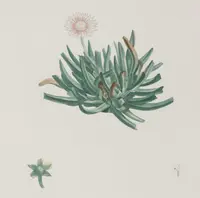
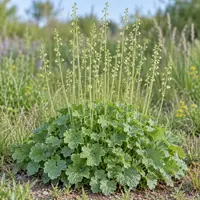
Missouri alumroot (Heuchera missouriensis) is a compact perennial native to rocky glades and bluffs in the central United States. It forms low mounds of rounded, often slightly hairy leaves. In late spring to early summer, it sends up thin flowering stems topped with small, airy clusters of pale blooms that attract pollinators. The plant’s clumping habit and modest size make it useful for rock gardens, native plant beds, and edging.

This species is generally considered undemanding if given well-drained soil and protection from extreme heat and drought. Gardeners who learn how to care for Missouri Alumroot usually find it reliable in suitable conditions.

Main Plant Requirements

Care Difficulty

Moderate Care

Light Preference

Partial Shade

Water Requirements

Moderate Water

Temperature Preference

Cold Hardy

Hardiness Zone

4–8

Soil Texture

Sandy, Loamy, Rocky

Soil pH

Acidic (5.5–6.5), Slightly acidic (6.5–7.0)

Soil Drainage

Well-drained

Fertilization

Minimal (feed rarely)

Get Personalized Care Plan

Scan your plant to receive care tips personalized for your specific plant

Available on iOS and Android

How to Care for the Missouri Alumroot

This prairie alumroot prefers bright conditions with some protection from intense heat.

  • Provide 4–6 hours of morning sun with light or dappled shade in the afternoon, especially in hotter regions.
  • Tolerates partial shade, but in deep shade foliage becomes sparse, flowers less, and plants may lean toward brighter areas.
  • In very strong summer sun, especially on south or west exposures, leaf scorch and bleaching can occur; use nearby plants or light shade cloth to filter light for Missouri Alumroot.

Watering should keep the root zone evenly moist but never saturated.

  • Before watering Heuchera missouriensis, allow the top 3–5 cm of soil to dry, then water slowly so moisture reaches the full root depth.
  • In spring and fall, rainfall often covers much of its needs; during hot, dry periods, monitor foliage for early wilting, then water that day or the next.
  • Yellowing, soft crowns and sour odor indicate overwatering or poor drainage, while crisp leaf edges and shrinking clumps point to chronic underwatering.

This species is adapted to continental climates with cold winters and warm summers.

  • Active growth is strongest around 60–75°F (16–24°C), with flowering and foliage quality best in these moderate conditions.
  • Established plants typically survive winter lows near -20°F (-29°C) under snow or mulch, though young crowns benefit from extra leaf or bark cover.
  • In summer, plants tolerate short heat waves up to about 90–95°F (32–35°C) if soil moisture is maintained; prolonged extreme heat with dry soil can stunt growth and scorch leaves.

This species handles a wide humidity range and rarely needs special humidity management outdoors.

Heuchera missouriensis prefers loose, well-aerated, fast-draining mineral soils.

  • Use a sandy or gravelly loam with 20–30% compost to provide both drainage and moderate organic matter.
  • Aim for slightly acidic to neutral pH around 6.0–7.0, avoiding strongly acidic or alkaline sites.
  • Improve drainage on heavier soils by incorporating coarse sand or small grit into the top 15–20 cm.
  • Avoid compacted, waterlogged, or peat-heavy mixes that hold prolonged moisture around the crown and roots.

This species can grow successfully in containers when drainage and root conditions are controlled carefully.

  • Choose a squat, wide container to match the shallow, spreading root system and keep the crown near the surface.
  • Select a gritty, mineral-rich potting mix so water moves quickly through and does not collect around the crown.
  • Use a heavier pot material or add surface gravel to stabilize the container against wind, since the foliage can act like a sail.

This native perennial needs modest feeding but responds well to light, balanced nutrition in garden or container settings.

  • Apply a balanced, slow-release fertilizer (around 10-10-10) at half strength once in early spring as new growth starts.
  • In richer soils, supplement instead with a thin layer of compost around the crown, keeping material off the stems.
  • For containers, use a diluted balanced liquid feed every 4–6 weeks during the growing season if growth looks weak.
  • Stop feeding Missouri Alumroot by late summer and avoid fertilizing in fall and winter to prevent soft, frost-prone growth.

Heuchera missouriensis benefits from light, periodic pruning to keep the clump tidy and flowering well.

  • In early spring, remove dead, damaged, or mushy leaves at the base with clean hand pruners or scissors.
  • Deadhead spent flower stalks down to the foliage after blooming to encourage a neater appearance and possible rebloom.
  • Thin crowded or overlapping leaves during the growing season to improve airflow and reduce foliar disease.
  • In late fall, trim only clearly dead material, leaving healthy evergreen or semi-evergreen foliage for winter protection.

This species is more often transplanted in garden beds than repotted, but both benefit from minimal root disturbance and good timing.

  • Transplant or divide clumps every 3–4 years in early spring or early fall when temperatures are mild.
  • Move plants when growth slows, the crown heaves out of the soil, or roots circle the container and drain holes.
  • Lift the clump carefully, tease roots apart gently, and replant so the crown sits at soil level in well-drained ground.
  • Water thoroughly after transplanting, then keep soil lightly moist for 1–2 weeks to reduce stress and support re-establishment.

Heuchera missouriensis is commonly propagated by division, with seed used less often for garden clones.

  • Divide mature clumps in early spring or early fall, when temperatures are cool and soil is workable.
  • Lift the plant, cut the crown into sections with 2–3 growing points each, and discard woody, exhausted centers.
  • Replant divisions at the same depth in loose, well-drained soil, spacing them to allow airflow and future spread.
  • For seed, sow fresh in a bright, cool spot, barely cover, and keep evenly moist to support slow but steady germination.

This native alumroot is generally cold hardy in much of the US and needs only modest winter attention in the ground.

  • In late fall, leave most healthy foliage in place, removing only clearly dead or diseased leaves at the base.
  • Apply a 3–5 cm mulch layer around, not on, the crown to insulate roots and limit freeze–thaw heaving.
  • Container plants in colder zones can be moved to a sheltered, unheated but frost-moderated location to protect roots.

Care Tips

Crown protection

Set plants so the crown sits just at or slightly above soil level and top-dress yearly with 1–2 cm of fine gravel or grit around the crown to reduce rot and soil splash on leaves.

Summer dormancy support

In hot, dry summers, allow partial dormancy by accepting some foliage dieback, then lightly tidy and mulch the root zone with a thin, airy organic layer to keep roots cool without burying the crown.

Seedling rescue

Leave spent flower stalks until seeds ripen, then gently shake them into nearby cracks or a shallow tray of gritty mix to encourage self-sown seedlings that can be lifted and replanted once they have 3–4 true leaves.

Rocky site anchoring

When planting into rocky or sloped sites, wedge the root ball against stable stones and backfill firmly with a gritty mix so the plant is anchored and less likely to heave or wash out.

Winter heave control

In regions with freeze–thaw cycles, check plants in late winter and gently firm any lifted crowns back into place, then spot-add grit or gravel around the base to stabilize them and support growing Missouri Alumroot in exposed beds.

Common Pests and Diseases

Black vine weevil

This pest chews notches along leaf edges and its larvae feed on roots, which can cause sudden wilting and decline. Symptoms include scalloped foliage, poor vigor, and sometimes plant collapse in shaded, moist sites.

Solution

Hand-pick adults at night using a flashlight and destroy them, and inspect the crown for larvae in the soil, removing and discarding any you find. For persistent problems, apply beneficial nematodes to the soil in late spring or early fall according to label directions, and keep mulch a few cm away from the crown to make conditions less favorable for larvae.

Heuchera rust

This disease causes orange to brown pustules on the undersides of leaves and yellow spotting above, leading to leaf distortion and premature drop. Symptoms include patchy, thinning clumps that lose ornamental value.

Solution

Remove and destroy affected leaves as soon as spots appear and avoid overhead watering to keep foliage dry. Improve spacing and airflow, and if infection is severe, cut back foliage to encourage clean regrowth and consider using a labeled fungicide as a last resort while following all instructions carefully.

Foliar leaf spots

This disease complex, often caused by fungi such as Cercospora, produces tan to dark purple spots that may merge into larger blotches, especially during warm, humid weather. Symptoms include cosmetic damage and gradual thinning of older leaves, particularly in dense plantings.

Solution

Prune off heavily spotted leaves and dispose of them in the trash, then water at the soil level in the morning so foliage dries quickly. Maintain good spacing, avoid high-nitrogen fertilization that promotes lush soft growth, and use a preventive fungicide only if weather conditions remain favorable for repeated outbreaks.

Aphids

These insects cluster on flower stems and young leaves, sucking sap and excreting sticky honeydew that can lead to sooty mold growth. Symptoms include distorted new growth, sticky residue, and increased ant activity around the plant.

Solution

Spray colonies off with a firm stream of water in the morning, repeating every few days until numbers drop. For ongoing issues, use insecticidal soap or a horticultural oil labeled for ornamental perennials, making sure to coat the undersides of leaves and flower stalks, and avoid spraying in full sun or high heat.

Spider mites

This pest thrives in hot, dry conditions and feeds on the underside of leaves, causing fine stippling, a dull appearance, and sometimes light webbing. Symptoms include bronzed or faded foliage, especially on plants in full sun or near heat-reflecting surfaces.

Solution

Increase humidity around the plant and rinse foliage thoroughly with water, focusing on the leaf undersides to dislodge mites. In more serious infestations, apply insecticidal soap or a light horticultural oil at labeled intervals, and reduce environmental stress by providing consistent moisture and partial shade appropriate for Heuchera missouriensis care.

Interesting Facts

Ozark limestone specialist

This species is naturally restricted to limestone and dolomite glades and bluff ledges in the Ozark region, where it anchors itself in shallow, rocky soils with very little organic matter.

Spring-emerging foliage

New leaves typically emerge early in spring from a tight basal crown, allowing the plant to take advantage of cool, moist conditions before summer heat dries exposed glade habitats.

Pollinator support role

Its airy sprays of small, bell-shaped flowers provide nectar and pollen to a range of native bees and small insects in late spring to early summer, contributing to the biodiversity of Ozark glade communities.

Botan icon

Did you know?

Heuchera missouriensis is considered a regional endemic of the central United States, occurring naturally only in parts of Missouri, Arkansas, and a few adjacent areas, which makes conservation of its specialized limestone glade habitat particularly important.

FAQs about Missouri Alumroot

This species forms small clumps and spreads slowly by short rhizomes. It does not run or self-seed aggressively, so it stays where planted and usually coexists well with neighboring perennials in garden beds or rock gardens.

Grow Healthy Plants with Botan Care

Keep your plants happy and healthy with plant identification, disease detection, and easy care guidance.

Botan plant care app — identify plants on mobile

Explore More Plants