russet buffaloberry Care (Shepherdia canadensis)

Also known as: Canadian buffalo-berry, soopolallie, Canada Buffaloberry, Soapberry
russet buffaloberry

About russet buffaloberry

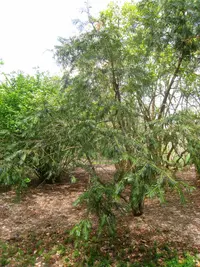
Russet buffaloberry (Shepherdia canadensis) is a hardy deciduous shrub native to northern and western North America, often found in open woods, slopes, and rocky sites. It typically forms dense, twiggy thickets with small opposite leaves that have a gray-green, slightly silvery look.

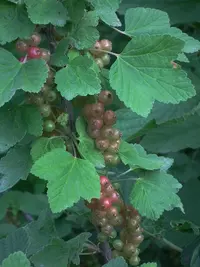
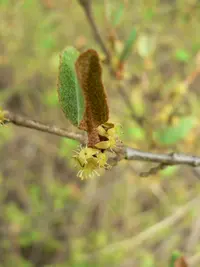
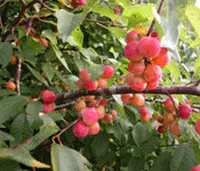
The shrub produces small yellowish flowers in spring, followed by bright red, somewhat tart berries that feed wildlife. Its tolerance of poor, dry, or rocky soils and cold climates makes it relatively easy to establish.

Once rooted, it needs minimal care and copes well with low-fertility conditions, though it prefers well-drained soil and full sun to light shade. Understanding how to care for russet buffaloberry mainly involves matching its natural, tough habitat conditions.

Main Plant Requirements

Care Difficulty

Easy Care

Light Preference

Full Sun

Water Requirements

Low Water

Temperature Preference

Cold Hardy

Hardiness Zone

2–6

Soil Texture

Sandy, Loamy, Rocky

Soil pH

Slightly acidic (6.5–7.0), Neutral (7.0)

Soil Drainage

Well-drained

Fertilization

Minimal (feed rarely)

Get Personalized Care Plan

Scan your plant to receive care tips personalized for your specific plant

Available on iOS and Android

How to Care for the russet buffaloberry

Shepherdia canadensis thrives in bright conditions typical of open woodlands and scrubby slopes.

  • Provide full sun for 6–8 hours per day for best flowering and fruiting, though light afternoon shade in hotter regions reduces leaf scorch risk.
  • Plant russet buffaloberry where it receives morning sun and filtered or dappled light after 2–3 p.m. in climates with very strong summer sun.
  • In partial shade (around 3–4 hours direct sun), shrubs survive but may grow looser and produce fewer berries; avoid deep shade, which leads to weak, sparse growth.

This shrub prefers dry to moderately moist conditions and is adapted to well-drained, often poor soils.

  • After establishment, water only when the top 5–8 cm of soil is dry, using a deep soak rather than frequent light watering to encourage deep roots.
  • During the first 1–2 growing seasons, especially in sandy or sloping sites, check soil after hot, windy days and water if leaves begin to dull or slightly curl.
  • In heavy or compacted soils, improve drainage or plant on a slight mound; signs of overwatering include yellowing leaves and dieback of young stems in Shepherdia canadensis.

This cold-hardy shrub is adapted to continental climates with cold winters and mild to warm summers.

  • Active growth is strongest around 60–75°F (16–24°C), with good performance in cool spring and fall conditions.
  • Established plants tolerate winter lows down to about -40°F (-40°C) when dormant, provided roots are not waterlogged and soil drains freely.
  • Summer heat up to 85–90°F (29–32°C) is usually tolerated if soil is not saturated; prolonged extremes above 95°F (35°C) combined with drought can cause leaf scorch and reduced fruit set.

Humidity is usually not a limiting factor for Shepherdia canadensis, which is adapted to dry, exposed sites.

Shepherdia canadensis prefers lean, well-drained mineral soils and tolerates poor, rocky sites.

  • Use sandy or gravelly loam with low to moderate organic matter to mimic its native habitats.
  • Ensure fast drainage by blending 40–60% coarse sand or fine gravel into existing loam or native soil.
  • Aim for slightly acidic to neutral pH, about 6.0–7.5, as strongly alkaline soil can reduce nutrient availability.
  • Avoid compacted clay or sites where water lingers after rain, since prolonged saturation increases root rot risk.

This shrub can be grown in containers for several years, but long-term culture is more demanding than in-ground planting.

  • Choose a deep, heavy container that stabilizes the shrub against wind and prevents tipping as the canopy spreads.
  • Fill the pot with a gritty mix, such as 50% peat-free compost and 50% coarse sand or grit, to keep drainage rapid.
  • Position the container where runoff can escape freely so roots are never left standing in a saucer or low spot after watering.

Shepherdia canadensis is a tough nitrogen-fixing shrub that usually needs minimal fertilization in average garden soil.

  • In poor or sandy soils, apply a light layer of compost around the root zone once in spring.
  • If using fertilizer, choose a low- to medium-strength balanced NPK or native shrub formula at half label rate.
  • Feed only once during the growing season; avoid summer and late-fall applications to prevent soft growth.
  • Skip fertilization in winter dormancy and whenever growth and leaf color appear normal, as russet buffaloberry performs well in lean conditions.

Shepherdia canadensis responds well to light structural pruning to maintain shape and plant health.

  • Best time is late winter to early spring before new growth starts.
  • Remove dead, diseased, crossing, or inward-growing branches with clean bypass pruners or loppers.
  • Thin crowded stems to improve light and air penetration, keeping the shrub open-centered.
  • Shorten overly long shoots lightly to control size without removing too much fruiting wood.

This shrub is most often grown in the ground, so care focuses on transplanting rather than routine repotting.

  • Transplant young Shepherdia canadensis plants in early spring or early fall when temperatures are mild.
  • Move if growth is stunted, roots circle the container, or the plant outgrows its space.
  • Dig a wide hole, loosen circling roots gently, and set at the same soil level to limit stress.
  • Water deeply after planting, then keep soil evenly moist for the first season to support root establishment.

Shepherdia canadensis is commonly propagated from seed or semi-hardwood cuttings for landscape and restoration use.

  • Collect ripe berries in late summer; clean and cold-stratify seeds for 2–3 months at 34–41°F to improve germination.
  • Sow in a well-drained, sandy mix kept lightly moist and bright but not hot.
  • Take semi-hardwood cuttings in mid to late summer, 10–15 cm long, with several nodes.
  • Use rooting hormone, insert in a sharply drained medium, and maintain high humidity until roots form.

Shepherdia canadensis is very cold hardy and usually needs little to no special winter care in most temperate climates.

  • In exposed sites, apply a 5–8 cm mulch layer around the root zone, keeping it away from the stems.
  • Avoid heavy pruning in late fall, which can stimulate tender growth before freezes.
  • Container-grown plants in very cold regions can be moved to a sheltered, unheated but frost-free area if root zones are at risk.

Care Tips

Encourage Fruit Set

Plant at least 2 genetically different shrubs within 3–5 m of each other to improve cross‑pollination and berry yield, since this species is mostly dioecious with separate male and female plants.

Use As Nurse Shrub

Install it a few years before more sensitive trees or shrubs in poor, exposed sites, as its nitrogen‑fixing roots and wind tolerance help create a more favorable microclimate and richer soil for companion plants.

Manage Suckering

Inspect the base each spring and cut unwanted root suckers at or below soil level with clean pruners to keep the plant from forming an overly wide thicket or encroaching on paths.

Snow And Wind Protection

In very windy or high‑snow areas, place shrubs on the leeward side of a fence or taller planting so heavy snow loads and winter winds do not break young branches.

Wildlife And Human Safety

Site plants a short distance away from narrow paths or play areas, since the branches are thorny and the abundant fruit attracts birds that may drop seeds and create volunteer seedlings nearby when growing russet buffaloberry.

Common Pests and Diseases

Rust fungus

This disease causes small orange, yellow, or reddish pustules on leaves and young stems, sometimes leading to early leaf drop. Symptoms include scattered spots that may merge into larger discolored areas under humid conditions.

Solution

Remove and destroy infected leaves and nearby fallen debris to reduce spore spread, and avoid overhead watering to keep foliage dry. If rust recurs and is severe, apply a sulfur or copper-based fungicide according to label directions, and increase spacing or pruning to improve airflow around the shrub.

Powdery mildew

This disease produces a white to gray powdery coating on leaf surfaces, especially in shaded, humid sites with poor air movement. Symptoms include distorted new growth and reduced vigor when infections are heavy.

Solution

Prune surrounding vegetation to increase light and airflow, and avoid wetting foliage late in the day. In persistent cases, use a horticultural oil or potassium bicarbonate spray labeled for powdery mildew, covering both upper and lower leaf surfaces, and repeat as directed.

Leaf spot

This disease causes small brown, tan, or purplish spots on leaves that may expand and lead to partial defoliation by late summer. Symptoms include scattered lesions often with a darker edge and a lighter center.

Solution

Rake and discard fallen leaves to lower the amount of infectious material and irrigate at the soil level rather than on foliage. For shrubs that defoliate repeatedly, apply a broad-spectrum fungicide in early spring at bud break and repeat during prolonged wet periods, following label instructions.

Aphids

These insects cluster on young shoots and leaf undersides, sucking sap and causing curling or distortion of new growth. This pest also excretes sticky honeydew that can attract sooty mold on leaves and stems.

Solution

Spray colonies off with a strong stream of water and encourage natural predators such as lady beetles by minimizing broad-spectrum insecticide use. For persistent infestations, treat tender growth with insecticidal soap or neem oil, making sure to coat the undersides of leaves and repeating as needed.

Scale insects

These insects appear as small, rounded or oval bumps on stems and sometimes leaves, feeding on sap and weakening the plant over time. This pest often causes yellowing, reduced vigor, and sticky honeydew deposits around the shrub.

Solution

Prune out heavily infested twigs and dispose of them, then wipe or gently scrape remaining scales from accessible stems. During the dormant season, apply a horticultural dormant oil to smother overwintering stages, and in the growing season target the crawler stage with light horticultural oil or insecticidal soap, following label timing and rates as part of broader Shepherdia canadensis care.

Interesting Facts

Nitrogen-fixing partnership

Shepherdia canadensis forms root nodules with actinobacteria in the genus Frankia, allowing the shrub to convert atmospheric nitrogen into forms usable by plants and to enrich nutrient-poor soils around it.

Dioecious shrub biology

This species is dioecious, meaning individual plants are either male or female, so only female shrubs produce the characteristic orange-red berries when a compatible male plant is nearby for pollination.

Cold-hardy native range

The shrub is naturally distributed across much of Canada and the northern United States, where it tolerates long, cold winters and often grows on dry, rocky slopes, open forests, and disturbed sites.

Botan icon

Did you know?

The berries of Shepherdia canadensis are an important seasonal food for grizzly bears in parts of western North America, and dense stands of this shrub can influence bear movement patterns on the landscape during late summer when the fruit ripens.

FAQs about russet buffaloberry

The bright red-orange berries are edible when fully ripe, though very tart and astringent. They are traditionally used cooked in jams, jellies, sauces, and preserves rather than eaten fresh in large quantities.

Grow Healthy Plants with Botan Care

Keep your plants happy and healthy with plant identification, disease detection, and easy care guidance.

Botan plant care app — identify plants on mobile

Explore More Plants