

red mulberry Identification (Morus rubra)

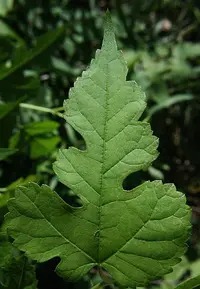
To recognize red mulberry, check for simple alternate leaves, often unlobed or shallowly lobed on the same twig, with long pointed tips and sharply toothed edges.

It grows as a medium to large tree, and its flowers form short, hanging catkins from the leaf axils.

Morus rubra Identification

Check Your Plant ID

Check your plant ID by uploading a clear photo to Botan.

Clear images work best. Avoid photos taken too close or too far away

Use these quick visual checks for Morus rubra.

  • Leaves are alternate, broadly oval to heart-shaped, often rough above, and usually 4-8 inches (10-20 cm) long.
  • Many leaves are unlobed, but some on the same branch have 2-3 shallow lobes.
  • Leaf edges are finely toothed, and the base is often uneven where it meets the stalk.
  • Twigs and young leaf stalks often show fine soft hairs rather than a smooth surface.
  • Fruits are blackberry-like clusters about 1-1.5 inches (2.5-4 cm) long, hanging singly or in small numbers.

Check several leaves on one branch, since shape can vary on the same tree.

Morus rubra shows clear age-related shifts in leaves, bark, branching, and reproductive structures.

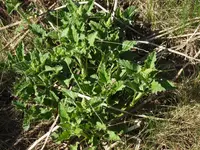
  • Seedling: First leaves are small and often unlobed, while later seedling leaves may become irregularly lobed; stems are slender, green, and softly hairy.
  • Young plant: Leaves are more variable than on mature trees, commonly heart-shaped to deeply lobed, sometimes 4-8 inches (10-20 cm) long, on flexible shoots.
  • Mature plant: Crown becomes broad and rounded with heavier lateral branches; bark darkens and breaks into long ridges, and leaves are usually larger but less deeply lobed.
  • Fruiting stage: Female trees carry elongated, blackberry-like multiple fruits that shift from red to very dark when ripe, hanging singly or in small numbers from leaf axils.

In spring, Morus rubra leafs out with soft, bright green leaves, and flowers become visible as short, dangling catkins. By early summer, the ripening fruit shifts from red to dark purple-black, creating one of the clearest seasonal clues. After leaf drop in fall, the broad, often heart-shaped leaves are gone and the tree shows a bare, open branching outline through winter.

A few mulberries are commonly confused with red mulberry.

white mulberry(Morus alba)

Often confused because both have variable, sometimes lobed leaves and blackberry-like fruits. White mulberry usually has glossy, smoother leaves with a long tapering tip; red mulberry leaves are typically duller and rough-textured above.

black mulberry(Morus nigra)

Similar broad leaves and dark fruits can mislead gardeners. Black mulberry usually has thicker, very rough, heart-based leaves and a lower, denser habit; Morus rubra more often forms a taller tree with thinner leaves.

Morus rubra is native to eastern and central North America, from the Northeast and Great Lakes region south into the Southeast and west into parts of the central United States. It is most often found in rich, moist deciduous woods, bottomlands, streambanks, and woodland edges. Habitat can help narrow identification because true wild plants are usually in forested settings rather than open disturbed urban sites, where introduced white mulberry is more common.

Confirm the Species with Botan

Upload a photo to compare key features and get help identifying the plant or checking that your identification is correct.

FAQ

Look for broad, alternate leaves with rough upper surfaces, often heart-shaped bases, and variable lobing on the same plant. Mature fruits are 1 to 1.5 inches (2.5 to 4 cm) long and ripen from red to dark purple.

More Plant Identification Guides

Identify It. Learn More About It.

Use Botan to identify a plant from a photo, then get plant details, care information, and common problems for that species.

Botan app identifying a plant from a photo
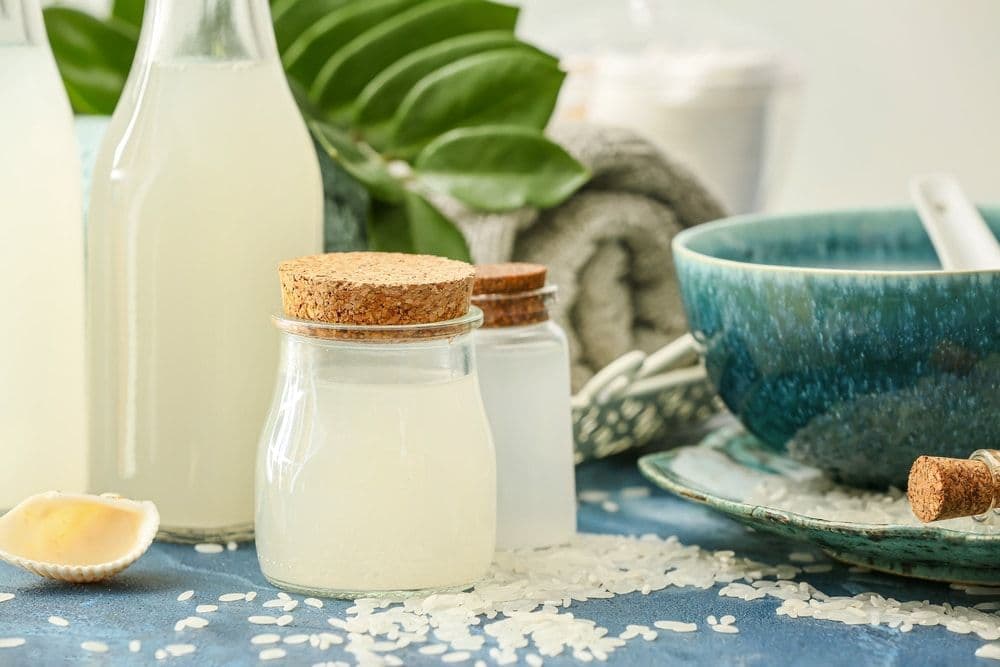
Rice Water for Plants – Which Plants Love It and How to Make It

8 min read · 14 Jul 2026

Rice Water for Plants – Which Plants Love It and How to Make It

Rice water can be an ideal DIY solution for orchids, roses, or fruiting plants. It supports growth, leaf count, and height. We’ll share how to make and apply it correctly for your plant.

Plant Care
Rice Water for Plants – Which Plants Love It and How to Make It
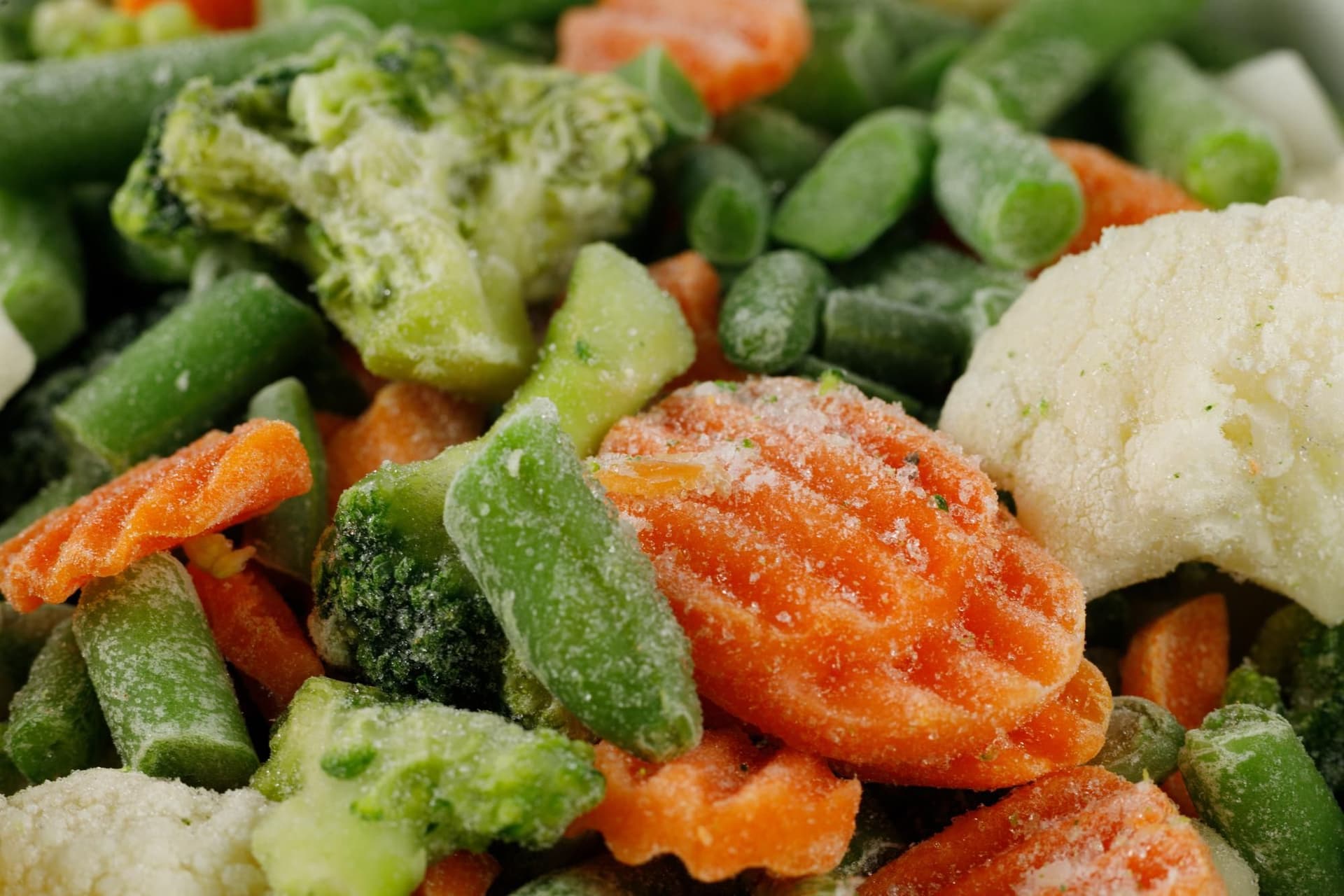
Frozen vs Fresh Vegetable Nutrients: Which Option Is Healthier?

6 min read · 8 Sept 2026

Frozen vs Fresh Vegetable Nutrients: Which Option Is Healthier?

Frozen and fresh vegetables are nutritionally comparable: frozen produce often retains vitamins just as well as fresh and may sometimes contain more. Here’s how blanching and storage affect nutrients—and when to choose each.

Plant Recommendations
Frozen vs Fresh Vegetable Nutrients: Which Option Is Healthier?
10 Easy Garden Flowers to Grow

8 min read · 10 Sept 2026

10 Easy Garden Flowers to Grow

Discover 10 garden flowers that require minimal care. Learn which characteristics make plants easy to grow and follow tips on how to create a beautiful corner from beginner-friendly blooms on your property.

Beginner Guides
10 Easy Garden Flowers to Grow