Autumn Leaf Management
Let healthy fallen leaves remain as a thin mulch layer under the canopy in autumn, then remove excess piles to prevent fungal issues while still benefiting from soil cooling and slow nutrient return.

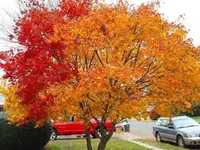
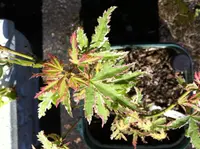
Acer palmatum var. amoenum 'O Sakazuki' is a deciduous Japanese maple valued for its strong structure and reliable autumn color. It forms a small tree or large shrub with a rounded, upright habit and finely divided leaves.
In spring and summer, the foliage is medium green, turning intense scarlet-red in fall, making it a focal point in gardens and small landscapes. It occurs naturally in woodlands of Japan, where it grows in dappled light and well-drained, slightly acidic soil.
This cultivar is moderately easy to grow if protected from harsh wind, strong afternoon sun, and very dry conditions. Understanding how to care for Japanese Maple in local climate and soil conditions helps maintain its shape, color, and long-term health.

Care Difficulty
Moderate Care

Light Preference
Partial Shade

Water Requirements
Moderate Water

Temperature Preference
Cold Hardy

Hardiness Zone
5–8

Soil Texture
Loamy, Sandy, Organic-rich

Soil pH
Acidic (5.5–6.5), Slightly acidic (6.5–7.0)

Soil Drainage
Moist but well-drained

Fertilization
Minimal (feed rarely)
Scan your plant to receive care tips personalized for your specific plant
Available on iOS and Android
This maple prefers bright outdoor conditions with protection from harsh extremes for best leaf color and health.
This tree prefers consistently moist, well-drained soil that never stays waterlogged.
This maple thrives in temperate climates with cool winters and moderate summers.
This maple prefers moderate humidity but generally adapts well to typical outdoor conditions in temperate climates.
Soil should be moisture-retentive yet free-draining to support strong, fine roots and stable growth.
This maple can be grown successfully in containers when the pot is chosen and managed to support its shallow, spreading root system.
This cultivar benefits from light, measured feeding rather than heavy fertilization.
Pruning helps maintain structure and health in Acer palmatum var. amoenum 'O Sakazuki' without forcing heavy reshaping.
This maple is usually grown in the ground but can be transplanted or moved in containers with care to its fine roots.
Propagation of this cultivar is specialized and mainly carried out by grafting onto seedling Japanese maple rootstock.
This maple is generally cold hardy in suitable climates but benefits from some root-zone protection in harsh winters.

Plant Health Check
Not sure what's wrong with your plant? Check your plant's health inside the app.
This cultivar is widely noted among Japanese maples for its unusually intense scarlet to crimson autumn color, which can hold well even in cooler, short-season climates compared with many other red-tinged selections.
Its leaves are relatively large for a Japanese maple and have 7 lobes that are moderately to deeply dissected, giving a bold texture that reads clearly in the landscape from a distance.
The tree typically develops a strong, upright to vase-shaped framework with well-spaced branches, making it suitable as a small focal tree where consistent form and reliable fall color are both desired.

This cultivar was selected and named in Japan and has long been favored by specialist collectors and public gardens in Europe for its combination of strong growth, reliable scarlet fall color, and ability to color well even in relatively cool, overcast autumn conditions.
Brown, crispy leaf edges usually result from leaf scorch caused by hot sun, low humidity, or inconsistent watering. Wind exposure, high salt or fertilizer levels, and compacted soil can worsen damage. Improve site conditions and water evenly to reduce stress.
Keep your plants happy and healthy with plant identification, disease detection, and easy care guidance.