Robertson Oxtongue Care (Gasteria disticha)

Robertson Oxtongue

About Robertson Oxtongue

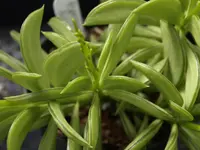
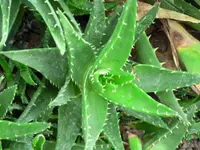
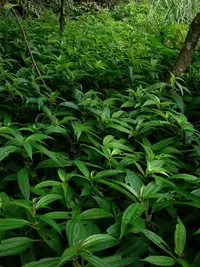
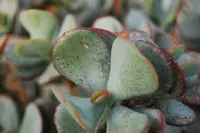
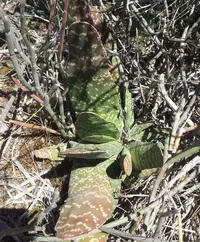
Robertson oxtongue (Gasteria disticha) is a compact succulent from South Africa, valued for its thick, tongue-shaped leaves arranged in neat opposing rows. The leaves are usually mottled or banded, giving the plant a patterned, architectural look that suits small containers and indoor displays.

This species grows slowly and stays relatively low, which makes it suitable for windowsills, desks, and mixed succulent planters. It tolerates indoor conditions well and is considered forgiving for beginners, as long as it is not overwatered.

To care for Robertson Oxtongue, provide bright, indirect light, occasional watering with thorough drying in between, and a very well-draining, gritty soil mix.

Main Plant Requirements

Care Difficulty

Easy Care

Light Preference

Bright Indirect Light

Water Requirements

Low Water

Temperature Preference

Tropical / Frost Sensitive

Hardiness Zone

10–11

Soil Texture

Sandy, Loamy, Rocky

Soil pH

Acidic (5.5–6.5), Slightly acidic (6.5–7.0)

Soil Drainage

Well-drained

Fertilization

Minimal (feed rarely)

Get Personalized Care Plan

Scan your plant to receive care tips personalized for your specific plant

Available on iOS and Android

How to Care for the Robertson Oxtongue

This succulent prefers bright, indirect light and protection from intense midday sun.

  • Provide 4–6 hours of bright, filtered light daily; morning sun with light afternoon shade suits Robertson Oxtongue well, especially in warm climates.
  • Outdoors, place where it gets dappled light or partial shade; indoors, set near an east or bright north window, avoiding harsh south or west exposure.
  • Watch for signs of stress: bleached, scorched patches indicate too much direct sun, while elongated, floppy leaves signal insufficient light, especially in winter.

Water Gasteria disticha sparingly, allowing the soil to dry between waterings.

  • Let the top 3–5 cm of soil dry before watering; in active growth, this often means watering every 10–21 days depending on light, pot size, and temperature.
  • In winter or cool, low-light periods, reduce watering frequency significantly, sometimes to once every 3–4 weeks, to prevent root rot.
  • Use a sharply draining, gritty mix and water thoroughly until excess drains; soft, yellowing, or translucent leaves suggest overwatering, while thin, wrinkled leaves suggest underwatering.

This species prefers mild, stable temperatures without frost or extreme heat spikes.

  • Aim for 65–80°F (18–27°C) for best growth, with slightly cooler nights; consistent conditions help maintain compact, healthy leaves.
  • Protect from cold below 40°F (4°C); brief dips to 35°F (2°C) may be tolerated if dry, but repeated exposure near freezing increases risk of tissue damage.
  • In hot weather above 90°F (32°C), provide shade and airflow; avoid baking conditions near reflective walls or pavement that can overheat roots and leaves.

This succulent prefers relatively dry air and does not need elevated humidity.

  • Aim for 30–50% humidity, similar to most heated or air-conditioned homes.
  • Robertson Oxtongue tolerates dry indoor air but may wrinkle slightly if air and soil are both very dry.
  • If tips shrivel or leaves lose firmness, check soil moisture first; only use a small pebble tray nearby if room air is extremely dry.

This species needs a very fast-draining, gritty substrate to protect the roots from rot.

  • Use a cactus/succulent mix amended with extra mineral material, such as 30–50% pumice, coarse perlite, or 3–5 mm grit for Gasteria disticha.
  • Aim for a sandy, open texture that feels loose in the hand and does not clump when slightly moist.
  • A slightly acidic to neutral pH around 6.0–7.0 is suitable and easy to achieve with most commercial succulent mixes.
  • Avoid peat-heavy or compact garden soil that stays wet for more than 2–3 days, as this reduces aeration and encourages fungal problems.

This species is well suited to container growing due to its compact, shallow root system.

  • Choose a wide, shallow pot so the spreading leaf fans remain stable and do not lever the plant out of the mix.
  • Use unglazed terracotta if moisture lingers, as it allows faster evaporation and helps the substrate dry between waterings.
  • Place the pot in a stable spot where the low center of gravity is not disturbed, since dry, gritty mixes provide little anchoring weight.

Gasteria disticha benefits from light, infrequent feeding suited to a small, slow-growing succulent.

  • Use a balanced liquid cactus or succulent fertilizer (around 10-10-10) diluted to 25–50% strength.
  • Feed every 4–6 weeks in spring and summer while actively growing, then stop in fall and winter.
  • Apply only to moist soil to avoid root burn, never onto dry substrate.
  • Light feeding supports compact, healthy Robertson Oxtongue growth without forcing soft, weak tissue.

Gasteria disticha needs minimal pruning, mainly to keep the rosette clean and disease-free.

  • Carry out light pruning in spring or early summer when the plant is actively growing.
  • Remove dead, dried, or damaged leaves at the base with clean, sharp scissors or pruners.
  • Cut spent flower stalks at soil level once they fade to direct energy back to the leaves.
  • Thin out badly crowded offsets only if needed to maintain airflow and the clumping shape.

This compact succulent prefers slightly tight pots and only infrequent repotting.

  • Check for roots circling the container, bulging sides, or unexplained slow growth as signs it needs a larger pot.
  • Plan to repot every 3–4 years in spring, using a shallow container with excellent drainage and gritty cactus mix.
  • Lift the plant gently, loosen circling roots lightly with fingers, and remove old, soggy soil from the root zone.
  • After repotting, keep soil barely moist for 1–2 weeks to limit root stress and allow recovery.

This species is commonly multiplied by removing offsets, with seeds used less often at home.

  • Divide offsets in spring or early summer once they have several leaves and their own roots.
  • Gently unpot the clump, then twist or cut pups away with a clean knife, keeping as many roots as possible.
  • Allow cut surfaces to dry and callus for 1–2 days before planting in a dry, gritty succulent mix.
  • Provide bright, indirect light and lightly moist, not wet, soil until new roots establish and growth resumes.

This succulent is not frost-hardy and needs protection in regions with cold winters.

  • Keep temperatures above 40°F; prolonged exposure near freezing can damage leaves and roots.
  • Move container plants indoors or into a bright, cool room before the first frost.
  • Use a very free-draining mix and water sparingly in winter to prevent rot in cold, low-light conditions.
  • Avoid cold drafts on indoor plants and give as much indirect light as possible.

Care Tips

Offset division timing

Divide offsets only when they have at least 3–4 mature leaves and their own visible root nubs, which reduces transplant shock and speeds establishment in a new pot.

Shallow pot selection

Use a wide, shallow pot rather than a deep one so the fibrous, relatively shallow root system can spread horizontally, which improves stability and reduces the risk of soggy lower soil.

Controlled root pruning

When repotting a root-bound plant, trim only browned or circling roots with sterile scissors and leave healthy white roots intact to refresh growth without setting the plant back.

Seasonal light acclimation

At the end of winter, increase light over 2–3 weeks by gradually moving the plant closer to a bright window or adding short periods of direct sun to prevent leaf scorch on the strap-like foliage.

Preventing substrate compaction

Every 6–12 months, gently rake the top 1–2 cm of potting mix with a clean chopstick or plant label to break crusting, which improves air exchange and water infiltration for better Gasteria disticha plant care.

Common Pests and Diseases

Mealybugs

This pest often hides in the tight leaf bases and undersides of Gasteria leaves, sucking sap and causing yellowing, distortion, and sticky honeydew. Symptoms include cottony white clusters, especially where the fan-like leaves overlap.

Solution

Isolate the plant, then dab visible insects with cotton swabs dipped in 70% isopropyl alcohol and repeat weekly until no new clusters appear. Increase airflow around the rosette, avoid overfertilizing, and for heavy infestations use a labeled systemic insecticide suitable for succulents according to package directions.

Aloe mite

This pest forms abnormal, warty, or tumor-like growths on leaves and leaf tips, which is a known problem in Gasteria and related genera. These microscopic eriophyid mites live inside distorted tissue, so damage continues even when no insects are visible.

Solution

Remove and discard all affected leaves and growths, cutting well into healthy tissue with sterile tools and disposing of waste in the trash, not compost. Keep the plant under observation, maintain good hygiene between plants, and if new galls appear treat nearby plants preventively with a sulfur or other mite-targeted product labeled for ornamental succulents.

Soft scale

These insects appear as flat or slightly domed brown or tan bumps along leaf surfaces and stems, causing gradual yellowing and reduced vigor. This pest excretes honeydew that can lead to sooty mold on the smooth Gasteria leaves.

Solution

Gently scrape or wipe off scales with a soft cloth or cotton swab dipped in soapy water or 70% isopropyl alcohol, then rinse the plant. For persistent cases, use a horticultural oil or neem oil spray, applied carefully to coat the insects while keeping the soil relatively dry and the plant in bright, indirect light until foliage dries.

Fungal leaf spots

This disease produces small, sunken, brown to black lesions on the fleshy leaves, often starting where water sits on the surface or in leaf axils. Symptoms include spotted, sometimes slightly soft areas that may expand under cool, humid conditions.

Solution

Remove affected leaves or cut out localized lesions with sterile tools and let the cuts dry in a warm, airy place. Reduce overhead watering, keep foliage dry, improve air circulation, and if spotting continues apply a copper-based or other succulent-safe fungicide according to label instructions.

Bacterial soft rot

This disease causes water-soaked, mushy, bad-smelling areas at the leaf base or within the rosette, often following mechanical damage or prolonged wetness. Symptoms include rapid collapse of affected tissue and spreading decay in the tightly packed fan of leaves.

Solution

Immediately cut away all soft, discolored tissue with sterile tools, dust or swab exposed areas with sulfur or 3% hydrogen peroxide, and allow the plant to dry in a warm, ventilated place. Adjust care by using a faster-draining mix, watering only when the soil is dry through, and avoiding water sitting in the leaf bases, which supports safer Gasteria disticha care instructions in indoor collections.

Interesting Facts

Distinctly distichous leaves

This species has its thick, tongue-shaped leaves arranged in two opposite ranks, a pattern called distichous, which gives the plant its species name disticha and a very flat, fan-like profile compared with many other Gasteria species.

Cape region endemic

It occurs naturally in arid and semi-arid parts of South Africa’s Western and Eastern Cape, where it often grows on rocky slopes or among scrub vegetation, adapted to intense light and episodic rainfall.

Cryptic juvenile pattern

Seedlings and young plants often show more mottled, rough-textured leaves than adults, a juvenile phase that may help camouflage them among stones and soil in their native habitat.

Botan icon

Did you know?

In its native range, this species is sometimes found growing in the partial shade of shrubs or rocks, using this natural shelter to reduce water loss and survive the strong, drying winds typical of its Cape habitats.

FAQs about Robertson Oxtongue

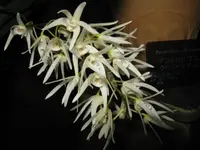
This species often blooms only when mature and slightly root-bound, with stable light and temperature. Lack of flowers is usually due to immaturity, irregular light cycles, or recent repotting, rather than a serious health problem.

Grow Healthy Plants with Botan Care

Keep your plants happy and healthy with plant identification, disease detection, and easy care guidance.

Botan plant care app — identify plants on mobile

Explore More Plants