Aechmea pineliana Care

Aechmea pineliana

About Aechmea pineliana

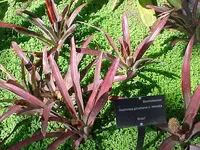
Aechmea pineliana is a terrestrial bromeliad, valued for its stiff, spiny-edged leaves and striking, upright flower spikes with colorful bracts. It forms a dense rosette that can create a bold architectural accent in pots or warm landscapes.

This species is native to eastern Brazil, where it grows in warm, humid habitats, often in sandy or well-drained soils. Its slow growth and drought tolerance make it relatively forgiving, but the spines require careful handling.

Good light, moderate moisture, and a free-draining mix help care for Aechmea pineliana in home settings, especially in bright indoor spots or sheltered outdoor areas in mild climates.

Main Plant Requirements

Care Difficulty

Moderate Care

Light Preference

Bright Indirect Light

Water Requirements

Moderate Water

Temperature Preference

Tropical / Frost Sensitive

Hardiness Zone

10–12

Soil Texture

Sandy, Organic-rich

Soil pH

Acidic (5.5–6.5)

Soil Drainage

Well-drained

Fertilization

Light (every 4–6 weeks)

Get Personalized Care Plan

Scan your plant to receive care tips personalized for your specific plant

Available on iOS and Android

How to Care for the Aechmea pineliana

This bromeliad prefers bright conditions but not harsh, all-day sun, especially in warm climates.

  • Provide 4–6 hours of bright, indirect light or gentle morning sun; filtered sun under light tree shade suits Aechmea pineliana outdoors.
  • Tolerates light to partial shade, but growth and color fade in deep shade; if leaves stretch or lose banding, move it to a brighter spot.
  • Avoid strong midday and late-afternoon sun, which can scorch leaf tips and margins; increase shade slightly during summer or heatwaves.

This species is a tank-forming bromeliad that needs distinct care for its central cup and its roots.

  • Keep the central cup filled 1/2–3/4 full with fresh water and flush it every 1–2 weeks to prevent stagnation and salt buildup.
  • Let the top 2–4 cm of soil dry before watering the pot or ground area; the mix must drain quickly to avoid root rot and sour smells.
  • In cooler months, reduce frequency, keep the cup only partly filled, and watch for signs like limp, curling leaves (too dry) or blackened leaf bases (too wet).

This bromeliad prefers warm, stable temperatures and is sensitive to frost and prolonged cold.

  • Ideal growth occurs around 65–80°F (18–27°C); short peaks up to 90°F (32°C) are tolerated if humidity is moderate and the plant is shaded.
  • Protect from temperatures below 50°F (10°C); tissue damage often appears when exposed for long to 40–45°F (4–7°C).
  • Never expose the plant to frost; during cold seasons, place it in a sheltered, frost-free spot and avoid sudden temperature swings near vents or open doors.

This bromeliad prefers moderately humid air but copes with typical indoor conditions.

  • Aim for 50–60% humidity, which suits both the foliage and the central tank.
  • Dry air may brown leaf tips and slow growth; prolonged crisping indicates humidity stress.
  • Increase humidity by grouping plants, placing the pot on a pebble tray with water, or running a nearby humidifier.

This species needs a very free-draining, airy mix that mimics epiphytic conditions.

  • Use a blend of 40% fine orchid bark, 30% peat-free potting mix, and 30% perlite or coarse sand.
  • Ensure the mix feels loose and chunky so water drains within seconds, not minutes, after thorough watering.
  • Keep pH slightly acidic to neutral, around 5.5–7.0, which supports nutrient uptake and root health in Aechmea pineliana.
  • Avoid heavy clay, compacted garden soil, or mixes that stay wet for more than 2–3 days, which promote root and crown rot.

This bromeliad is well suited to container growing for both indoor and sheltered outdoor settings.

  • Choose a pot just wider than the root base so the plant anchors firmly without surrounding soil staying wet for long periods.
  • Select a heavy or wide-based container if the rosette becomes top-heavy to prevent tipping in wind or accidental knocks.
  • Use a pot material that breathes slightly, such as unglazed terracotta, to help excess moisture evaporate from the fast-draining mix.

This bromeliad has modest nutrient needs but benefits from light feeding during active growth for best foliage color and flowering.

  • Use a balanced liquid fertilizer (around 10-10-10 or 20-20-20) diluted to 1/4–1/2 strength, applied to the potting mix, not the tank.
  • Feed every 4–6 weeks in spring and summer when Aechmea pineliana is actively growing, skipping doses if growth slows.
  • Avoid feeding in late fall and winter, when light is low and growth is minimal, to reduce salt buildup and root stress.
  • Flush the pot with plain water every few months to wash out excess salts from synthetic fertilizers or use a mild slow-release product.

Pruning is minimal and mainly focuses on hygiene and shaping the clump over time.

  • Cut spent flower stalks at the base with clean, sharp scissors or pruners once they fade and dry.
  • Remove dead, damaged, or badly spotted leaves at any time to improve airflow and reduce disease risk.
  • After flowering, leave the mother rosette until it fully declines, then cut it out to give pups more space and light.
  • Disinfect tools with alcohol before and between plants to limit spread of fungal or bacterial problems.

This species prefers to stay slightly tight in its pot, so repotting is infrequent and mainly done to refresh the mix or manage offsets.

  • Repot every 2–3 years or when roots circle the pot, growth slows without another cause, or pups overcrowd the container.
  • Choose early spring for repotting so the plant has a full warm season to adjust and resume growth.
  • Use a shallow, slightly wider pot with a fast-draining mix such as fine orchid bark blended with coarse perlite and a little peat-free compost.
  • Handle roots gently, keep the central rosette upright, water lightly after repotting, and keep in bright, indirect light until fully recovered.

Propagation is commonly done by division of offsets rather than by seed, which is slower and less predictable.

  • Wait until pups reach about 1/3–1/2 the size of the mother rosette, usually after flowering has finished.
  • Best season is late spring to early summer, when warmth and longer days support rooting and new growth.
  • Gently separate pups with a clean, sharp knife, keeping some roots attached, and plant in a small pot with airy, free-draining bromeliad mix.
  • Maintain bright, indirect light, high humidity, and slightly moist but not waterlogged mix until new roots and leaves show steady growth.

This bromeliad is frost-tender and needs protection in regions with cold winters.

  • Keep plants above 50°F; growth slows below this and tissue damage occurs near freezing.
  • Move container plants indoors or into a heated greenhouse before nights drop below 55°F.
  • Indoors, provide bright, indirect light and reduce watering, allowing the mix to dry slightly between waterings.
  • Avoid filling the central cup with cold water in winter; instead, keep it just barely moist to limit rot risk.

Care Tips

Tank water hygiene

Empty the central cup every 1–2 weeks and refill with fresh, non-salty water to prevent bacterial buildup and mosquito larvae, especially in warm indoor conditions.

Leaf base protection

When removing spent flower stalks, cut them above the leaf bases and avoid tearing, which reduces the risk of rot entering the tight rosette structure.

Offset management

Allow pups to reach at least one-third to one-half the height of the mother before separating, then pot them slightly high in the mix so the basal rosette does not sit in soggy media.

Stability in shallow pots

Use a wide, shallow container and pack the mix firmly around the base or add a top dressing of coarse bark or gravel to stabilize the plant’s often top-heavy rosette.

Outdoor summer acclimation

If moving the plant outdoors for summer, acclimate it over 7–10 days in bright shade, then gradually increase light to avoid scorch while still supporting strong leaf coloration when growing Aechmea pineliana.

Common Pests and Diseases

Scale insects

This pest feeds on plant sap, often hiding on the undersides of leaves and along the tough leaf bases of the rosette. Symptoms include sticky honeydew, sooty mold growth, and yellowing or weakening leaves.

Solution

Remove visible insects by wiping leaves and leaf bases with a cotton pad dipped in 70% isopropyl alcohol, repeating weekly until clear, and then rinse with lukewarm water. For heavier infestations, use a horticultural oil or insecticidal soap, ensuring good coverage around the leaf bases and bracts while keeping the central cup from staying waterlogged afterward.

Mealybugs

These insects nest in sheltered leaf axils and between stiff bromeliad leaves, where they appear as white, cottony clusters. This pest weakens the plant by sucking sap and can cause distorted new growth and sticky residue.

Solution

Isolate the plant, then dab visible mealybugs with 70% isopropyl alcohol and flush tight leaf spaces with a strong but gentle stream of water. Follow up with 2–3 treatments of insecticidal soap at 7–10 day intervals, focusing on the leaf bases and rosette center while allowing the plant to dry between waterings to limit reinfestation when caring for Aechmea pineliana.

Bromeliad leaf spot

This disease usually appears as brown, tan, or black spots or streaks on the leaves, often starting where water stands on the foliage. Symptoms include expanding spots with yellow halos and occasional tissue collapse in humid, low-airflow conditions.

Solution

Cut off the most affected leaves with sterile tools and avoid overhead watering that leaves the foliage wet for long periods. Improve air circulation, keep the central cup water fresh and not overfilled, and in severe or persistent cases use a copper-based fungicide labeled for ornamentals, applied according to the product instructions.

Heart rot

This disease affects the central rosette or cup, where water collects, causing the core to become soft, brown, and foul-smelling. Symptoms include sudden collapse of the central leaves while outer leaves may initially remain green.

Solution

Discard severely affected plants, as recovery is unlikely once the center has rotted. To prevent heart rot, change the water in the central cup regularly, avoid letting cold water sit in the cup for long periods, ensure good air movement, and grow the plant in a fast-draining mix so excess water does not stagnate around the leaf bases.

Spider mites

These insects thrive on Aechmea foliage in warm, dry indoor air, causing fine speckling, dulling of leaf color, and sometimes delicate webbing between leaves. This pest is more likely when humidity is low and the plant is kept close to heating or cooling vents.

Solution

Rinse the plant thoroughly with lukewarm water, including the undersides of leaves and inside the rosette, to dislodge mites and webs. Raise humidity slightly, keep the plant away from hot, dry drafts, and repeat treatments with insecticidal soap or a labeled miticide every 7–10 days until new growth appears clean.

Interesting Facts

Rocky Atlantic native

This species occurs naturally on rocky, coastal slopes of southeastern Brazil, especially in restinga vegetation, where it endures high light, strong winds, and nutrient-poor, sandy soils.

Spiny, tank-forming rosette

Its stiff, arching leaves form a water-holding tank that collects rain, debris, and small aquatic organisms, while the sharply toothed margins likely deter herbivores in its exposed habitat.

Color-shifting inflorescence

The compact, cone-like flower spike emerges with striking orange to reddish bracts, which can gradually dull and brown as the numerous small, pale flowers finish and the plant directs resources to ripening seed.

Botan icon

Did you know?

In its native Brazilian habitat, this bromeliad often grows as a terrestrial or saxicolous plant anchored in rock crevices, where its roots mainly serve for attachment while most water and nutrients are absorbed through specialized leaf scales called trichomes.

FAQs about Aechmea pineliana

Flowering usually occurs once on a mature rosette, often after several years. Lack of bloom is commonly due to immaturity, insufficient light, or nutrient imbalance. A short period of slightly cooler, bright conditions can sometimes trigger flowering.

Grow Healthy Plants with Botan Care

Keep your plants happy and healthy with plant identification, disease detection, and easy care guidance.

Botan plant care app — identify plants on mobile

Explore More Plants