


Flush Central Tank
Every 1–2 months, pour lukewarm, low‑minerals water through the central cup until it overflows, then tip the plant gently to drain and refill so organic debris and salts do not build up and cause rot or odors.

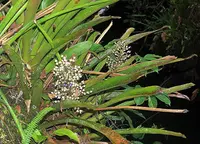
Aechmea angustifolia is an epiphytic bromeliad, often growing on trees rather than in soil. It forms a narrow-leaved rosette that can hold water in its central tank. The foliage is typically green to gray-green, with a stiff, architectural look suited to modern interiors.
This species is native to tropical regions of South America, where it grows in warm, humid forests with filtered light. It is considered moderately easy to grow, as it tolerates indoor conditions if given bright, indirect light and good air circulation.
Understanding how to care for Aechmea angustifolia mainly involves managing its tank water, avoiding soggy roots, and providing a loose, fast-draining bromeliad or orchid-type mix.

Care Difficulty
Moderate Care

Light Preference
Bright Indirect Light

Water Requirements
Moderate Water

Temperature Preference
Tropical / Frost Sensitive

Hardiness Zone
10–12

Soil Texture
Sandy, Loamy, Organic-rich

Soil pH
Acidic (5.5–6.5), Slightly acidic (6.5–7.0)

Soil Drainage
Well-drained

Fertilization
Light (every 4–6 weeks)
Scan your plant to receive care tips personalized for your specific plant
Available on iOS and Android
This bromeliad prefers bright, filtered light that mimics dappled forest conditions.
Watering should keep the central cup hydrated while allowing the root zone to drain well.
This species thrives in warm, frost-free conditions typical of tropical and subtropical climates.
This species prefers moderate to high humidity but usually adapts to typical indoor levels.
Use a loose, fast-draining, organic-rich mix that mimics an epiphytic bromeliad’s airy root environment.
This species is well suited to container culture, especially where climate or space is limited.
This bromeliad is light-feeding, but modest nutrition supports steady growth and flowering.
Pruning focuses on hygiene and managing offsets rather than shaping this bromeliad.
Container-grown plants need only infrequent repotting because the root system is shallow and mainly for anchoring.
Propagation is most reliable from pups produced around the base of the mother rosette.
This species is frost-sensitive and needs protection in regions with cold winters.

Plant Health Check
Not sure what's wrong with your plant? Check your plant's health inside the app.
This species forms a narrow, tubular rosette that holds water in the leaf bases, creating a small reservoir used to capture rain, debris, and dissolved nutrients in its native habitats of northern South America.
Aechmea angustifolia is commonly found as an epiphyte on trees along river margins and periodically flooded forests in countries like Venezuela and Brazil, relying on humid air and intercepted debris rather than soil for most of its nutrients.
Its characteristically long, narrow leaves increase drainage and reduce waterlogging in the central tank, an adaptation that helps limit rot and supports stable water levels where small aquatic invertebrates can live.
Blooming usually occurs once the rosette is mature, which can take several years. Insufficient light, lack of a slight night temperature drop, or heavy feeding with high-nitrogen fertilizer can delay flowering. Flowers appear only once per rosette.
Keep your plants happy and healthy with plant identification, disease detection, and easy care guidance.

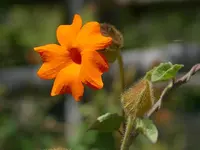
orange clock vine
Thunbergia gregorii
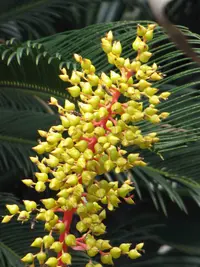
Aechmea ramosa
Aechmea ramosa
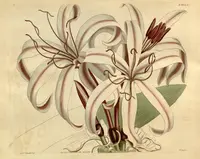
Giant Spider Lily
Crinum × amabile
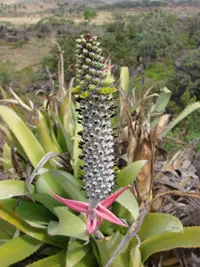
Aechmea bromeliifolia
Aechmea bromeliifolia
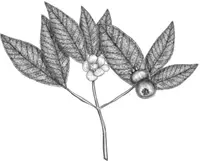
Campomanesia guazumifolia
Campomanesia guazumifolia
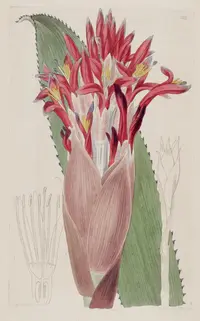
nakedstem livingvase
Aechmea nudicaulis
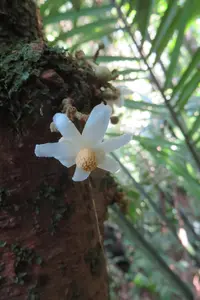
Carpotroche longifolia
Carpotroche longifolia
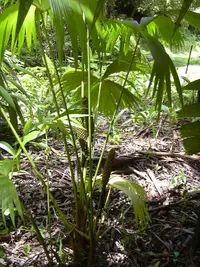
Panama hat plant
Carludovica palmata