


Use rainwater reservoir
Fill the central cup with collected rainwater or filtered water rather than hard tap water to reduce mineral buildup on the leaf bases and keep the rosette functioning well.

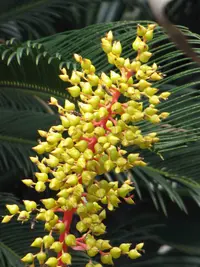
Aechmea ramosa is a tropical bromeliad native to the Atlantic Forest regions of Brazil. It usually grows as an epiphyte, attached to trees rather than soil. The plant forms a stiff rosette of arching, strap-shaped leaves that create a central water-holding cup. Its branched flower stalk carries colorful bracts and small blooms, followed by decorative berries. Growth is generally slow to moderate, and the plant stays compact, which suits indoor displays and small spaces. It is considered fairly easy to grow, as long as it receives bright, indirect light, moderate warmth, and good air movement, which helps explain how to care for Aechmea ramosa in home conditions.

Care Difficulty
Moderate Care

Light Preference
Bright Indirect Light

Water Requirements
Moderate Water

Temperature Preference
Tropical / Frost Sensitive

Hardiness Zone
11–12

Soil Texture
Sandy, Organic-rich

Soil pH
Acidic (5.5–6.5), Slightly acidic (6.5–7.0)

Soil Drainage
Well-drained

Fertilization
Light (every 4–6 weeks)
Scan your plant to receive care tips personalized for your specific plant
Available on iOS and Android
This bromeliad prefers bright, filtered light that mimics light under a high tree canopy.
Watering focuses on both the central cup and the root zone without leaving either waterlogged.
This species grows best in warm, frost-free conditions with only moderate swings between day and night.
This bromeliad prefers moderately humid air and reacts if conditions become very dry.
This species needs a very free-draining, airy mix that mimics epiphytic conditions rather than dense ground soil.
This species is well suited to container growing due to its compact root system and rosette form.
This bromeliad benefits from light, targeted feeding rather than heavy fertilization.
Pruning focuses on hygiene and directing energy rather than reshaping this bromeliad.
Container-grown plants only need infrequent repotting because roots prefer to stay somewhat confined.
New plants are usually produced by division of offsets rather than from seed.
This tropical bromeliad is not frost tolerant and needs protection in cool climates.

Plant Health Check
Not sure what's wrong with your plant? Check your plant's health inside the app.
This species grows naturally in the Brazilian Atlantic Forest, especially in the states of Espírito Santo and Rio de Janeiro, where it often occurs as an epiphyte on tree branches in warm, humid coastal habitats.
Its inflorescence has showy red or pink bracts that can persist for several months and gradually change in tone as the small yellowish flowers age and the fruit begins to form.
Like many bromeliads, the rosette that flowers will not bloom again and slowly declines after seed set, but it produces basal offsets, called pups, that maintain the clump and allow long-term growing Aechmea ramosa in cultivation.
This species usually needs to be mature, with a well-formed rosette and stable conditions, before flowering. If it remains bloomless, age, insufficient light, or lack of a short cooler, drier rest period are common reasons.
Keep your plants happy and healthy with plant identification, disease detection, and easy care guidance.

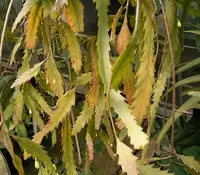
Snowdrop Cactus
Lepismium houlletianum
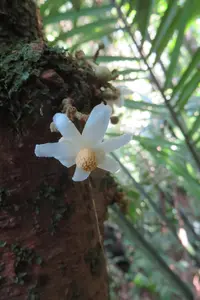
Carpotroche longifolia
Carpotroche longifolia
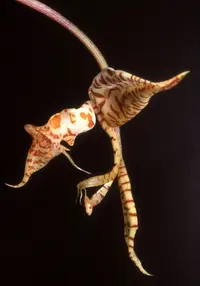
Gongora leucochila
Gongora leucochila
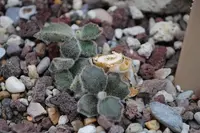
Felt Plant
Kalanchoe beharensis 'Fang'
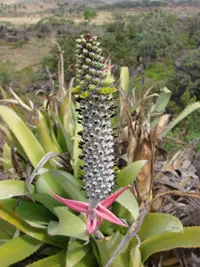
Aechmea bromeliifolia
Aechmea bromeliifolia

velvet leaf
Callicarpa pedunculata
Campomanesia phaea
Campomanesia phaea
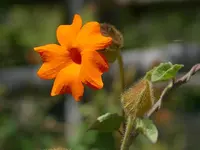
orange clock vine
Thunbergia gregorii