Canopy wind protection
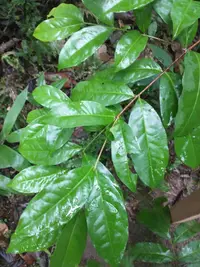
Install a simple windbreak or plant this species among taller shrubs or trees to shield its broad leaves from persistent strong winds that can cause tearing and water loss.

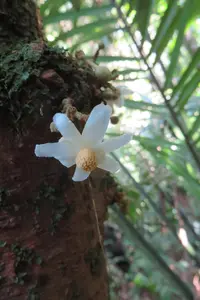
Carpotroche longifolia is an evergreen tree species from tropical South America, typically found in lowland rainforests. It develops a straight trunk with a rounded to slightly irregular crown and simple, elongated leaves. The tree produces small, pale flowers followed by fleshy fruits that are of local ecological interest, mainly for wildlife. In cultivation it is uncommon and better suited to warm, humid climates that mimic its native habitat. Gardeners who wish to care for Carpotroche longifolia should be prepared for a plant that prefers consistently moist, well-drained soil and sheltered, bright conditions without prolonged cold or drought stress.

Care Difficulty
Moderate Care

Light Preference
Partial Shade

Water Requirements
Moderate Water

Temperature Preference
Warm Climate

Hardiness Zone
Unknown

Soil Texture
Loamy, Silty, Organic-rich

Soil pH
Acidic (5.5–6.5)

Soil Drainage
Moist but well-drained

Fertilization
Minimal (feed rarely)
Scan your plant to receive care tips personalized for your specific plant
Available on iOS and Android
This species prefers bright, filtered light that mimics an understory tropical forest habitat.
This plant prefers consistently moist but not waterlogged soil, similar to a well-drained forest floor.
This tropical tree performs best in warm, stable conditions with no exposure to frost.
This species prefers consistently humid air and reacts poorly to extended dryness.
This species grows best in loose, moist, well‑drained soil that mimics a forest floor.
This tree is generally challenging in containers but can be managed in large pots for specialized collections.
In cultivation, Carpotroche longifolia responds to modest, balanced nutrition rather than heavy feeding.
Pruning needs are light and mainly structural, focusing on safety and plant health.
This species is usually grown in the ground; attention focuses on careful transplanting of young trees.
Propagation of this tree is usually done from seed and may be slow, requiring patience and stable conditions.
This tropical tree is not frost hardy and needs protection in regions with cool or cold winters.

Plant Health Check
Not sure what's wrong with your plant? Check your plant's health inside the app.
This tree naturally occurs in lowland Amazon and Guiana forests, often as part of the mid‑story to lower canopy layer in humid, shaded habitats on well‑drained soils.
Its seeds are surrounded by a fleshy, oily aril that attracts animals; this food reward helps promote seed dispersal when mammals or birds feed on the aril and move the seeds away from the parent tree.
It belongs to the family Achariaceae, a group of mostly tropical trees and shrubs that were historically placed in Flacourtiaceae before molecular studies reorganized these lineages based on DNA evidence.
This species is generally evergreen in its native humid tropical climate, holding foliage year-round. In marginal or cooler areas, it may thin leaves seasonally or under stress but does not undergo a true, synchronized leaf-drop period.
Keep your plants happy and healthy with plant identification, disease detection, and easy care guidance.