Stake Heavy Scapes
Install sturdy stakes or a low plant ring around the clump before tall flower stalks elongate so the heavy umbels are supported and less likely to snap in wind or heavy rain.

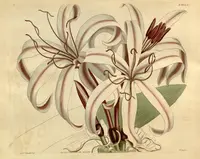
Giant spider lily, Crinum × amabile, is a large perennial bulb in the amaryllis family, grown mainly for its striking tropical look. It forms a bold clump of long, arching leaves and tall stalks topped with clusters of narrow, ribbon-like flowers that flare outward like a spider. In warm climates it is usually grown outdoors, but in cooler regions it can be kept in large containers and moved under shelter. This hybrid originates from tropical Asia, so it prefers warmth, bright light, and evenly moist but well-drained soil. Its size and need for space make it better suited to yards, patios, or spacious indoor areas for those who want to learn how to care for Giant Spider Lily.

Care Difficulty
Moderate Care

Light Preference
Full Sun

Water Requirements
Regular Water

Temperature Preference
Tropical / Frost Sensitive

Hardiness Zone
10–11

Soil Texture
Sandy, Loamy, Organic-rich

Soil pH
Acidic (5.5–6.5), Slightly acidic (6.5–7.0)

Soil Drainage
Moist but well-drained

Fertilization
Light (every 4–6 weeks)
Scan your plant to receive care tips personalized for your specific plant
Available on iOS and Android
This bulb prefers strong light to flower well and build sturdy foliage.
This plant prefers consistently moist but well-drained soil, especially during active growth.
This species thrives in warm climates and reacts poorly to lasting cold or frost.
This species handles a wide humidity range but grows best with moderately moist air.
Crinum × amabile prefers deep, moisture-retentive but free-draining soil that supports its large bulb and roots.
This species can be grown in large containers if the pot is deep and very stable.
Crinum × amabile benefits from steady, moderate feeding during the warm growing season.
Crinum × amabile needs minimal pruning, mainly to keep the clump healthy and tidy.
Large, long-lived bulbs of Crinum × amabile are usually transplanted infrequently due to size and sensitivity.
Crinum × amabile is most reliably propagated by division of bulb offsets rather than from seed.
Crinum × amabile prefers frost-free conditions and benefits from some protection in cooler climates.

Plant Health Check
Not sure what's wrong with your plant? Check your plant's health inside the app.
This plant is a horticultural hybrid, believed to originate from crosses between large tropical Crinum species in Southeast Asia, rather than a naturally occurring wild species with a defined native range.
It develops very large, fleshy bulbs that can weigh several kilograms and store substantial water and nutrients, allowing the plant to withstand short dry periods and quickly resprout after stress.
The inflorescences carry clusters of long, narrow, twisted tepals that give a spider-like appearance, and the flowers often release a noticeable fragrance in warm, still air, especially during the evening.

In some tropical and subtropical public plantings, long-lived clumps of this hybrid have been observed thriving and flowering for several decades from the same original bulbs, illustrating how durable well-established plants can be under suitable conditions.
Lack of flowering usually comes from insufficient light, a bulb planted too deep, or nutrient imbalance. Ensure strong sun, keep the bulb neck at or just above soil level, and avoid heavy high‑nitrogen fertilization.
Keep your plants happy and healthy with plant identification, disease detection, and easy care guidance.