chaparral yucca Care (Hesperoyucca whipplei)

Also known as: Our Lord's Candle, Spanish bayonet, Quixote yucca, foothill yucca, common yucca
chaparral yucca

About chaparral yucca

Chaparral yucca (Hesperoyucca whipplei) is an evergreen, stemless succulent native to dry slopes and rocky hillsides of California and northern Baja California. It forms a tight rosette of stiff, sword-like leaves with sharp tips and often fibrous leaf edges.

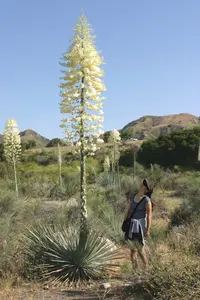
Mature plants send up a tall flowering stalk with many creamy white, bell-shaped flowers, then usually die after setting seed. This species is highly drought tolerant and adapted to poor, sandy or rocky soils, which can make it long-lived but slow-growing in gardens.

Understanding how to care for chaparral yucca starts with providing strong sun, excellent drainage, and minimal watering once established.

Main Plant Requirements

Care Difficulty

Moderate Care

Light Preference

Full Sun

Water Requirements

Low Water

Temperature Preference

Cold Hardy

Hardiness Zone

7–10

Soil Texture

Sandy, Loamy, Rocky

Soil pH

Slightly acidic (6.5–7.0), Slightly alkaline (7.0–7.5)

Soil Drainage

Well-drained

Fertilization

Minimal (feed rarely)

Get Personalized Care Plan

Scan your plant to receive care tips personalized for your specific plant

Available on iOS and Android

How to Care for the chaparral yucca

This desert species needs intense light to thrive outdoors in most regions.

  • Provide full sun for 6–10 hours daily; open, unshaded exposure suits chaparral yucca best, especially in arid and semi-arid climates.
  • Plant on a south- or west-facing slope where it receives strong midday and afternoon sun; light, dappled shade is tolerated only in very hot inland areas.
  • Too little sun causes weak, leaning growth and poor flowering, while harsh reflected heat from walls or pavement can scorch leaves in prolonged heatwaves.

This species is highly drought-tolerant and prefers very dry conditions between waterings.

  • In the ground, allow natural rainfall to provide most moisture; only water during extended drought when leaves curl or fold and soil is completely dry well beyond the top 5 cm.
  • Use sharply drained, gritty soil so water runs through quickly; avoid low spots where water pools, as Hesperoyucca whipplei is prone to root and crown rot.
  • In cooler months reduce or stop supplemental watering entirely, since cold, wet soil greatly increases the risk of fungal problems and tissue collapse.

This plant is adapted to wide temperature swings typical of arid and semi-arid climates.

  • Optimal growth occurs around 65–85°F (18–29°C), but established plants handle brief heat up to 100–110°F (38–43°C) if soil is very well drained.
  • Mature plants often tolerate short dips to about 15–20°F (-9 to -6°C) when planted in dry soil, though young rosettes are less cold-hardy.
  • In regions with repeated hard frosts or freezes, choose a raised, rocky site that sheds winter moisture and avoids cold air pockets near the base.

This species is highly drought-adapted and indoor humidity rarely affects its health.

This desert species needs very fast-draining, mineral-based soil to prevent root rot.

  • Use a sandy or gravelly mix, such as 60–70% coarse sand or grit combined with 30–40% cactus potting mix.
  • Aim for slightly acidic to neutral pH around 6.0–7.0, avoiding strongly acidic or alkaline extremes.
  • Incorporate pumice or perlite to improve aeration and prevent compaction, especially in containers or heavy native soils.
  • Avoid peat-heavy, moisture-retentive, or clayey soils, which hold water and suffocate Hesperoyucca whipplei roots.

This species can be grown in containers, mainly for young plants or in climates with cold, wet winters.

  • Choose a wide, heavy pot that resists tipping, since mature rosettes become tall and top-heavy in wind-exposed sites.
  • Use a gritty mix and a pot with large, unobstructed drainage holes so water exits within seconds after watering.
  • Select unglazed clay if extra evaporation is needed in cool or wet regions, as it allows faster moisture loss from the root zone.

Hesperoyucca whipplei is adapted to lean, rocky soils and usually needs no fertilizer in gardens.

Pruning Hesperoyucca whipplei is minimal and focuses on safety and cleanliness rather than shaping.

  • Cut spent flower stalks at the base after blooming, using clean, sharp loppers or a pruning saw.
  • Remove dead, dried, or pest-damaged leaves close to the trunk, avoiding injury to living tissue.
  • Tidy only obviously hazardous or messy foliage; heavy pruning does not improve flowering or vigor.
  • Wear thick gloves and eye protection because the stiff, sharp leaves can cause injury during pruning.

Chaparral yucca is usually grown in the ground; transplanting is rare and stressful for mature plants.

  • Transplant only young plants with manageable, non-woody roots; older specimens often fail to re-establish.
  • Choose late spring in mild climates so new roots grow before high summer heat or winter cold.
  • Lift with as much root ball as possible, keep roots shaded and slightly moist, and replant promptly in fast-draining soil.
  • Water lightly after planting to settle soil around roots, then let the soil dry well between modest, deep waterings.

Hesperoyucca whipplei is usually propagated from seed, and vegetative methods are limited for this monocarpic species.

  • Collect seed from fully dried flower stalks and clean out chaff before sowing.
  • Sow seeds in late winter–spring in a gritty, well-draining mix kept slightly moist, 65–75°F, with bright light.
  • Lightly cover seeds, avoid waterlogging, and provide good air movement to limit fungal problems during germination.
  • Transplant seedlings only once roots are well developed, disturbing the root system as little as possible.

Established Hesperoyucca whipplei is quite cold hardy and usually needs little specific winter care in suitable climates.

  • In regions colder than about 10–15°F, grow in raised beds or containers that can be sited in a more sheltered spot.
  • Apply a light, dry gravel or coarse sand mulch around the crown to improve drainage over winter.
  • Keep container plants on pot feet and avoid saucers so excess winter moisture can drain freely.

Care Tips

Establish Dry Basin

Shape a shallow, wide basin around the plant with a raised outer rim to catch rare rains, then let it fully dry between events so the deep root system benefits from natural infiltration without sitting in standing water.

Protect Flower Stalk

When the tall flower stalk starts forming, stake it loosely on the windward side using soft ties to prevent wind snap, especially in exposed or slope plantings.

Manage Old Rosettes

After a rosette has flowered and died back, cut it off cleanly at the base with a sharp saw or lopper and leave any offset rosettes intact to maintain the clump and reduce rot risk.

Safe Access Planning

When planting near paths or driveways, set the plant well back from traffic lines and keep a gravel or mulch buffer zone so the sharp leaves do not contact people or pets during routine access.

Slope Erosion Use

On dry slopes, position plants in staggered rows along the contour so the root systems help hold soil while the stiff leaves slow runoff, which supports long-term stability when growing chaparral yucca.

Common Pests and Diseases

yucca weevil

This pest bores into the stem and crown, causing internal tunneling, wilting, and eventual plant collapse. Symptoms include yellowing leaves, loose crowns, and foul-smelling rot in the central rosette.

Solution

Remove and destroy heavily infested plants, as internal damage is usually extensive and not reversible. For early or light infestations, cut out and discard affected tissue, keep the plant in very dry conditions, and use a targeted systemic insecticide labeled for ornamental yuccas to protect nearby plants.

scale insects

These insects attach to leaves and stems, appearing as small, round or oval bumps and causing yellowing, reduced vigor, and sticky honeydew on the foliage. Sooty mold may develop on the honeydew, darkening the leaves.

Solution

Physically remove scales by rubbing with a soft brush or cloth dipped in soapy water, then rinse with clean water. For persistent infestations outdoors, use horticultural oil or insecticidal soap applied thoroughly to leaf surfaces, repeating as needed according to label directions.

yucca leaf spot

This disease causes small water-soaked spots on leaves that enlarge into brown or tan lesions, often with dark margins. Symptoms include cosmetic damage and, in humid or crowded conditions, premature leaf death on lower leaves.

Solution

Remove and discard affected leaves to reduce inoculum, and improve airflow by spacing plants and avoiding overhead watering. If conditions remain wet and spots spread, apply a copper-based fungicide labeled for ornamental foliage plants, following label directions and allowing foliage to dry well between waterings.

crown bacterial soft rot

This disease starts in the leaf bases and crown, leading to soft, water-soaked tissue with a strong odor and rapid collapse of the central rosette. Symptoms include wilting, yellowing, and easy separation of leaves from the base.

Solution

Cut out and dispose of all affected soft tissue, sterilizing tools between cuts, and allow any firm remaining tissue to dry in very well-drained, dry conditions. Avoid overhead watering and wounding at the crown; severely affected plants are best removed and discarded to prevent spread to nearby xeric plantings.

agave snout weevil

This pest, which also attacks yuccas, lays eggs at the base of the plant; larvae tunnel into the crown and roots, causing sudden wilting and collapse. This pest is more common in warm, dry landscapes with large agave or yucca plantings.

Solution

Remove and destroy infested plants immediately, including surrounding soil where larvae may be present. In high-risk areas, apply a systemic insecticide in spring around the base of uninfested plants according to label directions, and maintain very dry, well-drained conditions to discourage prolonged soil moisture around the crown.

Interesting Facts

Monocarpic life strategy

This species flowers once at the end of its life, sending up a tall branched stalk packed with hundreds of flowers, then the rosette dies while younger offsets or seedlings continue the population.

Obligate moth pollination

It relies on yucca moths in the genus Tegeticula for pollination; the moth deliberately collects pollen and packs it onto the stigma while laying its eggs in the flowers, and the larvae later feed on some of the developing seeds.

Steep-slope specialist

In its native range of southern California and northern Baja California, it commonly grows on very steep, rocky slopes and chaparral hillsides where many competitors cannot survive, benefiting from fast drainage and reduced herbivore pressure.

Botan icon

Did you know?

Native peoples in California used this plant as a multi-purpose resource: leaf fibers were processed into cordage and nets, the strong flowering stalks served as building material and tools, and the young flower stalks and buds were eaten after careful preparation.

FAQs about chaparral yucca

This species is mostly monocarpic, meaning each rosette flowers once, then slowly dies over many months. Energy shifts into seed production while the central rosette declines, but surrounding offsets or seedlings often continue the colony.

Grow Healthy Plants with Botan Care

Keep your plants happy and healthy with plant identification, disease detection, and easy care guidance.

Botan plant care app — identify plants on mobile

Explore More Plants