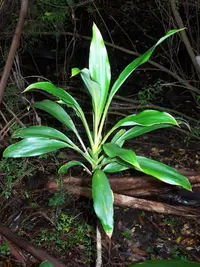
Tillandsia fuchsii Care

Tillandsia fuchsii

About Tillandsia fuchsii

Tillandsia fuchsii is a small air plant from the bromeliad family that naturally grows on rocks and trees in dry, highland regions of Mexico and Central America. It absorbs water and nutrients through its leaves, not roots, so it does not grow in regular potting soil.

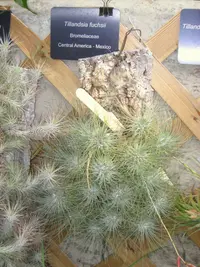
Plants form delicate, needle-like rosettes with fine, silvery leaves that give a soft, airy look. Growth is slow, and mature clumps stay compact, which suits small spaces and decorative displays.

This species prefers bright, indirect light, regular light misting, and good air movement. Understanding how to care for Tillandsia fuchsii mainly involves balancing moisture with thorough drying between waterings.


Main Plant Requirements

Care Difficulty

Moderate Care

Light Preference

Bright Indirect Light

Water Requirements

Moderate Water

Temperature Preference

Tropical / Frost Sensitive

Hardiness Zone

10–12

Soil Texture

Sandy, Rocky, Organic-rich

Soil pH

Acidic (5.5–6.5)

Soil Drainage

Well-drained

Fertilization

Light (every 4–6 weeks)

Get Personalized Care Plan

Scan your plant to receive care tips personalized for your specific plant

Available on iOS and Android

How to Care for the Tillandsia fuchsii

This small air plant prefers bright, indirect light that mimics high, airy exposure in nature.

  • Provide 6–8 hours of bright, filtered light daily, such as near an east or bright north window or under a sheer curtain outdoors.
  • Allow gentle early morning sun but shield from strong midday and afternoon sun, which can scorch the fine leaves and cause brown tips.
  • In winter, move Tillandsia fuchsii closer to the light source or use a full-spectrum grow light to compensate for shorter, weaker days.

Watering focuses on brief soaking and fast drying rather than constant moisture.

  • Soak the plant in room-temperature water for 10–20 minutes, then shake off excess so no water pools at the base or between leaves.
  • Allow the plant to dry completely within 2–3 hours; leaves staying wet longer or turning limp and brown at the base indicate overwatering or poor air movement.
  • Increase soaking to 2–3 times weekly in warm, dry seasons and reduce to about weekly in cooler, more humid periods, watching for slight leaf curl as a sign it needs water.

This species prefers warm, frost-free conditions with good air circulation.

  • Aim for 65–80°F (18–27°C) for steady growth, avoiding rapid swings between hot and cold air.
  • Protect the plant from temperatures below 45°F (7°C); brief dips may be tolerated, but frost will damage the leaves and can kill the plant.
  • In hot weather above 90°F (32°C), increase air movement and shade, and mist lightly to cool the plant without leaving it wet for many hours.

This air plant prefers moderate to high humidity but adapts to typical indoor levels if watering is consistent.

  • Target 50–70% humidity, with increased misting or rinsing during hot, very dry periods.
  • Tolerates drier air if watered more often, but leaf tips may brown and curl when humidity stays low.
  • Increase humidity by grouping air plants, placing near (not on) a humidifier, or using a shallow pebble tray under the display.

This epiphytic species does not grow in regular potting soil and instead needs an airy, soilless support.

  • Mount on cork, driftwood, or inert rock, or place loosely in a slatted or mesh container so air circulates around all sides.
  • Avoid any dense, moisture-holding substrate such as peat mixes, garden soil, or compost, which suffocate the base and cause rot.
  • If decorative media are desired, use large orchid bark, lava rock, or coarse gravel, keeping the plant sitting above, not buried in, the pieces.
  • Ensure the base dries within a few hours after watering; persistent dampness at the crown or leaf bases is a warning sign to improve ventilation.

This species is suitable for containers as long as the setup keeps the plant elevated and well ventilated.

  • Use open containers such as mesh cups, wire baskets, or slatted holders so air flows freely around the leaves and base.
  • Stabilize the plant with fishing line or soft wire rather than packing media tightly around it, which restricts drying.
  • Choose heavier bases or containers for tall arrangements to prevent tipping, especially when the plant is mounted on decorative branches.

Light feeding supports Tillandsia fuchsii growth but is not strictly essential.

  • Use a balanced, low-copper air plant or 20-20-20 NPK fertilizer, formulated for epiphytes if possible.
  • Apply at 1/4–1/2 strength in the soak or mist water every 4–6 weeks during spring–summer.
  • Skip or reduce feeding to once in 8–10 weeks during winter or low-light periods.
  • Rinse with plain water between feedings to limit salt buildup on leaves.

Pruning needs are minimal and focus on cleanliness and maintaining a neat clump.

  • Best timing is after flowering or during active growth in spring–summer.
  • Gently remove dead, brown, or damaged leaves by pulling downward at the base.
  • Trim spent flower spikes close to the rosette to direct energy into new offsets.
  • Use small, clean scissors for cutting and avoid injuring healthy leaf bases.

This air plant is usually mounted rather than potted, so transplanting focuses on remounting rather than root work.

  • Remount when the clump outgrows its support, becomes unstable, or dries too slowly due to crowded growth.
  • Choose spring–early summer for remounting to match the main growth period and reduce stress.
  • Gently detach the plant, keeping the base and any small roots intact, and secure it loosely to new wood, cork, or stone.
  • After remounting, provide bright, indirect light, careful soaking, and strong air movement for 1–2 weeks.

Propagation is commonly done from offsets, called pups, once the parent has matured and often flowered.

  • Allow pups to reach about 1/3–1/2 the size of the parent before removal, usually after flowering.
  • Best season is spring–summer, when warmth and light support faster establishment.
  • Hold parent and pup at the base and gently twist apart, keeping each rosette intact.
  • Place separated plants in bright, indirect light with good air flow and resume normal soaking after a few days.

This air plant is frost-sensitive and needs protection in regions with freezing winters.

  • Keep temperatures above 40°F; extended exposure near or below 32°F can damage foliage.
  • Move outdoor or mounted plants indoors to a bright, cool room before frost is expected.
  • Ensure excellent air circulation indoors to prevent rot when light and evaporation are lower.
  • Allow the plant to dry fully between waterings and slightly reduce soaking frequency.

Care Tips

Optimize mounting surface

Attach plants to inert, fast-drying materials such as cork bark, hardwood, or plastic-coated wire mesh rather than dense wood that stays wet, which helps the base dry quickly and reduces rot risk when growing Tillandsia fuchsii.

Improve air circulation

Place plants where there is gentle, regular air movement from an oscillating fan or open window, as this speeds drying after misting and reduces fungal spots and bacterial issues around the base.

Rinse after handling

After handling or rearranging plants, lightly rinse them with clean water to remove skin oils, dust, and any debris that can block trichomes and slow gas exchange.

Use rainwater flushes

Once every 4–6 weeks, give plants a more thorough rinse or brief soak in rainwater or low-mineral water to flush built-up fertilizer salts that can burn leaf tips over time.

Rotate for even form

Turn mounted plants 90° every 1–2 weeks so light reaches all sides evenly, which encourages symmetrical rosette development and prevents leaning or elongated growth on one side.

Common Pests and Diseases

Mealybugs

This pest feeds in protected spots at the base of leaves and in the rosette, sucking plant sap and causing slow decline. Symptoms include white cottony clusters, deformed or stunted leaves, and sticky honeydew deposits.

Solution

Isolate the plant, then rinse thoroughly under a strong but gentle stream of lukewarm water, focusing on crevices near the base. After drying, dab remaining insects with cotton swabs dipped in isopropyl alcohol (70%) and improve air movement and light to support recovery and reduce reinfestation risk when caring for Tillandsia fuchsii.

Scale insects

These insects attach tightly to the leaves and sheaths, appearing as small tan or brown bumps that do not brush off easily. Symptoms include yellowing, thinning of leaves, and reduced vigor over time.

Solution

Manually remove visible scale with a soft brush or cotton swab dipped in isopropyl alcohol (70%), then rinse the plant thoroughly and let it dry with good airflow. Repeat inspections weekly and remove any new insects to break the life cycle; avoid soaking the plant for long periods while treating.

Spider mites

This pest is favored by very dry, stagnant indoor air and occurs mostly on fine, thin leaves. Symptoms include fine speckling, dull or silvery patches, and very fine webbing between leaves or at the leaf bases.

Solution

Rinse the plant under running water, directing the spray from multiple angles to dislodge mites, then let it dry quickly in bright, indirect light with good ventilation. Increase ambient humidity slightly, maintain regular misting followed by fast drying, and inspect regularly to catch any return early.

Fungal leaf spot

This disease develops when moisture remains trapped on the leaves and in the dense leaf bases for long periods with poor airflow. Symptoms include small dark or translucent spots that may enlarge and form irregular patches, sometimes with a yellow or pale halo.

Solution

Remove severely spotted leaves if practical, then adjust watering so the plant dries fully within a few hours and avoid soaking it during cool, dark periods. Increase air circulation, provide brighter indirect light, and if spread continues, use a mild copper- or sulfur-based fungicide labeled for epiphytic bromeliads, following the label and allowing rapid drying after treatment.

Bacterial soft rot

This disease occurs in a persistently wet central base or crown, often following mechanical damage or overwatering. Symptoms include a foul odor, soft brown mushy tissue at the base, and rapid collapse of inner leaves.

Solution

At the first signs, remove and discard all affected soft tissue and any badly damaged leaves, then allow the plant to dry completely in a warm, very airy spot. Adjust care by shortening soak duration, ensuring the plant dries within a few hours after watering, and tilting or hanging it so water does not sit in the crown; discard the plant if rot is extensive and spreading to nearby plants is a concern.

Interesting Facts

Filament-like leaf structure

This species develops very fine, hair-like leaves with dense trichomes (specialized scales) that dramatically increase surface area for absorbing water and dissolved nutrients directly from the air in its native Mexican habitats.

Miniature saxicolous habit

In the wild, this plant often grows saxicolously, anchored in tiny crevices on rocks rather than on tree branches, forming compact tufts that tolerate intense light, rapid drying, and significant temperature swings at higher elevations.

Distinctive bulbous base

Mature plants form a small, bulb-like base from which thin leaves radiate outward, an adaptation that helps stabilize the plant on exposed substrates and provides a protected zone for new offsets, or pups, to emerge.

Botan icon

Did you know?

The species is considered part of the Tillandsia ionantha complex by many botanists, and its fine, filamentous leaf form and compact growth make it a reference taxon when comparing micro-adaptations to arid, high-light environments within this closely related group.

FAQs about Tillandsia fuchsii

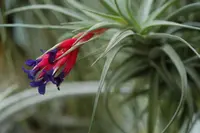
This species often needs to reach full maturity and experience a slight increase in light and a small drop in nighttime temperature to trigger flowering. Stable conditions, consistent hydration, and adequate airflow also support reliable bloom formation.

Grow Healthy Plants with Botan Care

Keep your plants happy and healthy with plant identification, disease detection, and easy care guidance.

Botan plant care app — identify plants on mobile

Explore More Plants