Tillandsia latifolia Care

Tillandsia latifolia

About Tillandsia latifolia

Tillandsia latifolia is an air plant species from the dry coastal regions of South America, especially Peru and Ecuador. It grows without traditional soil, anchoring to rocks, cliffs, or other surfaces.

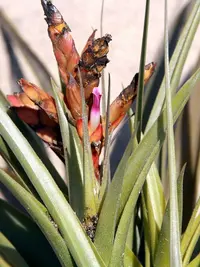
This species typically forms rosettes of narrow, often gray-green leaves covered in tiny scales that help capture water and nutrients from the air. Clumps may grow into dense mats over time.

It is generally considered a forgiving air plant, as it tolerates bright light, strong air movement, and relatively dry conditions. Because it relies on good light, regular air circulation, and periodic watering, understanding how to care for Tillandsia latifolia makes it easier to keep the plant healthy indoors.

Main Plant Requirements

Care Difficulty

Moderate Care

Light Preference

Partial Sun

Water Requirements

Low Water

Temperature Preference

Tropical / Frost Sensitive

Hardiness Zone

10–12

Soil Texture

Sandy, Rocky, Organic-rich

Soil pH

Acidic (5.5–6.5)

Soil Drainage

Well-drained

Fertilization

Minimal (feed rarely)

Get Personalized Care Plan

Scan your plant to receive care tips personalized for your specific plant

Available on iOS and Android

How to Care for the Tillandsia latifolia

This species thrives with bright, indirect light and some gentle direct sun each day.

  • Provide 4–6 hours of bright, filtered light daily, with soft morning sun and protection from harsh midday rays to prevent leaf scorch.
  • Outdoors, give dappled shade under open tree canopies or 30–50% shade cloth; indoors, place near an east or bright north-facing window.
  • If leaves turn pale or brown-tipped, light is too intense; if growth is weak and elongated, increase light exposure gradually over 7–10 days.

This air plant absorbs moisture through its leaves and depends on thorough, intermittent wetting rather than constant dampness.

  • Soak or heavily mist leaves until dripping, then allow them to dry fully within 3–4 hours; frequency is usually 2–3 times per week in warm, dry air.
  • In cooler or more humid seasons, reduce to 1–2 waterings per week, always ensuring no water remains trapped in leaf bases overnight to avoid rot.
  • Signs of underwatering include curling, brittle leaves, while overwatering or poor drying causes soft, darkened bases and a musty smell.

This species prefers warm, stable conditions without frost or extreme heat swings.

  • Aim for 65–80°F (18–27°C) for active growth, which matches typical warm-season outdoor or indoor conditions in many regions.
  • Short exposures down to about 40°F (4°C) may be tolerated if dry and sheltered, but repeated cold or any frost can permanently damage tissues.
  • In hot periods above 90°F (32°C), increase air movement and humidity through more frequent misting, while keeping the plant shaded from intense midday sun.

This air plant prefers moderately humid air but tolerates typical indoor conditions if watered correctly.

  • Aim for 50–70% humidity, with slightly higher levels during hot, dry weather.
  • In very dry air, leaf tips may brown and curl, and the plant may feel crisp instead of flexible.
  • Increase humidity with regular misting, clustering air plants together, or placing near (not on) a pebble tray of water.

This species is epiphytic and does not need conventional soil, but it can sit on a loose, airy substrate for stability and airflow.

  • Use a very open, fast-drying mix such as large orchid bark with a little coarse perlite or pumice.
  • Aim for a structure that holds the plant in place while allowing air to flow freely around the base.
  • Keep pH roughly neutral to slightly acidic (pH 6.0–7.0) if using any organic substrate beneath it.
  • Avoid dense, fine, or water-retentive media such as regular potting mix, peat-heavy blends, or compacted sand.

This species is suitable for container display when mounted loosely rather than planted in potting mix.

  • Choose shallow, heavy containers or dishes that keep the plant stable against wind or accidental knocks.
  • Elevate the base on stones, shells, or wire stands so air circulates fully around the leaves and stem junctions.
  • Avoid deep, narrow pots that trap moisture around the base and instead use open-sided vessels, slatted baskets, or mesh holders.

This air plant benefits from light feeding but is sensitive to excess nutrients.

  • Use a low-nitrogen, balanced NPK epiphyte or air-plant fertilizer, avoiding urea-based products that can burn tissues.
  • Apply a very dilute solution at 1/4 strength every 3–4 weeks during spring–summer misting or soaking routines.
  • Skip soil amendments like compost or slow-release granules, since Tillandsia latifolia absorbs nutrients through its leaves.
  • Reduce feeding to once every 6–8 weeks, or stop entirely, in fall–winter when growth slows.

Pruning needs are minimal and mainly cosmetic for this air plant species.

  • Perform light grooming in late winter or early spring, before the main growth period starts.
  • Gently remove dead or browned leaves and spent flower spikes with clean scissors to maintain a tidy rosette.
  • Trim only fully dry, damaged, or desiccated tips, leaving healthy silver leaf tissue intact to support photosynthesis.
  • Thinning crowded, dead leaf bases improves air circulation and reduces the risk of rot in dense clumps.

As an epiphyte, this species is mounted or tucked into containers rather than truly potted in soil.

  • Transplant or remount when clumps outgrow their support, lean badly, or airflow becomes poor through the center.
  • Best timing is spring to early summer, when temperatures are mild and growth is active, which limits stress.
  • Typical intervals are every 2–4 years, shifting plants to slightly larger mounts, driftwood, or open baskets.
  • Handle gently by the base, keep roots and leaves dry after remounting for 24 hours, then resume normal soaking or misting.

This air plant is most often propagated by division of offsets after flowering.

  • Allow the mother plant of Tillandsia latifolia to finish blooming and produce pups around its base.
  • In spring or early summer, separate pups once they reach at least 1/3–1/2 the size of the parent plant.
  • Gently twist or cut pups away with a sterile blade, keeping the basal area intact to avoid damage.
  • Place divisions in bright, indirect light with good air movement and follow normal watering until firmly established.

This tropical air plant is frost-sensitive and needs protection in cold climates.

  • Move outdoor or mounted plants indoors before temperatures drop near 40°F, keeping them in bright, filtered light.
  • Avoid exposure to frost or freezing wind, which damages leaf tissues and can kill the plant.
  • Ensure winter locations have good air circulation and avoid placing plants against cold window glass.
  • Reduce watering in cool conditions, allowing plants to dry fully between soakings to lower rot risk.

Care Tips

Optimize mounting surfaces

Attach plants to rough, inert materials like cork bark, hardwood, or lava rock rather than soft wood so roots can anchor securely without staying wet against a rotting surface.

Use directional airflow

Position a small fan on a low setting several feet away to keep air gently moving across the leaves, which helps water dry within 2–4 hours after soaking and reduces rot risk.

Seasonal light adjustment

Shift plants slightly farther from south- or west-facing windows in summer and closer in winter to maintain bright light while preventing leaf scorching or weak, stretched growth.

Support clump formation

Avoid dividing offsets too early and instead allow several pups to develop on the mother plant, creating a stable clump that dries more evenly and is less prone to mechanical damage.

Bloom and seed management

After flowering, remove spent blooms before seed capsules fully mature if you want the plant to focus energy on pup growth, or leave a few capsules to collect seed only if you can provide fine, well-ventilated mesh or paper envelopes underneath to catch them.

Common Pests and Diseases

Scale insects

These insects attach tightly to the leaf bases and sheaths, sucking sap and causing yellowing, slow growth, and sticky residue. Symptoms include rough, bump-like patches that are hard to remove with simple rinsing.

Solution

Isolate the plant, then carefully scrub affected areas with a cotton swab or soft brush dipped in isopropyl alcohol, followed by a thorough rinse and complete drying. Improve air movement, avoid crowding clumps, and repeat spot treatments weekly until no new insects appear, which is key for long-term Tillandsia latifolia care instructions.

Mealybugs

This pest hides in the tight leaf axils and around the base, leaving white, cottony masses and sticky honeydew. Symptoms include distorted new growth and gradual decline of the clump if left untreated.

Solution

Physically remove visible colonies with a cotton swab dipped in isopropyl alcohol, then rinse the plant under a firm but gentle stream of water and let it dry fully. Maintain strong air circulation, keep plants free of old debris where insects hide, and repeat inspections and spot treatments every 5–7 days until no further signs remain.

Fungal leaf spot

This disease appears as small, sunken, brown or black spots on the leaves, often following prolonged wetting of the foliage or poor air circulation. Spots may coalesce and cause localized tissue dieback, especially in dense clumps.

Solution

Trim out heavily spotted leaves with sterile scissors and discard them, then adjust watering so the plant dries quickly after soaking or misting. Provide stronger air movement, avoid water sitting in the leaf bases for long periods, and, if spread continues, use a low-toxicity copper or sulfur-based fungicide according to label directions, allowing the plant to dry fully after each treatment.

Bacterial soft rot

This disease causes localized soft, water-soaked, foul-smelling areas, usually starting in the densely packed leaf bases where water lingers. Symptoms include rapid collapse of affected sections and a slimy texture.

Solution

Immediately remove and discard any mushy or foul-smelling parts, cutting back into firm, healthy tissue with sterilized tools, and dispose of severely affected plants. Reduce soaking frequency, ensure the plant dries within a few hours after watering, increase air movement, and avoid allowing water to stagnate in the central leaf bases or at the mounting point.

Interesting Facts

Fog-harvesting leaves

The stiff, grey-green leaves of this species are densely covered in tiny scale-like trichomes that efficiently capture moisture from coastal fog, an adaptation especially strong in populations from the Peruvian and Ecuadorian lomas (fog-desert) ecosystems.

Sand-dwelling form

Unlike many air plants that grow mainly on trees, some T. latifolia populations occur as terrestrial or saxicolous plants, forming large clumps rooted in sand dunes or rocky coastal slopes rather than relying solely on tree bark.

Highly variable growth forms

This species shows marked variation in size, leaf thickness, and inflorescence shape across its range, leading botanists to describe several forms and varieties that reflect adaptation to different light, humidity, and substrate conditions along the Pacific coast of South America.

Botan icon

Did you know?

Certain coastal populations of Tillandsia latifolia form extensive, almost continuous mats that can stabilize sandy soils and contribute to dune formation and maintenance along parts of the Peruvian and Ecuadorian coastline.

FAQs about Tillandsia latifolia

This species usually flowers once when mature, then produces pups and the mother slowly declines. Lack of blooming often relates to insufficient light intensity, inadequate air movement, or inconsistent nutrition rather than age alone.

Grow Healthy Plants with Botan Care

Keep your plants happy and healthy with plant identification, disease detection, and easy care guidance.

Botan plant care app — identify plants on mobile

Explore More Plants