Tillandsia albida Care

Tillandsia albida

About Tillandsia albida

Tillandsia albida is a small epiphytic air plant from arid regions of Mexico, where it grows on rocks and trees rather than in soil. It belongs to the bromeliad family and absorbs water and nutrients mainly through its leaves.

This species has narrow, arching leaves covered in fine silver trichomes, giving it a pale, frosted look and helping it tolerate bright light and dry air. It usually forms loose clumps and stays compact, which suits indoor displays.

Because it does not need soil and is adapted to drier conditions, many growers find it relatively straightforward to care for Tillandsia albida. It responds best to bright, indirect light and regular but moderate moisture.

Main Plant Requirements

Care Difficulty

Moderate Care

Light Preference

Partial Sun

Water Requirements

Low Water

Temperature Preference

Tropical / Frost Sensitive

Hardiness Zone

10–12

Soil Texture

Rocky, Sandy

Soil pH

Slightly acidic (6.5–7.0)

Soil Drainage

Well-drained

Fertilization

Minimal (feed rarely)

Get Personalized Care Plan

Scan your plant to receive care tips personalized for your specific plant

Available on iOS and Android

How to Care for the Tillandsia albida

This air plant prefers bright, indirect light with gentle direct sun rather than harsh exposure.

  • Provide 4–6 hours of bright, indirect light daily; early morning sun and bright shade the rest of the day work well for Tillandsia albida.
  • Outdoors, place where it receives dappled light or filtered sun; indoors, use an east or bright north window, or 20–30 cm from a strong grow light.
  • Avoid strong midday or late afternoon sun, which can scorch leaves, and move closer to the light source in winter when natural light is weaker.

This species absorbs water through its leaves and needs thorough wetting followed by complete drying.

  • Soak or drench the plant for 5–10 minutes, then shake off excess and let it dry within 3–4 hours; repeat when leaves feel lighter and slightly curled rather than on a fixed schedule.
  • Water more often in warm, dry weather and less in cool or very humid conditions; silvery, closed leaves suggest thirst, while limp, browning bases indicate overwatering and rot risk.
  • Use rainwater or low-mineral water when possible and ensure strong air movement after watering, especially for clumps of Tillandsia albida.

This air plant prefers warm, frost-free conditions with moderate daily temperature swings.

  • Aim for 65–80°F (18–27°C) for steady growth, with slightly cooler nights; this range supports good metabolism and photosynthesis.
  • Protect from cold; it may survive brief dips to 40°F (4°C) if dry, but tissue damage and rot become likely below this, especially with moisture present.
  • In hot periods above 90°F (32°C), increase air movement, shade during peak sun, and water more frequently to prevent leaf desiccation and heat stress.

This species prefers semi-dry air but still benefits from moderate ambient humidity.

  • Aim for 40–60% humidity, as very dry air slows growth and weakens leaf tips.
  • It tolerates short periods of 30–35% humidity if misted lightly 2–3 times a week.
  • Crisping, curling, or browning of leaf tips signals low humidity; increase humidity by grouping plants, using a pebble tray, or briefly running a room humidifier nearby.

Tillandsia albida is an epiphytic air plant and should not be planted in conventional potting soil.

  • Mount the plant on cork, driftwood, or inert rock, or place it loosely in a slatted or mesh-style container so air can move freely around the base.
  • If using a decorative substrate, choose very coarse materials such as large orchid bark, lava rock, or chunky charcoal that will not hold water around the plant.
  • Keep any support material fast-draining and only lightly misted; avoid peat, compost, or dense mixes that stay wet and can cause rot.
  • Ensure air circulation around the plant is unobstructed, avoiding packed moss or soil that covers the base completely.

This species is suitable for loose, airy container displays rather than traditional potted culture.

  • Use shallow, wide containers or open terracotta bowls so air can circulate freely and excess water evaporates quickly.
  • Secure the plant with wire, fishing line, or a small wedge of bark instead of packing media tightly around the base.
  • Choose heavier or broad-based containers if the display is tall to prevent top-heavy arrangements from tipping over when moved or watered.

This epiphytic species needs only light feeding, as most nutrients come from water and air.

  • Use a balanced NPK air-plant or orchid fertilizer diluted to 1⁄4–1⁄2 strength in water.
  • Apply every 3–4 weeks during the warm growing season when plants are actively producing leaves or pups.
  • Skip or greatly reduce feeding in winter or when light and growth are low.
  • Mist or soak with fertilizer solution, then allow Tillandsia albida to dry fully within a few hours.

Pruning needs for Tillandsia albida are minimal and focus on hygiene rather than shaping.

  • Best time for light pruning is in spring or after flowering, when plants resume active growth.
  • Gently remove dead, brown, or rotting leaves by pulling downward, avoiding damage to healthy tissue.
  • Cut spent flower spikes close to the base with clean, sharp scissors once they dry out completely.
  • Removing dead material improves air flow, reduces rot risk, and keeps the clump looking tidy.

This air plant grows without soil, so transplanting focuses on remounting rather than traditional repotting.

  • Remount when the clump outgrows its support, becomes unstable, or when mounting material breaks down.
  • Best time is spring to early summer, allowing warm, bright conditions for recovery and new root growth.
  • Typical frequency is every 2–4 years, or sooner if moisture lingers and rot risk increases.
  • Gently detach the plant, trim dead roots, and secure onto new, dry wood or cork, then provide bright shade and good air flow for 1–2 weeks.

Propagation of this species is commonly done by division of offsets, called pups, rather than by seed.

  • Allow pups on Tillandsia albida to reach at least 1⁄3–1⁄2 the size of the parent before separating.
  • Best season for division is spring to early summer, when warmth and light support strong growth.
  • Hold the base firmly and twist pups away gently, keeping their basal tissue intact.
  • Place divisions in bright, filtered light with good air flow and maintain consistent misting to support establishment.

This air plant dislikes hard frost and needs simple winter care in cooler climates.

  • Move outdoor plants indoors before temperatures drop below 40°F, especially in USDA zones colder than 9.
  • Provide bright, indirect light indoors, away from cold drafts, heater vents, and window condensation.
  • Reduce watering in winter; mist lightly and allow plants to dry quickly to prevent cold-related rot.
  • In mild climates, keep Tillandsia albida under shelter to avoid freezing rain and prolonged wet cold.

Care Tips

Mounting strategy

Attach plants to open, moisture-safe materials such as cork, hardwood, or wire mesh instead of dense wood so the base dries quickly and the plant receives good air movement around all sides.

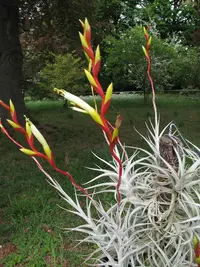
Position for pup growth

When fixing the plant, orient the base slightly downward so excess water drains away and leave space around the base where pups can form and expand without being crushed against the mount.

Soak scheduling

In very dry indoor air, replace one misting per week with a 15–20 minute room-temperature soak, then shake the plant gently and dry it upside down to prevent water from collecting in the leaf bases.

Dust and salt removal

Every 4–6 weeks, rinse the foliage under a gentle stream of lukewarm water to remove dust and dissolved fertilizer salts that can clog trichomes and reduce gas exchange.

Seasonal air adjustment

In winter heating season, move plants slightly farther from hot air vents and closer to bright windows with occasional fresh air, as this reduces desiccation stress and supports more stable conditions when growing Tillandsia albida.

Common Pests and Diseases

Mealybugs

This pest feeds on plant sap and hides in leaf bases and sheltered spots, often appearing as small white cottony clusters. Symptoms include yellowing or weakening of leaves and reduced growth.

Solution

Isolate the plant, then gently remove visible insects with a cotton swab dipped in isopropyl alcohol and rinse the foliage thoroughly with lukewarm water. Increase air movement, avoid overfertilizing, and repeat spot treatments weekly until no new insects appear.

Scale insects

These insects attach tightly to the leaves and sheaths, forming small brown or tan bumps that can be hard to see on pale foliage. Symptoms include localized yellowing and general decline over time.

Solution

Scrape off individual insects carefully with a wooden or plastic tool, then wash the plant under a strong but safe stream of water. Follow with several applications of insecticidal soap or neem oil spray, allowing the plant to dry quickly in bright, airy conditions.

Fungal leaf spot

This disease produces small brown, tan, or translucent spots on leaves, often starting where water sits for long periods between the leaf bases. Symptoms include slow spread of spots and eventual drying or collapse of affected leaf tips.

Solution

Remove and discard the most affected leaves or leaf tips, then improve air circulation and avoid soaking the plant for long periods, especially in cool conditions. Allow the plant to dry rapidly after misting or soaking, and if spots progress, use a low-toxicity fungicidal spray labeled for epiphytic bromeliads.

Bacterial rot

This disease starts in water-trapping areas of the rosette or leaf bases, leading to soft, mushy tissue with a sour or unpleasant odor. Symptoms include rapid collapse of affected sections, often after prolonged wetness and poor airflow.

Solution

Cut away all soft, discolored tissue with a sterile tool, allowing only firm, healthy tissue to remain, and discard severely affected plants. Afterward, keep the plant in bright, airy conditions, reduce soaking frequency, avoid standing water in leaf bases, and use only clean water and tools to reduce reinfection risk.

Spider mites

This pest thrives in hot, very dry air and can cause fine speckling, dulling of leaf color, and very fine webbing between leaves. Symptoms include a general gray or dusty look to the foliage over time.

Solution

Rinse the plant thoroughly with a firm stream of water, paying attention to leaf bases, then increase ambient humidity while still maintaining good airflow. Repeat rinsing every few days and, if needed, apply insecticidal soap or a mite-specific spray, ensuring the plant dries quickly afterward to prevent fungal issues while growing Tillandsia albida.

Interesting Facts

Extreme xeric adaptation

This species is considered one of the most drought-tolerant Tillandsia, naturally occurring in very arid, high-light habitats in Mexico where many other air plants cannot survive long term.

Silvery, curly foliage

Its leaves are densely covered with trichomes, specialized scale-like structures that give the plant a pale silvery color and a characteristically curly, somewhat tubular shape that reduces water loss.

Cool-season bloomer

In cultivation and in habitat, it often initiates its tall flower spike during cooler months, producing creamy white to pale yellow tubular flowers rather than the brighter pink or purple tones common in many related species.

Botan icon

Did you know?

In its native Mexican range, this species is frequently found growing epiphytically or lithophytically in exposed, windy locations at higher elevations, showing how highly specialized it is for intense sun, strong airflow, and minimal moisture compared with many other air plants.

FAQs about Tillandsia albida

This species usually needs to reach mature size before flowering, which can take several years. Insufficient light, irregular watering, or stress from extreme temperatures can delay blooms. Stable conditions and patience are essential for growing Tillandsia albida successfully.

Grow Healthy Plants with Botan Care

Keep your plants happy and healthy with plant identification, disease detection, and easy care guidance.

Botan plant care app — identify plants on mobile

Explore More Plants