Tillandsia nana Care

Tillandsia nana

About Tillandsia nana

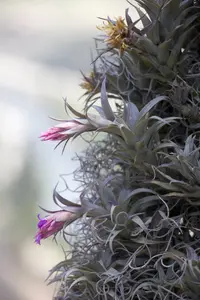
Tillandsia nana is a small epiphytic air plant from highland regions of Central and South America. It usually grows on rocks or tree branches rather than in soil. Plants form tight, rounded clumps of fine, silvery-green leaves that help capture moisture and light. With good conditions they may produce small, tubular flowers on short stems. This species stays compact, which makes it suitable for terrariums, mounts, and small indoor displays. It is generally considered easy to care for Tillandsia nana, as long as it receives bright, indirect light, good air circulation, and regular but moderate moisture.

Main Plant Requirements

Care Difficulty

Moderate Care

Light Preference

Bright Indirect Light

Water Requirements

Moderate Water

Temperature Preference

Tropical / Frost Sensitive

Hardiness Zone

10–12

Soil Texture

Sandy, Rocky, Organic-rich

Soil pH

Acidic (5.5–6.5)

Soil Drainage

Well-drained

Fertilization

Light (every 4–6 weeks)

Get Personalized Care Plan

Scan your plant to receive care tips personalized for your specific plant

Available on iOS and Android

How to Care for the Tillandsia nana

This epiphytic air plant prefers bright, indirect light and protection from intense midday sun.

  • Provide 6–8 hours of bright, filtered light daily, such as near an east window or shaded greenhouse bench.
  • Allow gentle early-morning or late-afternoon sun, but shield Tillandsia nana from harsh midday exposure that can scorch leaves or cause bleaching.
  • In winter, move plants closer to bright windows or supplement with a grow light placed 20–30 cm away to prevent weak, elongated growth from low light.

This air plant absorbs moisture through its leaves and depends on thorough but well-timed watering.

  • Soak or heavily mist the plant 2–4 times per week, then let it dry completely within 2–3 hours to prevent rot at the base.
  • Increase watering frequency in hot, dry weather and reduce slightly in cool or very humid conditions, always prioritizing fast drying over a fixed schedule.
  • Watch for curling, brittle leaves as a sign of underwatering, and for soft, darkened bases or a musty smell as early indicators of overwatering stress.

This species prefers mild, stable temperatures with protection from frost and extreme heat.

  • Aim for 65–80°F (18–27°C) for active growth, which suits most homes and sheltered outdoor spots in mild climates.
  • Protect plants from temperatures below 45°F (7°C), as prolonged exposure or any frost can damage leaf tissue and lead to rot.
  • In hot weather above 90°F (32°C), increase air movement and misting while ensuring fast drying, and keep plants shaded from reflective or radiant heat sources.

This species prefers moderate to high humidity and dislikes prolonged very dry air.

  • Aim for 50–70% humidity, using regular misting or short soaks rather than keeping the plant constantly wet.
  • It tolerates brief drops to 30–40% if watered a bit more often and kept out of strong drying drafts.
  • Crisping leaf tips, curling, and slow growth indicate humidity stress; increase moisture with a pebble tray, room humidifier, or grouped plants.

Tillandsia nana is an epiphytic air plant and must never be packed into conventional potting soil.

  • Use a loose, airy mount such as cork, driftwood, or large-chunk orchid bark that allows air to flow freely around all leaf bases.
  • If placing in a container, fill it only with coarse materials like orchid bark, lava rock, or large perlite so water drains and evaporates quickly.
  • Keep the plant sitting above the medium, not buried, to prevent rot at the base where leaves meet the stem.
  • Avoid any fine, dense, or peat-heavy mix that stays wet for more than a few hours, since low oxygen around the base quickly causes decay.

This species grows well in containers if mounted or displayed above a very fast-drying medium.

  • Choose a wide, shallow container that allows the plant to sit securely on top while leaving space around it for air movement.
  • Use unglazed clay or other porous materials so any water on the medium evaporates quickly and does not trap moisture around the base.
  • Secure the plant with wire, fishing line, or plant-safe glue instead of packing it in, keeping the base fully exposed to air.

This species benefits from light feeding but is sensitive to excess nutrients.

  • Use a low-nitrogen, balanced NPK air plant or orchid fertilizer, never compost or slow-release granules.
  • Feed Tillandsia nana every 4–6 weeks in spring–summer by misting or soaking in a weak solution.
  • Dilute fertilizer to 1/4–1/8 strength to avoid leaf burn and salt buildup.
  • In fall–winter, reduce feeding to 1–2 light applications or pause if growth is very slow.

Pruning needs are minimal and focus on hygiene rather than shaping.

  • In any season, gently remove fully dried or brown leaves by pulling downward along the natural growth line.
  • Trim spent flower spikes at the base with clean, sharp scissors to encourage pup development.
  • Leave healthy pups attached until they reach at least 1/3–1/2 the size of the mother plant before separating.
  • Check Tillandsia nana after watering and remove decaying tissue promptly to prevent fungal problems.

This air plant is not potted in soil, so care focuses on remounting rather than traditional repotting.

  • Remount when the clump outgrows its support, airflow is blocked, or the base begins to rot or wobble.
  • Best time is spring–early summer, when Tillandsia nana resumes active growth and recovers faster.
  • Every 2–4 years, detach gently, trim dead roots, and secure to new wood, cork, or mesh using wire or non-metallic ties.
  • Minimize stress by handling only the base, avoiding glue on living tissue, and keeping humidity slightly higher for 1–2 weeks.

Propagation of this species is most reliable through pups rather than seed.

  • Wait until pups reach at least 1/3–1/2 the size of the parent Tillandsia nana before removal.
  • Best season is spring–summer, when warm temperatures and bright light support new growth.
  • Hold the mother plant firmly and gently twist or lever pups sideways from the base to separate.
  • Provide bright, indirect light, good air circulation, and slightly higher humidity to encourage establishment.

This tropical air plant has low frost tolerance and needs protection in cold climates.

  • Keep temperatures above 45–50°F; brief exposure to lower temperatures can damage foliage.
  • In frosty regions, grow Tillandsia nana on removable mounts that can be brought indoors for winter.
  • Indoors, provide bright light, slightly reduced watering, and good air movement to prevent rot.
  • Avoid leaving plants wet overnight in cool conditions, as cold moisture increases tissue damage risk.

Care Tips

Rotate mounting surface

Rotate the mount or display stand 90° every 1–2 weeks so the rosette develops evenly and does not lean or flatten on one side over time.

Secure but ventilated mounting

Attach plants with soft wire, fishing line, or stretchy plant tape in a loose figure-eight so the base is held firmly but air can still move freely around the leaves and roots.

Rinse after soaking

After each soak, give the plant a brief rinse under running room‑temperature water to flush away dust, fertilizer residues, and trapped debris that can encourage rot or pests.

Use fast‑drying displays

Mount plants on porous materials such as cork, driftwood, or unsealed hardwood rather than nonporous glass or plastic so excess water evaporates more quickly from the base.

Seasonal air movement

Increase gentle air circulation with a small fan on a low, indirect setting in winter heating season or during very humid spells to reduce the risk of rot when caring for Tillandsia nana.

Common Pests and Diseases

Mealybugs

These insects feed on leaf bases and sheltered crevices, leaving cottony white clusters and sticky honeydew on the plant. Symptoms include slowed growth, leaf yellowing, and sooty mold growing on residues in very humid setups.

Solution

Isolate the affected plant, then rinse thoroughly under lukewarm running water, focusing on leaf bases and around the sheath. For remaining insects, dab individually with cotton swabs dipped in 70% isopropyl alcohol, repeat weekly until no new clusters appear, and increase air movement to make conditions less favorable for reinfestation.

Scale insects

These insects appear as small, hard bumps on leaf surfaces and at the base of the rosette, where they suck sap and weaken the plant. Symptoms include dull, yellowing leaves and reduced vigor, especially in plants kept in low air movement terrariums or crowded displays.

Solution

Gently scrape or rub off visible scale with a soft toothbrush or cloth, then rinse the plant thoroughly. Follow with targeted spot treatment using 70% isopropyl alcohol on remaining insects and improve ventilation and light to support plant recovery and reduce scale buildup when caring for Tillandsia nana.

Fungal leaf spots

This disease produces small brown or black spots on leaves, sometimes with pale halos, which can merge into larger dead patches under persistently wet or poorly ventilated conditions. Symptoms include patchy leaf dieback starting on older leaves or in the inner rosette where water lingers.

Solution

Trim and discard affected leaves or leaf sections with sterile scissors, then allow the plant to dry quickly after each watering and avoid water sitting in the center overnight. Increase airflow, reduce misting frequency, and, in severe or recurring cases, use a mild copper- or sulfur-based fungicide labeled for epiphytes, applying only a light, well-ventilated spray.

Bacterial soft rot

This disease causes localized, water-soaked, mushy areas at the base of the rosette or where water sits, often with a sour or unpleasant smell. Symptoms include rapid collapse of affected leaves and spreading decay in plants kept constantly wet or with poor air movement.

Solution

Remove and discard all mushy, discolored tissue immediately and separate the plant from others. Allow the remaining healthy parts to dry in a warm, airy place, avoid soaking until no new soft areas appear, and adjust routine to shorter dunking or rinsing times and faster drying after watering.

Spider mites

These pests are tiny and usually hidden, but symptoms include fine stippling on leaves, dull or silvery patches, and very fine webbing in leaf axils, especially under warm, dry indoor conditions. This pest weakens the plant over time and can be overlooked in dense groupings of air plants.

Solution

Rinse the plant thoroughly under a strong but gentle stream of water, paying attention to leaf undersides and inner whorls, and repeat several times over 1–2 weeks. Increase humidity slightly while maintaining good airflow, and if mites persist, use an insecticidal soap or horticultural oil labeled for use on bromeliads, applied lightly and then rinsed off after the recommended contact time.

Interesting Facts

High-altitude specialist

This species is naturally found on rocky cliffs and shrubs in high Andean valleys of Bolivia, where it copes with strong light, large temperature swings, and frequent mists.

Miniature rosette form

It forms tight, spherical to cushion-shaped rosettes only a few centimeters across, an adaptation that helps reduce water loss in its windy, exposed habitats.

Trichome-dense leaves

The leaves carry a very dense layer of trichomes, the tiny scale-like hairs that give the plant its silvery look and allow it to capture moisture and dissolved nutrients directly from fog and rain.

Botan icon

Did you know?

In its native habitat, this species often grows in dense colonies, creating pale silvery cushions that can visually blend into lichen-covered rocks, which likely offers some camouflage from herbivores and reduces heat load from intense mountain sun.

FAQs about Tillandsia nana

Leaf tips usually brown from low humidity, intense direct sun, or inadequate watering, especially if the plant is not dried properly afterward. Poor air circulation and mineral-heavy tap water can also cause tissue damage over time.

Grow Healthy Plants with Botan Care

Keep your plants happy and healthy with plant identification, disease detection, and easy care guidance.

Botan plant care app — identify plants on mobile

Explore More Plants