velvet calathea Care (Goeppertia rufibarba)

Also known as: velvet calathea
velvet calathea

About velvet calathea

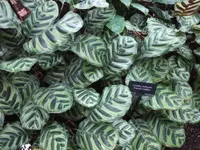
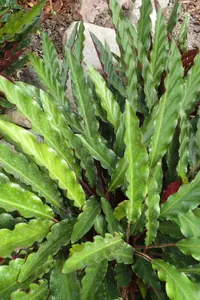
Velvet calathea, Goeppertia rufibarba, is a tropical understory plant grown mainly for its textured, velvety foliage rather than for flowers. It forms clumps of slender, arching leaves with soft hairs on the underside and a subtle purple tint.

This species comes from the shaded, humid forests of Brazil, so it prefers stable warmth, gentle filtered light, and evenly moist, airy soil. Its sensitivity to dry air, cold drafts, and inconsistent watering can make it moderately challenging for beginners.

Understanding how to care for velvet calathea starts with providing a calm environment, steady moisture, and protection from harsh sun or sudden temperature swings.

Main Plant Requirements

Care Difficulty

Moderate Care

Light Preference

Bright Indirect Light

Water Requirements

Keep Soil Moist

Temperature Preference

Tropical / Frost Sensitive

Hardiness Zone

11–12

Soil Texture

Loamy, Peaty, Organic-rich

Soil pH

Acidic (5.5–6.5), Slightly acidic (6.5–7.0)

Soil Drainage

Moist but well-drained

Fertilization

Light (every 4–6 weeks)

Get Personalized Care Plan

Scan your plant to receive care tips personalized for your specific plant

Available on iOS and Android

How to Care for the velvet calathea

This species prefers bright, filtered light that mimics a forest understory.

  • Provide 6–8 hours of bright, indirect light each day, such as light filtered through sheer curtains or dappled shade outdoors.
  • Allow brief early morning sun only; avoid direct midday or afternoon sun, which can scorch the long leaves of velvet calathea and cause pale, crispy patches.
  • In darker months, move the plant closer to a bright window or use a weak grow light to prevent stretched, floppy growth.

This plant prefers evenly moist but never waterlogged soil.

  • Water when the top 2–3 cm of soil feels dry, using room-temperature water, and let excess drain fully to prevent root rot.
  • Reduce watering slightly in winter when growth slows, but do not allow the root zone to dry out completely or the leaves may curl and brown at the edges.
  • Watch for yellowing, mushy stems as a sign of overwatering, and crisp, folding leaves and very light pots as signs Goeppertia rufibarba is too dry.

This species thrives in warm, stable temperatures with no sudden swings.

  • Aim for 65–80°F (18–27°C) for best growth, keeping conditions similar day and night to avoid stress on the foliage.
  • Protect the plant from temperatures below 60°F (16°C); prolonged exposure near 50°F (10°C) can cause leaf damage, and frost will kill the plant.
  • In heat above 85°F (29°C), increase humidity and air circulation, and keep it shaded from intense sun to limit leaf wilting and heat stress.

This species needs consistently high humidity to maintain healthy foliage.

  • Aim for 60–75% humidity; it tolerates brief dips but reacts poorly to extended levels below 50%.
  • Dry air causes curling, crisp brown edges, and dulling of the soft leaves typical of velvet calathea.
  • Increase humidity with a nearby cool-mist humidifier, grouped plants, and placing the pot on a pebble tray without letting roots sit in water.

This plant prefers a loose, airy, organic-rich mix that stays lightly moist but never waterlogged.

  • Use a peat- or coco coir-based mix with added perlite and fine orchid bark to create a fibrous, well-structured substrate.
  • Target slightly acidic to neutral pH, around 5.5–7.0, which supports nutrient availability for Goeppertia rufibarba.
  • Ensure fast drainage by avoiding heavy garden soil or pure compost, which compact and trap water around the roots.
  • Improve aeration by keeping at least 30–40% coarse components (perlite, bark, pumice) in the mix to prevent root suffocation.

This species is well suited to container growing.

  • Choose a stable, broader pot rather than a very tall one to support its arching foliage without tipping.
  • Select slightly porous materials like unglazed clay if a drier mix is needed, or plastic if moisture retention is a concern.
  • Leave some vertical space below the rim so surface water does not overflow before it can drain through the mix.

This species benefits from light, consistent feeding during its active growing season for steady foliage production.

  • Use a balanced liquid fertilizer (around 10-10-10 or 20-20-20) diluted to 1/4–1/2 strength for velvet calathea.
  • Apply every 4–6 weeks in spring and summer on moist soil, never on completely dry roots.
  • Stop or reduce feeding to 1 very light application in late autumn if growth slows in winter.
  • Organic options like diluted fish emulsion or a thin layer of fine compost also work, but avoid high-salt synthetic products.

Goeppertia rufibarba needs only light, maintenance pruning to keep foliage tidy and healthy.

  • Best timing is throughout the year as needed, with most pruning done in late winter or early spring before strong new growth.
  • Remove yellow, brown, or torn leaves at the base of the stem to limit disease and pest issues.
  • Thin out very crowded inner leaves to improve light and air flow, which encourages a more even, upright shape.
  • Use small, sharp scissors or pruning snips disinfected with alcohol to make clean cuts without crushing tissue.

This plant prefers slightly snug pots and is repotted only when root congestion begins to affect growth.

  • Check for roots circling the pot, pushing through drainage holes, or water running straight through, all signs it needs more space.
  • Plan to repot every 2–3 years in spring, when Goeppertia rufibarba resumes active growth and recovers faster.
  • Choose a container 2–5 cm wider with good drainage and use a loose, peat-free, humus-rich mix that retains moisture yet drains well.
  • Gently loosen the root ball, trim only dead roots, water thoroughly after potting, and keep humidity high for 1–2 weeks to reduce stress.

This species is most reliably propagated by division rather than by seed or cuttings.

  • Divide mature clumps in late spring, when plants grow actively and recover more quickly.
  • Remove the plant from its pot, then separate sections by hand, ensuring each division has several healthy stems and roots.
  • Plant each division in a small pot with fresh, airy, slightly acidic mix and firm gently around the roots.
  • Maintain warm temperatures around 70–80°F, high humidity, and evenly moist soil to support establishment of the new divisions.

This tropical species is frost-sensitive and needs warm, stable indoor conditions in winter in most climates.

  • Keep indoor temperatures around 65–75°F and avoid drafts, sudden temperature drops, or heater blasts.
  • Move container plants indoors before outdoor temperatures fall near 55°F, especially in cooler regions.
  • Use a pebble tray or humidifier to maintain higher humidity, as indoor winter air is often dry.
  • Water less often but never let the root ball dry out completely; reduce fertilizer until growth resumes in spring.

Care Tips

Rotate For Evenness

Rotate the pot 90° every 2–3 weeks so the plant develops a symmetrical, upright habit instead of leaning toward the light and producing lopsided foliage.

Use Group Humidity

Cluster this plant with other broad-leaved tropicals on a wide tray filled with water and pebbles to create a stable, localized humidity pocket around the foliage without waterlogging the roots.

Gentle Leaf Cleaning

Wipe both sides of the leaves every 4–6 weeks with a soft, barely damp microfiber cloth to remove dust, which improves light capture and reduces hiding places for spider mites.

Prevent Salt Build‑up

Every 2–3 months, slowly run lukewarm, low-mineral water through the pot until it drains freely to flush out accumulated fertilizer salts that can burn fine roots and cause leaf edge browning.

Quarantine New Plants

Keep any new houseplant at least 2–3 weeks in a separate area and inspect it regularly for mites, mealybugs, or thrips before placing it near your existing collection, which is a key step in caring for velvet calathea in the long term.

Common Pests and Diseases

Spider mites

This pest thrives in warm, dry indoor air and feeds on leaf sap, leading to stippled, dull foliage and fine webbing, especially on leaf undersides. Symptoms include leaf curling, brown edges, and overall decline if the infestation is heavy.

Solution

Rinse leaves thoroughly with lukewarm water, focusing on undersides, then increase humidity to 50–60% and avoid placing the plant in hot, dry drafts. For persistent problems, wipe leaves with insecticidal soap or a dilute neem oil solution every 7–10 days until no new webbing or speckling appears.

Fungus gnats

These insects breed in consistently wet potting mix and their larvae feed on organic matter and fine roots, which can stress Goeppertia rufibarba in low-light indoor conditions. Symptoms include tiny black flies around the pot and slow, weak growth from root stress.

Solution

Allow the top 3–4 cm of soil to dry between waterings, and remove any decaying plant debris on the soil surface. Use yellow sticky traps for adult gnats, and if the infestation is strong, drench the soil with a biological control containing Bacillus thuringiensis israelensis (BTi) according to label directions.

Mealybugs

This pest hides in leaf axils and along the midrib, where it sucks sap and excretes sticky honeydew that can attract sooty mold. Symptoms include cottony white clusters, leaf yellowing, and reduced vigor, especially on new growth.

Solution

Isolate the plant, then dab visible mealybugs with cotton swabs dipped in isopropyl alcohol and wipe down affected areas. Follow up with regular inspections and, if needed, repeat treatments with insecticidal soap or neem oil every 7–10 days until new growth remains clean.

Leaf spot disease

This disease is usually fungal or bacterial and develops where moisture lingers on the soft, velvety leaves. Symptoms include small, water-soaked spots that turn brown with yellow halos, sometimes merging into larger patches that cause leaf distortion or drop.

Solution

Remove and discard affected leaves, avoid wetting foliage, and improve air movement around the plant while maintaining warmth. Reduce overhead misting, water at the soil level in the morning, and if new spots continue to appear, apply a houseplant-safe copper or sulfur-based fungicide according to label directions.

Salt and chemical leaf burn

Symptoms include crisp brown tips and margins on older leaves, even when humidity and watering are otherwise adequate, caused by fertilizer salt buildup or sensitive reaction to hard or chlorinated tap water. This issue is common in velvet calathea indoor care where the potting mix is not flushed regularly.

Solution

Flush the pot thoroughly with clean, preferably filtered or distilled water every 1–2 months, allowing excess water to drain completely. Reduce fertilizer strength to half the recommended indoor rate, discard severely damaged leaves, and switch to softer water if brown tips keep appearing on new foliage.

Interesting Facts

Velvety leaf undersides

The leaves have soft, reddish hairs on their undersides, giving a velvet-like texture and the common name velvet calathea. These hairs can slightly reduce water loss and scatter light in the dim understory where the plant evolved.

Nightly leaf movement

This species performs nyctinasty, a daily leaf movement controlled by an internal circadian rhythm. Its long, narrow leaves lower during the day and lift more upright at night due to changes in specialized hinge cells at the base of the leaf.

Subtle yellow flowering

In suitable conditions it produces small, pale yellow flowers held on short stalks above the foliage. Indoors these flowers are modest and often overlooked because the foliage remains the main ornamental feature.

Botan icon

Did you know?

This species is native to the understory of Brazilian tropical forests, where its narrow, arching leaves and reddish undersides help it capture limited, filtered light while blending into the dappled shade of the forest floor.

FAQs about velvet calathea

Brown, crispy edges usually come from low humidity, mineral-heavy tap water, or irregular watering. Increase humidity to around 50–60%, use filtered or distilled water, and keep the potting mix lightly moist but never saturated.

Grow Healthy Plants with Botan Care

Keep your plants happy and healthy with plant identification, disease detection, and easy care guidance.

Botan plant care app — identify plants on mobile

Explore More Plants