coarse tassel fern Care (Huperzia phlegmaria)

Also known as: common tassel fern
coarse tassel fern

About coarse tassel fern

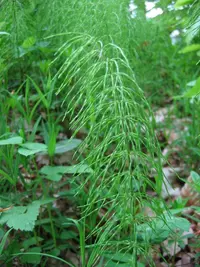
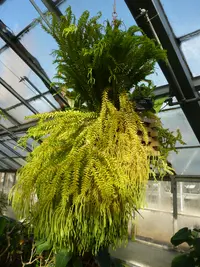
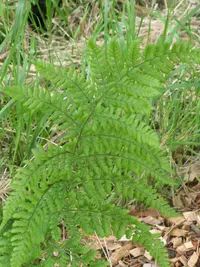
The coarse tassel fern, Huperzia phlegmaria, is an epiphytic fern ally that often hangs in long, trailing curtains from trees or baskets. Its stiff, densely packed, tassel-like stems give it a textured, architectural look.

In nature, it occurs in humid tropical forests of Africa, Asia, and the Pacific, where it grows on tree trunks and branches rather than in soil. It can be moderately challenging to grow because it dislikes drying out, needs good air movement, and reacts poorly to extremes in light or temperature.

Those conditions influence how to care for coarse tassel fern, which prefers bright but indirect light, steady moisture, and a loose, airy growing medium instead of heavy potting soil.

Main Plant Requirements

Care Difficulty

Hard Care

Light Preference

Bright Indirect Light

Water Requirements

Keep Soil Moist

Temperature Preference

Tropical / Frost Sensitive

Hardiness Zone

11–12

Soil Texture

Peaty, Organic-rich

Soil pH

Strongly acidic (4.5–5.5), Acidic (5.5–6.5)

Soil Drainage

Moist but well-drained

Fertilization

Light (every 4–6 weeks)

Get Personalized Care Plan

Scan your plant to receive care tips personalized for your specific plant

Available on iOS and Android

How to Care for the coarse tassel fern

This epiphytic fern prefers bright, very filtered light that mimics light under a forest canopy.

  • Provide 6–8 hours of bright, indirect light each day, such as dappled light under trees or behind a sheer curtain for coarse tassel fern.
  • Allow gentle early morning sun if filtered, but avoid direct midday or afternoon sun, which can scorch fronds and cause bleaching or crispy tips.
  • In winter or in deep shade, move it to a brighter position; leggy, stretched growth and dull green color indicate insufficient light.

This species prefers evenly moist conditions around its roots and supporting substrate, without waterlogging.

  • Water when the surface of the substrate just begins to feel slightly dry, avoiding a completely dry or soggy root zone.
  • Aim for a consistently damp but aerated mix; use a loose, well-draining medium so excess water runs off rather than pooling around Huperzia phlegmaria roots.
  • Reduce watering slightly in cooler seasons; wilting, shriveling tips, or very light fronds suggest underwatering, while blackened bases and a sour smell suggest overwatering.

This fern thrives in warm, stable temperatures similar to a humid tropical understory.

  • Maintain 65–80°F (18–27°C) for best growth; brief dips to 60°F (16°C) are tolerated but slow growth.
  • Avoid temperatures below 50°F (10°C); frosts damage tissue quickly and repeated cold stress can kill the plant.
  • In hot spells above 85°F (29°C), increase humidity, shade from intense sun, and ensure good air movement to reduce heat stress and prevent tissue scorch.

This epiphytic fern needs high, stable humidity to keep fronds lush and hydrated.

  • Aim for 60–80% humidity; coarse tassel fern declines if kept below 50% for long periods.
  • Crisping tips, dull fronds, and slowed growth indicate air is too dry or fluctuating sharply.
  • Increase humidity with a nearby humidifier, closed glass cabinet, or grouped plants rather than misting alone.

This species prefers a loose, airy, organic medium that mimics a tree-fern or mossy epiphytic habitat.

  • Use a mix of fine orchid bark, sphagnum moss, and perlite to create a fibrous, moisture-retentive but free-draining medium.
  • Keep pH slightly acidic to neutral (about 5.5–7.0), avoiding heavy lime additions that can raise alkalinity.
  • Arrange the mix so roots sit in airy, chunky material rather than compacted peat, which reduces oxygen and increases rot risk.
  • Avoid dense potting soil, clayey mixes, or permanently saturated conditions, which quickly cause Huperzia phlegmaria stem and root decay.

This fern is suitable for containers, especially hanging pots and baskets that support its cascading habit.

  • Choose a hanging basket or deep pot that allows stems to hang freely without resting on wet surfaces, reducing fungal problems.
  • Select a relatively narrow but deep container to support vertical root growth while minimizing excess side volume that can stay waterlogged.
  • Use lightweight plastic or mesh-sided baskets when possible, as they keep the mix slightly more humid yet still well aerated for the roots.

This epiphytic fern has modest nutrient needs but benefits from light, consistent feeding in active growth.

  • Use a balanced liquid fertilizer at 1/4–1/2 strength or a very dilute orchid feed suited to epiphytes.
  • Apply every 4–6 weeks in spring and summer, ensuring the substrate is already moist before feeding.
  • Reduce feeding to 1 light application in late fall or stop entirely in midwinter when growth slows.
  • For coarse tassel fern indoor care, avoid compost or heavy slow-release pellets that can burn roots or stay too concentrated.

Huperzia phlegmaria needs only minimal pruning focused on health and tidiness rather than shaping.

  • Trim browned or dried stem tips at any time with clean, sharp scissors to prevent fraying.
  • Remove damaged or diseased segments promptly, cutting back into firm, green tissue.
  • Thin out a few crowded hanging stems in spring to improve air flow and light penetration.
  • Avoid heavy clipping, which can distort the natural cascading form and slow recovery.

This species dislikes frequent disturbance, so repot or remount only when clear signs appear.

  • Look for roots circling a basket, declining vigor, or very slow growth despite good care as signals to act.
  • Plan repotting or transplanting for early spring, about every 3–4 years, to match the start of new growth.
  • Move the plant gently onto fresh, very airy epiphyte mix, keeping roots spread and loosely anchored.
  • Reduce stress by watering beforehand, shading for several days afterward, and maintaining high humidity.

Huperzia phlegmaria is slow-growing and generally considered difficult to propagate at home.

  • Division is the most practical method, done in early spring when handling the plant for repotting or remounting.
  • Separate only large, healthy clumps, keeping attached roots and several intact stems on each division.
  • Place divisions on moist, airy epiphyte mix, maintain 70–80°F, high humidity, and bright filtered light.
  • Avoid seeds or tiny stem cuttings, which require specialized conditions and usually fail in typical home setups.

This tropical epiphyte is not frost hardy and needs controlled indoor conditions in winter.

  • Keep temperatures around 60–75°F, avoiding cold drafts or exposure below 50°F.
  • Move outdoor containers indoors before the first frost and place in bright, indirect light.
  • Maintain moderate humidity using trays or humidifiers and reduce watering slightly while never allowing the roots to dry out completely.

Care Tips

Basket mounting technique

Grow this species in a slatted wooden basket or open-wire hanging pot lined with coarse sphagnum so the hanging stems can air-dry freely and avoid rot at the base.

Layered media refresh

Every 12–18 months, gently lift sections of the plant and tuck in fresh, moistened long-fiber sphagnum around the roots instead of repotting fully, which reduces stress on fragile root systems.

Support for long stems

As stems lengthen beyond 45–60 cm, loop them loosely over the basket rim or use soft ties on a hoop so their weight does not pull and damage the shallow anchoring roots.

High-airflow placement

Position the plant near a gentle fan or an open interior doorway to keep air moving around the foliage, which helps prevent fungal spotting and tip dieback without lowering humidity too much.

Quarantine and inspection

When adding new epiphytic plants, keep them separate for 2–3 weeks and inspect the fine stems and leaf bases with a hand lens for scale or mites, since early detection makes caring for coarse tassel fern much easier over time.

Common Pests and Diseases

Scale insects

This pest forms small, rounded or oval bumps on stems and leaf bases, often where fronds branch. Symptoms include sticky honeydew, sooty mold growth, and gradual yellowing or decline of the hanging shoots.

Solution

Remove affected sections with pruning shears if heavily clustered, and gently scrape or rub off individual scales with a cotton swab dipped in isopropyl alcohol. Improve air movement around the plant, avoid overfertilizing with high-nitrogen products, and repeat alcohol swabbing weekly until no new scale is seen.

Mealybugs

These insects appear as white, cottony clusters tucked into leaf axils, branch junctions, and among the fine tassel-like leaves. Symptoms include distorted new growth, sticky residue, and slow decline in vigor.

Solution

Isolate the plant, then carefully wash infested areas with a gentle shower of lukewarm water and follow with spot treatment using cotton swabs or a soft brush dipped in isopropyl alcohol. For larger outbreaks, apply a ready-to-use insecticidal soap thoroughly to all surfaces, repeating every 7–10 days until no live mealybugs remain, while keeping the plant out of direct sun during treatment.

Spider mites

These pests thrive in warm, dry indoor air and can be hard to see, but cause fine stippling, dull fronds, and in severe cases, delicate webbing along stems and branch tips. Symptoms include fronds that lose their fresh green color and appear dusty or tired despite adequate watering.

Solution

Increase humidity to 60–80% using a humidifier or pebble tray and rinse the plant gently but thoroughly under a soft shower to remove mites. Follow with applications of insecticidal soap or a horticultural oil labeled for ferns, covering all surfaces and repeating every 5–7 days for several cycles to break the life cycle.

Fungal leaf blight

This disease causes scattered brown or black spotting on the fine leafy segments, sometimes with yellow halos, which can merge into blighted patches and lead to dieback of hanging fronds. Symptoms include a patchy, thinned canopy and premature browning of otherwise well-watered plants, especially in stagnant, overly moist air.

Solution

Prune out and discard all affected frond sections with sterile tools, then space the plant for better air circulation and avoid wetting the foliage late in the day. Water at the root zone, run a small fan nearby on low to reduce leaf wetness, and if the problem persists, apply a fern-safe fungicide according to label directions while continuing to remove newly spotted tissue.

Bacterial soft rot

This disease leads to mushy, water-soaked stem bases or branching points near the top of the pot or mounting surface, often with a sour or unpleasant odor. Symptoms include sudden collapse of sections of the hanging plant even though the growing medium appears wet and cool.

Solution

Cut away all affected, softened tissue well into firm, healthy material and discard it, then reduce watering frequency so the medium stays lightly moist but never saturated. Improve drainage and airflow, avoid overhead watering, and keep the plant in a stable, warm environment; severely affected specimens are often best restarted from healthy, uninfected tip cuttings if available.

Interesting Facts

Hanging epiphyte specialist

This species naturally grows as an epiphyte, hanging from tree branches in humid tropical forests, and anchors itself with specialized root-like structures that cling to bark rather than soil.

Unique clubmoss lineage

Although it looks like a fern, it is a lycophyte, part of an ancient plant lineage that diverged from true ferns and seed plants hundreds of millions of years ago.

Spore-based reproduction

Instead of flowers and seeds, it produces microscopic spores in small, cone-like structures along the stems, and these spores must form a symbiosis with soil fungi to develop into new plants.

Botan icon

Did you know?

Fossil relatives of this species’ lycophyte lineage once formed vast forests in the Carboniferous period, and their remains contributed significantly to many of the coal deposits mined today.

FAQs about coarse tassel fern

This species is a fern and does not produce true flowers or blooms. It reproduces by spores, usually formed on specialized leaf tips, so a lack of flowers is completely normal and not a care problem.

Grow Healthy Plants with Botan Care

Keep your plants happy and healthy with plant identification, disease detection, and easy care guidance.

Botan plant care app — identify plants on mobile

Explore More Plants