soursop Care (Annona muricata)

Also known as: Guanabana
soursop

About soursop

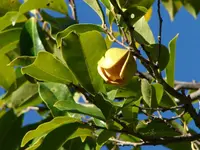
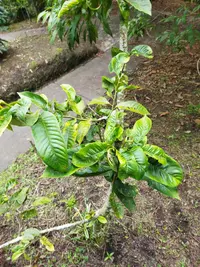
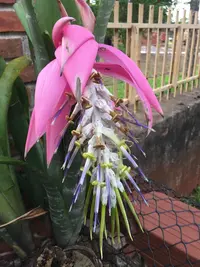
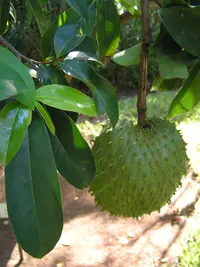
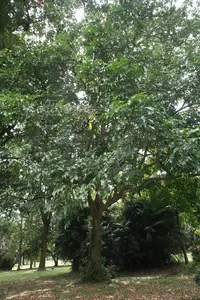
Soursop, Annona muricata, is a tropical evergreen fruit tree from Central and South America and the Caribbean. It is now widely grown across many warm, humid regions. The tree has glossy, dark green leaves and produces large, spiny, heart-shaped fruits with soft white flesh. In cultivation it tends to be medium-sized but can become quite tall in the ground. Soursop prefers consistently warm temperatures, high humidity, and well-drained soil. It is somewhat sensitive to cold and drought, which can make it more challenging outside true tropical or subtropical climates. Understanding how to care for soursop helps improve flowering, fruit set, and overall health.

Main Plant Requirements

Care Difficulty

Hard Care

Light Preference

Full Sun

Water Requirements

Regular Water

Temperature Preference

Tropical / Frost Sensitive

Hardiness Zone

10–12

Soil Texture

Sandy, Loamy, Organic-rich

Soil pH

Acidic (5.5–6.5), Slightly acidic (6.5–7.0)

Soil Drainage

Moist but well-drained

Fertilization

Moderate (every 2–4 weeks)

Get Personalized Care Plan

Scan your plant to receive care tips personalized for your specific plant

Available on iOS and Android

How to Care for the soursop

Annona muricata performs best in bright, warm conditions with protection from harsh midday sun.

  • Provide 6–8 hours of direct sun daily, ideally with morning sun and light afternoon shade, especially in hotter climates.
  • Tolerates partial shade (4–5 hours sun) but flowering and fruiting of soursop decrease if light is too low.
  • In hot summers, use filtered light or light shade during 12–4 p.m. to prevent leaf scorch, while in cooler seasons allow more direct sun.

Annona muricata prefers evenly moist, well-drained soil without long periods of drought or saturation.

  • Water when the top 3–5 cm of soil feels dry, applying enough to moisten the root zone but allowing excess to drain freely.
  • Use deep, less frequent watering during warm growth periods and reduce frequency in cooler months when growth slows.
  • Watch for yellowing, soft leaves or sour-smelling soil as signs of overwatering, and wilting or curled, dry-edged leaves as signs of underwatering.

This tropical species needs warm, frost-free conditions to grow and fruit reliably.

  • Aim for 70–86°F (21–30°C) for active growth; short periods up to 95°F (35°C) are tolerated if soil moisture is stable.
  • Avoid temperatures below 55°F (13°C); growth slows and damage risk increases as conditions approach this level.
  • Frost is usually fatal; protect plants if forecasts approach 40°F (4°C), and shield from hot, drying winds during peak summer heat.

This species prefers warm, humid air and reacts quickly to prolonged dryness.

  • Aim for 60–80% humidity, as soursop foliage drops more easily in dry indoor air.
  • Crisp leaf edges, dull leaf surface, and stalled new growth indicate humidity stress.
  • Use grouped plants, a room humidifier, or a pebble tray near the plant rather than misting leaves directly.

Annona muricata grows best in deep, loose, slightly acidic, well‑drained soil.

  • Use a loamy mix with high organic matter, such as 40% compost, 40% coarse sand, and 20% perlite or fine bark.
  • Keep pH around 5.5–6.5 to support nutrient uptake and reduce micronutrient deficiencies like chlorosis, which shows as yellowing leaves.
  • Improve aeration by avoiding compaction; gently crumble and moisten the mix before planting so roots spread easily.
  • Avoid heavy clay, waterlogged spots, or saline soils, which cause root rot and slow, weak growth.

This species can be grown in containers when given enough root space and careful moisture control.

  • Choose a deep, heavy container that resists tipping as the canopy becomes dense and top‑heavy.
  • Use a coarse, fast‑draining mix and ensure runoff leaves the saucer within 10–15 minutes after watering.
  • Select light-colored pots in hot climates to reduce root‑zone overheating and moisture loss on exposed patios.

Annona muricata benefits from moderate, consistent feeding during its warm growing season.

  • Apply a balanced NPK granular or slow-release fertilizer every 6–8 weeks in spring and summer for healthy vegetative growth and fruiting.
  • Use a light dressing of well-rotted compost or manure around the drip line, keeping it off the trunk to avoid rot.
  • Reduce feeding in cooler months, giving only a half-strength balanced liquid feed every 6–8 weeks if the tree remains in active growth.
  • For potted soursop, use a diluted (1/2 strength) balanced liquid fertilizer every 4–6 weeks during active growth, ensuring good drainage.

Pruning Annona muricata helps maintain structure, manage height, and support fruit production.

  • Carry out main pruning at the end of winter or early spring, before strong new growth starts.
  • Remove dead, diseased, or crossing branches first, then thin crowded interior shoots to improve light and airflow.
  • Shorten overly long, upright shoots to encourage a low, spreading canopy that is easier to harvest.
  • Use clean, sharp bypass pruners or loppers and make angled cuts just above outward-facing buds or side branches.

Transplanting this tropical fruit tree is most successful when done carefully at the right stage and season.

  • Look for roots circling the pot, pushing through drainage holes, or slowed top growth as signals the plant has outgrown its container.
  • Transplant young trees in late spring or early summer once nights are consistently warm and soil temperatures have risen.
  • For container plants, step up only 1–2 pot sizes every 1–2 years, using a deep, well-drained mix with added compost.
  • Water well 1–2 days before moving, keep the root ball intact, set at the same depth, then water thoroughly and shade for several days to reduce stress.

New Annona muricata plants are most commonly raised from seed, with grafting used for improved cultivars.

  • Sow fresh, cleaned seeds in late spring to early summer in a warm (75–85°F), bright, sheltered location.
  • Use a sterile, well-drained seed mix, plant seeds 1–2 cm deep, and keep moisture even but not waterlogged.
  • Provide bottom heat or a warm propagator to speed germination, which can take 3–6 weeks or longer.
  • For clonal plants, use approach grafting or cleft grafting onto vigorous rootstocks during active growth for better fruit quality.

This strictly tropical tree has very low frost tolerance and needs careful winter management in cool climates.

  • Trees outdoors are usually damaged below about 40°F and can be killed near freezing, so plan site and backup protection in advance.
  • In marginal climates, mulch the root zone 5–10 cm deep with organic material, keeping it a few cm away from the trunk.
  • For container-grown plants, move indoors or into a heated greenhouse before nights drop below 50°F, providing bright light and good airflow.
  • Reduce watering slightly in winter, keeping the root zone barely moist to avoid cold, waterlogged soil that stresses roots.

Care Tips

Wind protection

Install a permeable windbreak such as shade cloth or a slatted fence on the windward side to reduce branch breakage and flower drop on young trees.

Trunk training

Stake the central leader loosely for the first 1–2 years and remove low, crowded side shoots early to build a strong, well-spaced framework that supports heavy fruit later.

Fruit thinning

When fruits reach about 3–4 cm, remove excess and damaged ones so that remaining fruits are spaced at least 15–20 cm apart, which improves size, quality, and reduces limb strain.

Mulch management

Maintain a 5–8 cm layer of organic mulch in a wide ring around the tree, keeping it 5–8 cm away from the trunk to conserve moisture and limit weed competition without inviting rot.

Cold event prep

Before forecast cold snaps near 40°F, water the root zone thoroughly, add extra mulch, and cover the canopy with frost cloth supported on a frame to reduce chilling damage when growing soursop.

Common Pests and Diseases

Fruit borer

This pest tunnels into developing soursop fruits, causing internal feeding damage, frass, and premature fruit drop. Symptoms include small entry holes on the skin and brown, rotting flesh inside the fruit.

Solution

Remove and destroy infested fruits as soon as damage is noticed to break the life cycle. Use fine mesh bags over young fruits, maintain good orchard hygiene by clearing fallen fruits, and, if needed, apply a targeted Bacillus thuringiensis (Bt) spray to young larvae following local extension guidance.

Mealybugs

These insects cluster on young shoots, leaf undersides, and fruit stalks, sucking sap and excreting sticky honeydew that encourages sooty mold growth. Symptoms include stunted new growth and white, cottony masses on plant surfaces.

Solution

Prune and discard heavily infested twigs, then wash remaining foliage with a strong stream of water and a mild insecticidal soap solution. Encourage natural predators such as lady beetles outdoors and repeat treatments every 7–10 days until populations decline, which supports stable Annona muricata care in home gardens.

Scale insects

These insects attach firmly to stems and leaves, appearing as small, immobile bumps while they remove plant sap. Symptoms include yellowing foliage, weakened shoots, and sticky honeydew that can lead to black sooty mold.

Solution

Gently scrape or wipe off small infestations with a cloth or soft brush and prune heavily infested branches. For larger populations, apply horticultural oil thoroughly to stems and leaf undersides during mild temperatures, repeating according to label directions to disrupt the scale life cycle.

Anthracnose

This disease is caused by Colletotrichum fungi and affects leaves, twigs, and especially fruits, where it forms dark, sunken lesions that may merge and cause fruit rot. Symptoms include leaf spots with dark borders, dieback of young twigs, and blemished fruit surfaces.

Solution

Remove and destroy infected leaves and fruits, and avoid overhead watering to keep foliage dry. Improve airflow by thinning dense canopy growth and, in regions with a history of anthracnose, apply a preventive copper-based fungicide during wet, warm periods following local recommendations.

Phytophthora fruit rot

This disease develops in warm, wet conditions when Phytophthora species infect low-hanging or ground-contact fruits, causing soft, water-soaked lesions that expand rapidly and turn brown or black. Symptoms include a foul smell and rapid fruit collapse, especially after heavy rains or poor drainage.

Solution

Keep fruits off the soil by pruning low branches and using clean mulches that do not touch the fruits. Improve drainage, avoid waterlogging, promptly remove and destroy affected fruits, and consider a labeled phosphonate or other systemic fungicide where this disease is persistent and severe.

Interesting Facts

Large spiny fruit

This species produces one of the largest fruits in the Annonaceae family, often covered in soft, curved spines and filled with fibrous, aromatic pulp packed around glossy, flattened black seeds.

Night-active beetle pollination

In its native Neotropical range, the flowers are mainly pollinated by small beetles that are attracted to the flower’s strong scent and sheltered floral chamber, which opens and closes in a pattern that matches their nocturnal activity.

Protogynous flower timing

Each flower functions first as female, then later as male (a pattern called protogyny), which helps reduce self-pollination and increases genetic mixing between different trees.

Botan icon

Did you know?

The flowers of this species develop directly on older branches and sometimes from the trunk itself (a growth habit called cauliflory), allowing the heavy fruits to be supported by the strongest woody parts of the tree.

FAQs about soursop

Yellowing leaves often result from stress such as nutrient deficiency, waterlogging, compacted soil, or sudden temperature changes. Check drainage, avoid overwatering, and provide balanced fertilizer with micronutrients like iron and magnesium to correct persistent chlorosis.

Grow Healthy Plants with Botan Care

Keep your plants happy and healthy with plant identification, disease detection, and easy care guidance.

Botan plant care app — identify plants on mobile

Explore More Plants