Tank water hygiene
Rinse and refill the central cup weekly with fresh, low-mineral water to prevent salt buildup and bacterial slime that can rot the rosette base.

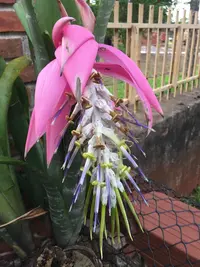
Billbergia zebrina is an epiphytic bromeliad, often grown as a compact ornamental houseplant. It forms a rosette of narrow, arching leaves with silver banding and a tubular, vase-like center that can hold water.
In nature it grows on trees or rocks in parts of South America, where it receives bright, filtered light and good air movement. Its colorful, pendant flower spikes appear from the central rosette and are short-lived but striking.
This species is generally considered low-maintenance, as long as it has bright indirect light, moderate warmth, and a free-draining mix. Understanding how to care for Billbergia zebrina mostly involves managing light, moisture in the central cup, and avoiding overwatering the roots.

Care Difficulty
Moderate Care

Light Preference
Bright Indirect Light

Water Requirements
Moderate Water

Temperature Preference
Tropical / Frost Sensitive

Hardiness Zone
10–12

Soil Texture
Sandy, Loamy, Organic-rich

Soil pH
Acidic (5.5–6.5), Slightly acidic (6.5–7.0)

Soil Drainage
Well-drained

Fertilization
Light (every 4–6 weeks)
Scan your plant to receive care tips personalized for your specific plant
Available on iOS and Android
This bromeliad prefers bright, indirect light with some gentle direct sun for best color.
Watering should keep the central cup filled and the potting mix lightly moist but never soggy.
Stable warm temperatures support healthy growth and flowering.
This bromeliad prefers moderate to moderately high humidity and handles short dry spells.
This species prefers a light, airy, very fast-draining mix similar to epiphytic bromeliad substrates.
This bromeliad is well suited to container culture, both indoors and outdoors in mild climates.
Light feeding supports healthy growth and flowering for Billbergia zebrina in containers.
Pruning needs for Billbergia zebrina are minimal and focus on hygiene and directing new growth.
Container-grown Billbergia zebrina prefers slightly tight quarters and is repotted infrequently.
New plants of Billbergia zebrina are most commonly produced by division of offsets rather than seed.
This bromeliad is frost sensitive and needs thoughtful winter care in cooler climates.

Plant Health Check
Not sure what's wrong with your plant? Check your plant's health inside the app.
The leaves form tight rosettes with silver cross-banding that channel rainwater into a central tank, which in nature holds water for insects and small invertebrates in Atlantic Forest ecosystems of Brazil.
Its tubular flowers, often blue-edged with pink bracts, open in a way that favors nocturnal pollinators such as moths, with nectar accessible along the narrow corolla tube.
In the wild this species usually grows as an epiphyte on tree branches rather than in soil, anchoring by roots mainly for support while obtaining moisture and nutrients from water and debris that collect around the leaf bases.

This species has been used extensively in bromeliad breeding, and many popular ornamental hybrids with striking pink inflorescences and silver-banded foliage trace at least part of their parentage back to Billbergia zebrina.
This bromeliad usually needs to be fully mature, slightly root-bound, and exposed to bright, indirect light to bloom. A short period of slightly cooler nights and consistent, balanced feeding also helps trigger flower and bract formation.
Keep your plants happy and healthy with plant identification, disease detection, and easy care guidance.





-1-200x154.webp)