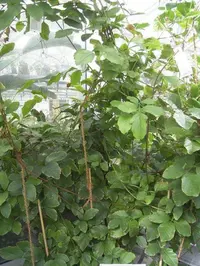
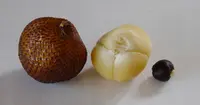
mountain soursop Care (Annona montana)

mountain soursop

About mountain soursop

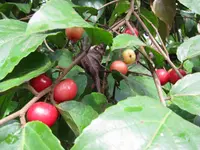
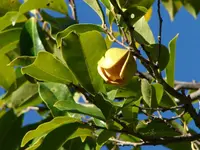
Mountain soursop (Annona montana) is a tropical fruit tree from the custard apple family, commonly grown in home gardens and small orchards. It forms a medium to large, evergreen tree with dense, glossy foliage and rounded, spiny green fruits that resemble soursop but are usually less sweet.

This species is native to tropical regions of the Americas and is often found in lowland forests and disturbed areas. It is valued as a hardy rootstock and as a fruit tree where conditions are too tough for true soursop.

Mountain soursop tolerates poorer soils, higher humidity, and more variable conditions than many tropical fruit trees, which makes it relatively forgiving once established. Gardeners who want to care for mountain soursop should note its preference for warm temperatures, ample sun, and consistently moist, well-drained soil.

Main Plant Requirements

Care Difficulty

Moderate Care

Light Preference

Full Sun

Water Requirements

Regular Water

Temperature Preference

Tropical / Frost Sensitive

Hardiness Zone

10–11

Soil Texture

Sandy, Loamy, Organic-rich

Soil pH

Acidic (5.5–6.5), Slightly acidic (6.5–7.0)

Soil Drainage

Moist but well-drained

Fertilization

Light (every 4–6 weeks)

Get Personalized Care Plan

Scan your plant to receive care tips personalized for your specific plant

Available on iOS and Android

How to Care for the mountain soursop

This tropical fruit tree thrives in bright, warm conditions with consistent sun exposure.

  • Provide 6–8 hours of direct sun daily; in hotter regions, prioritize morning sun with light afternoon shade to prevent leaf scorch.
  • Young trees benefit from 30–50% filtered light for the first 6–12 months, then can transition to more open sun as they establish.
  • Mountain soursop tolerates light partial shade but produces less vigorously; sparse, elongated growth indicates insufficient light, especially in winter at higher latitudes.

Annona montana prefers evenly moist, well-drained soil without prolonged dryness or waterlogging.

  • Allow the top 3–5 cm of soil to dry slightly before deep watering, ensuring water reaches the full root zone rather than frequent shallow sprinkling.
  • In hot, active growth periods, increase watering frequency; during cooler months, reduce frequency while still preventing the root zone from fully drying out.
  • Yellowing leaves and soft stems suggest overwatering or poor drainage, while dull, curling, or browning leaf edges indicate underwatering or extended dry soil.

This species grows best in consistently warm, frost-free climates.

  • Ideal growth occurs around 70–85°F (21–29°C), where the tree can maintain active shoot growth and fruit development.
  • It tolerates brief drops to about 40–45°F (4–7°C) but growth slows sharply; exposure near or below 32°F (0°C) can damage foliage and young wood.
  • In hot spells above 95°F (35°C), provide mulch and sufficient soil moisture to protect roots and reduce heat stress, especially on young trees.

This subtropical species prefers moderate to high humidity but adapts if air is not extremely dry.

  • Aim for 50–70% humidity for steady growth, especially in warm indoor or sheltered outdoor sites.
  • Leaves curling at edges, browning tips, or slowed new growth can indicate air that is too dry.
  • Increase humidity with grouped plants, a nearby humidifier, or a pebble tray that keeps the pot above, not in, the water.

Annona montana grows best in deep, well-aerated, moisture-retentive but fast-draining soil.

  • Use a loamy mix with 40–60% organic matter such as compost plus 20–30% coarse sand and 10–20% perlite for structure and drainage.
  • Target a slightly acidic to neutral pH of 6.0–7.0, avoiding strongly alkaline soils that can lock up nutrients and cause leaf yellowing.
  • Ensure strong drainage by planting on a slight mound or raised bed and breaking up compacted subsoil to prevent waterlogging.
  • Avoid heavy clay that stays wet, poorly aerated ground, or sites where water lingers after rain, since roots are sensitive to low oxygen.

This species can be grown in containers for several years if the pot is sized and stabilized correctly.

  • Choose a tall, heavy pot that lowers the center of gravity and keeps the tree stable against wind as it gains height.
  • Select thick-walled clay or concrete containers outdoors to reduce tipping and moderate rapid moisture swings in hot sun.
  • Use a container with wide, unobstructed drainage holes and elevate it slightly on pot feet so excess water exits quickly.

This tropical fruit tree benefits from modest, targeted feeding in active growth.

  • Use a balanced slow-release NPK fertilizer or mature compost in spring for young or container-grown mountain soursop.
  • Feed every 6–8 weeks during the warm growing season, skipping applications if growth is strong in fertile ground.
  • Apply at 1/2 label strength for container plants, and water deeply afterward to avoid root burn.
  • Stop fertilizing in late summer to allow wood to harden before cooler weather and winter dormancy.

Thoughtful pruning keeps Annona montana manageable, healthy, and productive.

  • Carry out structural pruning in late winter or very early spring before vigorous growth starts.
  • Remove dead, diseased, crossing, or inward-growing branches with clean, sharp bypass pruners or loppers.
  • Thin congested interior shoots to improve light penetration and air movement through the canopy.
  • Shorten overly long branches to maintain a balanced framework and support easier harvest of fruit.

This species is usually grown in the ground, with container culture mainly for young plants or short-term holding.

  • Transplant in late spring or early summer once soil is warm and frost risk has passed.
  • Look for roots circling the pot, water running straight through, or slowed growth as signs a container seedling needs a larger pot.
  • Shift up 1 pot size only, gently loosen circling roots, and keep the root ball just at or slightly above surrounding soil level.
  • Water thoroughly after moving and provide shade or wind protection for 7–10 days to reduce transplant shock.

Annona montana is most often propagated from seed, with grafting used for selected cultivars.

  • Sow fresh, cleaned seeds in late spring in a warm, bright location at 75–85°F.
  • Use a well-drained, sterile mix and plant seeds 1–2 cm deep, keeping the medium evenly moist but never waterlogged.
  • Expect slow, sometimes staggered germination; bottom heat and consistent warmth improve success.
  • Graft chosen scions onto vigorous seedlings during warm weather once rootstocks are pencil-thick.

This tropical tree is sensitive to frost and benefits from targeted winter protection in cool climates.

  • In-ground plants in marginal areas need a 5–10 cm mulch layer over the root zone, kept away from the trunk.
  • Wrap young trunks with breathable frost cloth when temperatures near freezing are forecast.
  • Move container plants indoors or into a greenhouse before temperatures drop below 40°F.

Care Tips

Windward placement

In windy areas, site the tree where buildings or larger trees break the prevailing wind to reduce branch breakage and fruit drop on young specimens.

Early structural training

During the first 3–4 years, select 3–4 well-spaced scaffold branches and remove steep, crossing, or duplicated shoots to create a strong open canopy that can support heavy fruit loads later.

Fruit thinning practice

On heavily setting branches, remove excess young fruits so that no more than 1–2 fruits develop per 20–30 cm of branch, which improves average fruit size and reduces limb stress.

Mulch management

Maintain a 5–8 cm deep organic mulch ring extending to the drip line but kept 10–15 cm away from the trunk to conserve moisture, moderate soil temperature, and limit weed competition.

Cold-event preparation

Ahead of forecast cold snaps below the plant’s comfort range, water the root zone well, apply an extra mulch layer, and use frost cloth over a simple frame to protect new flushes and small trees when growing mountain soursop.

Common Pests and Diseases

Annonaceae fruit borer

This pest is a caterpillar that tunnels into flower buds and young fruits, causing internal feeding damage and premature fruit drop.

Solution

Collect and destroy infested fruits and dried flower remains, prune to remove residual infested material, and use fine mesh bags over developing fruit where practical. For orchards or multiple plants, monitor flowering and fruit set closely and apply a targeted Bacillus thuringiensis (Bt) product to flowers and young fruit in the evening according to label directions.

Scale insects

These insects attach to stems and leaf undersides, sucking sap and weakening growth while producing sticky honeydew that can lead to sooty mold.

Solution

Wipe or gently scrub accessible stems and leaves with a cloth or soft brush dipped in diluted insecticidal soap, then rinse with water. For heavier infestations on outdoor trees, introduce or conserve natural predators such as lady beetles and parasitic wasps, and repeat insecticidal soap or horticultural oil sprays every 7–10 days until new growth appears clean.

Mealybugs

This pest forms white, cottony clusters in leaf axils, on young shoots, and around fruit stems, causing distortion, leaf yellowing, and slow growth.

Solution

Remove localized colonies with a cotton swab dipped in 70% isopropyl alcohol, then wash foliage with a strong but gentle stream of water. For persistent problems, apply insecticidal soap or light horticultural oil thoroughly to leaf undersides and crevices, repeating at 7–10 day intervals and reducing excess nitrogen fertilization that encourages soft, susceptible growth.

Anthracnose

This disease is a fungal infection that causes dark, sunken spots on leaves, twigs, flowers, and fruits, often leading to fruit blemishes and drop in humid conditions.

Solution

Prune and discard infected twigs, leaves, and mummified fruits, and keep the tree open and thinned to improve airflow and faster drying after rain. Avoid overhead watering, collect fallen debris, and in very humid or rainy regions consider preventive copper-based fungicide sprays during flowering and early fruit development, following label use and local regulations for Annona montana care instructions.

Leaf spot complex

Symptoms include scattered brown to dark spots on leaves that may merge into larger blotches, sometimes causing premature leaf drop on stressed trees.

Solution

Rake and remove fallen leaves, avoid wetting foliage when irrigating, and improve light and air movement through selective pruning. If spots progress rapidly in warm, wet weather, use a registered broad-spectrum fungicide such as a copper or chlorothalonil product applied at label rates, focusing on young expanding leaves and monitoring for new, clean growth.

Interesting Facts

Genetic rootstock role

This species is widely used as rootstock for Annona muricata (soursop) because it is more tolerant of poor soils and cooler conditions, improving the grafted tree’s vigor and resilience.

Stronger acidity and aroma

Its fruits resemble soursop but typically have firmer, more fibrous pulp and higher acidity, which makes them less favored for fresh eating yet useful for juices and processing in some tropical regions.

Greater cold tolerance

Compared with many related Annona species, it tolerates slightly lower temperatures and brief cool spells, so growers sometimes choose it when growing mountain soursop in marginal subtropical climates.

FAQs about mountain soursop

Yes, this species can grow in large containers if root space and drainage are adequate. Use a deep pot, quality well-drained mix, and regular feeding. Container culture helps manage size when you grow Annona montana in small spaces.

Grow Healthy Plants with Botan Care

Keep your plants happy and healthy with plant identification, disease detection, and easy care guidance.

Botan plant care app — identify plants on mobile

Explore More Plants