Ficus microcarpa 'Ginseng' Care

Ficus microcarpa 'Ginseng'

About Ficus microcarpa 'Ginseng'

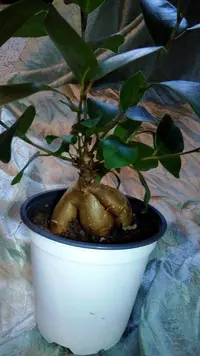
Ficus microcarpa 'Ginseng' is a compact fig commonly grown indoors as a bonsai-style houseplant. It has thick, swollen roots that form a sculptural base and a dense canopy of small, glossy green leaves.

In the wild, the species Ficus microcarpa occurs in tropical and subtropical Asia, often growing as a large tree. The 'Ginseng' form is selected for its chunky roots and slow, manageable growth.

This plant is considered moderately easy to grow, as it tolerates indoor conditions but reacts to sudden changes with leaf drop. Understanding how to care for Ficus microcarpa 'Ginseng' becomes easier when its needs for bright light, even moisture, and well-drained soil are respected.

Main Plant Requirements

Care Difficulty

Moderate Care

Light Preference

Bright Indirect Light

Water Requirements

Moderate Water

Temperature Preference

Tropical / Frost Sensitive

Hardiness Zone

10–12

Soil Texture

Loamy, Sandy, Organic-rich

Soil pH

Acidic (5.5–6.5), Slightly acidic (6.5–7.0)

Soil Drainage

Moist but well-drained

Fertilization

Light (every 4–6 weeks)

Get Personalized Care Plan

Scan your plant to receive care tips personalized for your specific plant

Available on iOS and Android

How to Care for the Ficus microcarpa 'Ginseng'

This bonsai-style fig prefers bright, indirect light with some gentle direct sun.

  • Provide 4–6 hours of bright, filtered light daily; early morning sun from an east window or mild outdoor exposure is ideal for Ficus microcarpa 'Ginseng'.
  • Protect from harsh midday or afternoon sun, which can scorch leaves and cause yellow or brown patches, especially through hot, unshaded glass.
  • In winter, move closer to the brightest window or to a brighter outdoor spot, and rotate the plant weekly to prevent lopsided growth.

This species prefers evenly moist, never soggy soil and reacts quickly to extremes.

  • Water when the top 2–3 cm of soil feel dry, letting water run through drainage holes, then discard any excess from saucers or cachepots.
  • Reduce frequency in winter when growth slows, but avoid letting the root ball dry out completely, which causes leaf drop and brittle twigs in Ficus microcarpa 'Ginseng'.
  • Watch for overwatering signs such as soft, yellowing leaves and a musty smell, and improve drainage with a loose mix containing bark or perlite.

This fig thrives in stable, warm conditions without sudden temperature swings.

  • Aim for 65–80°F (18–27°C) for best growth and compact foliage, keeping conditions consistent from day to night when possible.
  • Protect from cold; growth slows below 60°F (16°C), and tissue damage can occur below 50°F (10°C), especially with wind or damp conditions.
  • Avoid frost entirely and shield from extreme heat above 90°F (32°C) by providing shade, extra humidity, and good air movement during hot spells.

This species prefers moderate indoor humidity and reacts when air stays very dry.

  • Aim for 40–60% relative humidity to limit leaf drop and browning edges.
  • Tolerates short periods around 30% but prolonged dryness causes curled, crispy leaf tips and slower growth.
  • Increase humidity locally with a nearby humidifier, grouped plants, or a pebble tray instead of misting Ficus microcarpa 'Ginseng' leaves directly.

This fig needs a loose, fast-draining, slightly acidic to neutral potting medium.

  • Use a peat- or coir-based potting mix amended with 20–30% perlite and 10–20% fine bark for structure and air pockets.
  • Aim for pH around 6.0–7.0, which supports nutrient availability without risking micronutrient lockout.
  • Ensure excess water drains freely; avoid dense, heavy mixes and never allow the pot to sit in collected runoff.
  • Improve aeration further by adding coarse sand or extra bark if the mix feels compacted or stays wet for more than 3–4 days.

This species is well suited to container growing and adapts to a range of pot styles.

  • Choose a wide, stable container to counterbalance the heavy, raised root base and prevent tipping.
  • Select a non-glazed terracotta pot if extra evaporation is needed for plants in low-light or cooler rooms.
  • Use a container only slightly larger than the root mass to keep the mix drying evenly and reduce the risk of chronically wet pockets.

This bonsai-style fig responds well to modest feeding when actively growing, but excess nutrients can stress Ficus microcarpa 'Ginseng'.

  • Use a balanced liquid fertilizer (for example 10-10-10 or 20-20-20) at 1/2 strength for container plants.
  • Apply every 4–6 weeks during spring and summer, on moist soil, to limit root burn.
  • Reduce feeding to 1 light application in fall and skip midwinter if growth is very slow.
  • Slow-release pellets or a thin layer of mature compost can replace some liquid feedings.

Thoughtful pruning keeps this fig compact and maintains a strong trunk-and-root display in Ficus microcarpa 'Ginseng'.

  • Use clean, sharp scissors or bonsai shears to avoid crushing stems and spreading disease.
  • Trim in late winter to early spring, removing dead, damaged, or crossing branches first.
  • Shorten overly long shoots to 2–4 leaves to encourage dense branching and a balanced canopy.
  • Pinch soft new tips during the growing season to refine shape without heavy cuts.

Container-grown plants benefit from periodic repotting to refresh soil and manage the root system of Ficus microcarpa 'Ginseng'.

  • Check every 2–3 years; repot when roots circle the pot, emerge from drainage holes, or growth slows.
  • Repot in late winter to early spring, just before vigorous growth starts, using a fast-draining bonsai or general potting mix with added perlite.
  • Loosen and trim circling roots moderately rather than severely cutting them, to limit shock while maintaining vigor.
  • Water thoroughly after repotting, keep in bright but indirect light for 1–2 weeks, and avoid fertilizing until new growth appears.

New plants are most commonly produced from stem cuttings taken from healthy Ficus microcarpa 'Ginseng'.

  • Take semi-hardwood cuttings 8–12 cm long in late spring or early summer, with at least 2–3 leaf nodes.
  • Remove lower leaves, dip the cut end in rooting hormone, and insert into a sterile, moist mix of perlite and peat or coco coir.
  • Maintain warmth around 70–80°F, high humidity, and bright, indirect light to support root formation.
  • Cover with a clear dome or plastic bag for humidity, then gradually ventilate once new growth confirms rooting.

This tropical fig is frost-sensitive and needs sheltered conditions during cold months.

  • Move containers indoors before temperatures drop below 55°F, choosing a bright window with consistent light.
  • Avoid exposure to drafts, heaters, or sudden temperature swings that increase leaf drop risk.
  • Water less in winter, letting the top 2–3 cm of soil dry, since reduced light slows use of moisture.
  • If outdoor minimums stay above 60°F, only light monitoring and modest watering adjustments are needed.

Care Tips

Root flare cleaning

Gently brush away loose soil from the top of the pot once or twice a year to expose the thick roots and root flare, which improves air exchange around the base and reduces the risk of rot at the trunk line.

Canopy thinning rotation

Every 3–4 months selectively remove a few inner crossing twigs rather than just shortening tips, rotating the side you thin each time to keep the canopy compact while still allowing light and airflow into the interior branches.

Wiring young shoots

Use soft aluminum bonsai wire on young, flexible branches for 2–3 months to guide their direction, checking weekly so the wire does not cut into the bark as the stems thicken.

Controlled defoliation

On a healthy, well‑established plant, remove every second leaf on long shoots in late spring to encourage backbudding and smaller leaves, but avoid this technique on recently repotted or stressed plants.

Seasonal pest monitoring

Inspect leaf undersides and branch crotches with a hand lens every 2–3 weeks, especially when heating or air conditioning first switches on, since early detection of scale or mites is one of the most effective tools in caring for Ficus microcarpa 'Ginseng'.

Everything About Ficus microcarpa 'Ginseng'

Common Pests and Diseases

Scale insects

This pest feeds on sap and often appears as small, brown or tan bumps on stems and leaf undersides, sometimes producing sticky honeydew. Symptoms include yellowing leaves, reduced vigor, and sooty mold growing on the honeydew.

Solution

Isolate the plant, then manually remove scales with a cotton swab dipped in 70% isopropyl alcohol and gently wipe affected areas. For heavier infestations, wash the plant with lukewarm water and a mild insecticidal soap, repeating every 7–10 days until no new scale appears, and improve light and air movement to support recovery.

Ficus whitefly

This pest is a common issue on ornamental ficus and appears as small, white, moth-like insects that fly up when the plant is disturbed. Symptoms include leaf yellowing, curling, premature leaf drop, and sticky honeydew on leaves or nearby surfaces.

Solution

Shower the foliage thoroughly, focusing on leaf undersides, to dislodge nymphs and adults, then use a labeled insecticidal soap or horticultural oil every 7–10 days for several cycles. Reduce plant stress by providing bright light, stable temperatures, and even moisture, and remove heavily infested leaves to lower the population quickly when caring for Ficus microcarpa 'Ginseng' indoors.

Spider mites

These insects are tiny and often hard to see, but symptoms include fine webbing between leaves and stems, along with speckled, dull, or bronzed foliage. This pest tends to flare up in warm, dry indoor air, especially near heating or strong sun through glass.

Solution

Increase humidity around the plant and rinse foliage thoroughly with lukewarm water, paying attention to leaf undersides. Follow up with insecticidal soap or a light horticultural oil spray applied every 5–7 days for several treatments, and keep the plant out of hot, dry drafts to prevent reinfestation.

Edema

This disorder occurs when roots absorb water faster than leaves can transpire it, leading to small, corky, blister-like spots on leaves, often on the underside. Symptoms include rough, raised patches and sometimes distorted foliage, usually after irregular watering or sudden changes in moisture and light.

Solution

Allow the top 2–3 cm of soil to dry before watering again and avoid leaving the pot in standing water. Provide bright, stable light, moderate humidity, and consistent temperatures, and remove only severely damaged leaves since new growth will often emerge healthy once conditions are balanced.

Sooty mold

This disease is a dark, powdery or velvety fungal growth that develops on leaves and stems where honeydew from sap-sucking insects has accumulated. Symptoms include blackened leaf surfaces and reduced photosynthesis, which can slow growth and weaken the plant over time.

Solution

First control the source pests such as scale, aphids, or whiteflies, then gently wipe leaves with a soft cloth dampened in lukewarm water to remove the mold. For dense buildup, rinse foliage in the sink or shower and improve air circulation and light levels so leaves dry faster and new mold growth is discouraged.

Interesting Facts

Naturally lithophytic roots

In nature, this form of Ficus microcarpa often grows as a lithophyte, meaning it anchors on rock surfaces, and the swollen “ginseng” roots sold in containers are typically fused, pruned rootstocks shaped to mimic these rugged rock-clinging forms.

Urban air tolerance

This cultivar originates from a species widely used as a street and park tree in subtropical cities because it copes well with air pollution, reflected indoors by its relatively high tolerance of urban indoor air compared with many other woody houseplants.

Intensive nursery shaping

The characteristic bulbous base and miniature canopy are achieved through years of nursery techniques such as repeated pruning, grafting of finer-branching scions, and root training, so most plants in shops are already several years old when first sold.

Botan icon

Did you know?

In some subtropical regions where the wild-type Ficus microcarpa has been introduced, its figs are now spread by local birds that partner with introduced or naturally arriving fig wasps, allowing the species to naturalize and sometimes become invasive outside its original range.

FAQs about Ficus microcarpa 'Ginseng'

Growth is moderate. Indoors it typically adds 5–15 cm per year, depending on pot size, pruning, light, and nutrition. Rootstock thickens slowly over many years, which suits bonsai-style shaping and controlled indoor tree size.

Grow Healthy Plants with Botan Care

Keep your plants happy and healthy with plant identification, disease detection, and easy care guidance.

Botan plant care app — identify plants on mobile

Explore More Plants