Philodendron Care (Philodendron hederaceum var. oxycardium 'Brasil')

Philodendron

About Philodendron

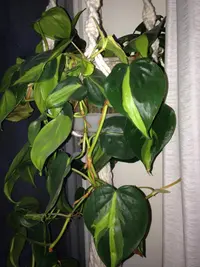
Philodendron hederaceum var. oxycardium 'Brasil' is a variegated climbing aroid grown mainly as an indoor foliage plant. It is valued for its heart-shaped leaves splashed with lime and darker green.

In nature, this type of philodendron occurs in tropical forests of Central and South America, where it grows as an understory vine on trees. Indoors it is typically grown in pots or hanging baskets and forms long, trailing stems.

This cultivar is considered forgiving and adaptable, which makes it suitable for people learning how to care for Philodendron. It prefers bright, indirect light, moderate moisture, and a free-draining potting mix.

Main Plant Requirements

Care Difficulty

Easy Care

Light Preference

Bright Indirect Light

Water Requirements

Moderate Water

Temperature Preference

Tropical / Frost Sensitive

Hardiness Zone

11–12

Soil Texture

Loamy, Peaty, Organic-rich

Soil pH

Acidic (5.5–6.5), Slightly acidic (6.5–7.0)

Soil Drainage

Moist but well-drained

Fertilization

Light (every 4–6 weeks)

Get Personalized Care Plan

Scan your plant to receive care tips personalized for your specific plant

Available on iOS and Android

How to Care for the Philodendron

This plant prefers bright, indirect light and tolerates some shade if exposure is adjusted carefully.

  • Provide 6–8 hours of bright, filtered light each day, such as near an east or north window or under light tree cover outdoors.
  • Allow gentle morning sun but protect from direct midday or afternoon rays, which can cause yellow patches and crisp brown edges on leaves.
  • In low light, vines stretch and variegation fades; move closer to a bright window or supplement with a grow light, especially in winter.

Watering should keep the soil lightly moist but never saturated for steady growth.

  • Before watering, let the top 2–4 cm of soil dry; check with a finger rather than following a fixed schedule.
  • Use a free-draining mix and a pot or bed with excellent drainage to reduce the risk of root rot, mushy stems, and sour odors from overwatering.
  • In spring and summer, expect to water more often; in fall and winter, lengthen the interval and watch for drooping, thin leaves as a sign of underwatering.

Stable, warm conditions support healthy growth and reduce stress for this tropical aroid.

  • Ideal temperatures are 65–80°F (18–27°C), where growth and variegation are strongest.
  • Below 55°F (13°C), growth slows and leaf damage may appear; protect from drafts near doors, windows, or air vents, and avoid unheated spaces in winter.
  • Short spikes up to 86°F (30°C) are tolerated if humidity and watering are adequate, but prolonged heat with dry air can cause leaf curl and crispy tips.

This plant prefers moderate to moderately high indoor humidity and reacts to very dry air over time.

  • Aim for 50–60% humidity for best foliage, though it tolerates short periods down to around 35–40%.
  • Low humidity stress shows as brown, crispy leaf edges and slower new growth on Philodendron leaves.
  • Increase humidity with a nearby humidifier, grouped plants, or a pebble tray, rather than misting alone.

This aroid grows best in a loose, airy, organic-rich substrate that drains quickly yet holds some moisture.

  • Use a mix of roughly 40% all-purpose potting mix, 30% fine bark, 20% perlite, and 10% coco coir or peat for structure and moisture balance.
  • Aim for slightly acidic to neutral pH, around 6.0–7.0, which keeps nutrients available without stressing roots.
  • Improve aeration by increasing chunky components like bark and perlite if the potting base feels dense or compacts easily.
  • Avoid heavy garden soil, waterlogged conditions, or pure peat mixes that stay wet for days and promote root rot in Philodendron hederaceum var. oxycardium 'Brasil'.

This species is very suitable for container growing due to its manageable root system and vining habit.

  • Choose a pot only 2–5 cm wider than the root mass to prevent excess unused mix from staying wet after each watering.
  • Use a stable, heavier container or cachepot if the vine is trained upward, so the plant does not tip as foliage mass increases.
  • Select porous materials like unglazed terracotta if the environment is humid, or glazed/plastic pots if moisture evaporates too quickly in your conditions.

Light, consistent feeding supports steady growth in Philodendron hederaceum var. oxycardium 'Brasil' without causing weak, leggy stems.

  • Use a balanced liquid fertilizer (for example 10-10-10 or 20-20-20) diluted to 1/4–1/2 strength for container plants.
  • Apply every 4–6 weeks during the active growing season in spring and summer on moist, not dry, soil.
  • Reduce feeding to 1 light application in fall and withhold fertilizer in midwinter when growth slows.
  • Alternatively, mix a small amount of slow-release granules or compost into the top 2–3 cm of potting mix each spring.

Targeted pruning keeps Philodendron hederaceum var. oxycardium 'Brasil' compact, encourages branching, and maintains healthy foliage.

  • Best time for pruning is late winter to midspring, before or just as new growth starts.
  • Remove yellowing, dead, pest-damaged, or crossing vines back to a node using clean, sharp scissors or pruning shears.
  • Shorten overly long or sparse stems to shape the plant and trigger fuller, bushier growth from lower nodes.
  • Disinfect blades with alcohol between plants to limit disease spread and discard all pruned material rather than composting if diseased.

Container-grown plants benefit from periodic repotting to refresh soil and relieve root crowding.

  • Plan to repot every 2–3 years, preferably in spring, when new growth of Philodendron hederaceum var. oxycardium 'Brasil' begins.
  • Check for roots circling the pot, protruding from drainage holes, or unexplained slow growth despite proper care.
  • Move to a pot 2–5 cm wider with fresh, airy, well-draining mix and good drainage holes.
  • Gently loosen circling roots, keep the original root ball largely intact, water thoroughly, then keep in bright, indirect light while it recovers.

Stem cuttings are the most reliable way to multiply Philodendron hederaceum var. oxycardium 'Brasil' for indoor collections.

  • Take 1–2 node stem cuttings with at least 1 leaf in late spring or summer when growth is active.
  • Place cuttings in water or a moist, airy mix, ensuring at least 1 node is submerged or buried for rooting.
  • Maintain warmth around 70–80°F, high humidity (50–70%), and bright, indirect light for strong root formation.
  • Pot rooted cuttings into small containers, keep slightly moist, and avoid strong fertilizer until new growth appears.

Indoor-grown Philodendron hederaceum var. oxycardium 'Brasil' needs mild winter adjustments rather than heavy protection.

  • Maintain indoor temperatures above 60°F and keep the plant away from drafts, heaters, and cold windows.
  • Move any outdoor containers indoors before night temperatures drop below 55°F, as foliage is not frost tolerant.
  • Reduce watering slightly in winter, letting the top 2–3 cm of soil dry, and avoid heavy fertilization until spring.

Care Tips

Regular vine rotation

Rotate hanging pots or trellised vines by 90° every 2–3 weeks so different sections of the plant receive stronger light and the variegation stays more even along the stems.

Support for fuller growth

Provide a thin moss pole, coco pole, or plastic grid and loosely tie a few main vines to it, which encourages larger, more consistent leaves and keeps long, tangled stems from breaking under their own weight.

Selective rejuvenation pruning

Once or twice a year, cut back a few of the oldest, bare-stemmed vines to just above a node and replant the healthy tip cuttings back into the same pot to keep the plant dense and visually full over time.

Strategic pot sizing

Choose a shallow, wide pot rather than a deep narrow one to encourage lateral root spread that better anchors the many trailing stems and reduces the risk of the root ball staying wet at the bottom.

Preventing thrips spread

Inspect the pale variegated sections and leaf undersides monthly for thrips or spider mites and, at the first sign, isolate the plant and use a targeted insecticidal soap spray, since the lighter leaf tissue shows feeding damage earlier and helps contain pests before they spread to other plants when caring for Philodendron.

Common Pests and Diseases

Spider mites

This pest feeds on the undersides of leaves, causing pale stippling, fine webbing, and a dull, dusty look to the foliage. Symptoms include slowed growth and leaf edge browning, especially in warm, dry indoor air.

Solution

Rinse foliage thoroughly in the shower or with a sink sprayer, focusing on leaf undersides, then let the plant dry with good air movement. For persistent infestations, use insecticidal soap or a horticultural oil labeled for indoor use every 7–10 days, and raise humidity slightly while avoiding leaf wetness that lingers overnight.

Mealybugs

These insects appear as small white cottony clusters in leaf axils, along stems, and sometimes on roots, causing leaf yellowing and sticky honeydew. This pest can stunt vines and deform new growth if not managed early.

Solution

Isolate the plant, then dab visible mealybugs with cotton swabs dipped in 70% isopropyl alcohol and wipe infested areas. Follow up with 2–3 treatments of insecticidal soap or horticultural oil at 7–10 day intervals, and inspect regularly for reinfestation while improving overall plant vigor with stable, bright indirect light and proper watering as part of Philodendron hederaceum var. oxycardium 'Brasil' plant care.

Scale insects

These insects form tan to brown shell-like bumps on stems and leaf veins and excrete sticky honeydew that can lead to sooty mold. Symptoms include yellowing leaves, weak vines, and reduced new growth.

Solution

Scrape or gently pry off individual scales with a fingernail or soft brush, then wipe stems and leaf midribs with a cloth lightly moistened with 70% isopropyl alcohol. Treat remaining juveniles with repeated applications of insecticidal soap or a light horticultural oil, and keep the plant slightly less crowded to improve airflow and monitoring access.

Bacterial leaf spot

This disease produces water-soaked, translucent spots that can turn dark and sometimes have yellow halos, often starting on older leaves or areas that stay wet. Symptoms include rapid spread across leaves in warm, humid, low-airflow conditions.

Solution

Remove and discard affected leaves, cutting several cm into healthy tissue, and avoid splashing water on foliage. Improve air circulation, water at the soil level in the morning, keep leaves dry, and if spread continues, dispose of severely affected plants to protect nearby philodendrons and other aroids.

Fungal leaf blight

This disease causes irregular brown or tan lesions that may have darker margins and can merge to kill large sections of leaves, especially when leaves stay wet for long periods. Symptoms include thinning foliage and rapid decline in very humid, poorly ventilated spaces.

Solution

Prune and discard infected leaves promptly, disinfecting cutting tools between cuts, and reduce overhead misting or any practice that leaves foliage wet. Increase spacing and airflow around the plant, water early in the day at the soil surface, and consider using a home-and-garden fungicide labeled for ornamental foliage plants if cultural changes alone do not halt progression.

Interesting Facts

Stable chimeric variegation

Its yellow and lime streaks come from a stable chimeric mutation, where genetically different tissues grow side by side, which is why the variegation pattern stays reasonably consistent through vegetative propagation.

More light-tolerant than wild type

Compared with typical green Philodendron hederaceum vines, this cultivar tolerates brighter indoor light because the lighter leaf areas reflect more radiation, though the paler tissue also performs less photosynthesis.

Selected from cultivated stock

This plant did not come from a separate wild population but was selected in cultivation from the common heartleaf philodendron, then maintained and distributed clonally to preserve its distinctive banded pattern.

Botan icon

Did you know?

Although often sold under changing trade names, genetic work and morphological comparison indicate that this plant is not a separate species but a cultivated variegated clone of the widely grown heartleaf philodendron, so different-looking plants with the same name are usually just sports or reverted stems from the same underlying lineage.

FAQs about Philodendron

Brown, crispy edges usually come from very dry air, underwatering, or fertilizer buildup. Increase humidity slightly, water thoroughly but less often, and flush the pot with plain water a few times to remove excess salts.

Grow Healthy Plants with Botan Care

Keep your plants happy and healthy with plant identification, disease detection, and easy care guidance.

Botan plant care app — identify plants on mobile

Explore More Plants