Early wind training
From the first season outdoors, expose the plant gradually to breezy but not stormy conditions so the pseudostem and leaf bases thicken and become more wind-resistant over time.

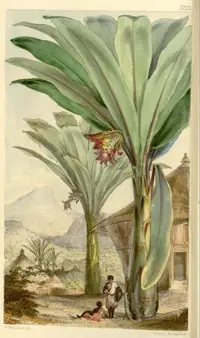
False banana, Ensete ventricosum, is a large, fast-growing ornamental banana relative grown mainly for its bold foliage rather than fruit. It forms a stout, trunk-like pseudostem with broad, arching green leaves that create a tropical look in gardens or large containers. Native to highland regions of East Africa, it prefers warm conditions and protection from frost. The plant is vigorous but needs ample space and consistent moisture, so it suits gardeners who can provide regular watering and feeding. In mild climates it can be grown outdoors, while in colder regions it is kept as a seasonal feature or lifted and stored. Understanding how to care for false banana helps keep its foliage lush and long-lived.

Care Difficulty
Moderate Care

Light Preference
Full Sun

Water Requirements
Keep Soil Moist

Temperature Preference
Tropical / Frost Sensitive

Hardiness Zone
9–11

Soil Texture
Loamy, Sandy, Organic-rich

Soil pH
Acidic (5.5–6.5), Slightly acidic (6.5–7.0)

Soil Drainage
Moist but well-drained

Fertilization
Heavy (weekly, diluted)
Scan your plant to receive care tips personalized for your specific plant
Available on iOS and Android
Ensete ventricosum needs strong light to build thick leaves and a sturdy pseudostem.
This plant prefers consistently moist but not waterlogged soil around its large root system.
This fast-growing species thrives in warm, frost-free conditions.
This species prefers moderately humid air but tolerates typical indoor levels if not extremely dry.
This plant grows best in deep, loose, fast-draining but moisture-retentive soil.
This species is suitable for container growing when the pot is large, heavy, and very stable.
Ensete ventricosum responds well to consistent feeding during its warm growing season.
Pruning Ensete ventricosum focuses on cleanliness and maintaining a strong, tidy clump.
Container-grown Ensete ventricosum and young outdoor plants benefit from careful, infrequent repotting or transplanting.
Propagation of Ensete ventricosum is usually done from seed and is considered slow and demanding.
Ensete ventricosum is frost sensitive and needs deliberate winter protection in most temperate regions.

Plant Health Check
Not sure what's wrong with your plant? Check your plant's health inside the app.
In Ethiopia, the false banana is cultivated mainly for its starchy pseudostem and corm, which are fermented and processed into traditional foods such as kocho and bulla rather than eaten as fruit.
This species is monocarpic, meaning each individual plant flowers once and then dies, typically after several years of building up a massive rosette of leaves and a thick pseudostem that can reach several meters tall.
The plant is naturally adapted to cool, moist highland conditions in eastern Africa, tolerating strong sun and seasonal dry periods as long as its root zone remains relatively moist and its pseudostem is not exposed to hard frost.

Genetic and ethnobotanical studies show that domesticated false banana in Ethiopia represents one of the few independently developed major root and starch crops in the world, supporting millions of people in highland regions where cereals are less reliable.
This species is fast-growing in warm conditions, often adding 60–120 cm of height in a single season and reaching 3–6 m tall with a 2–3 m spread when given enough space and resources.
Keep your plants happy and healthy with plant identification, disease detection, and easy care guidance.