Early form training
During the first 3–4 years, select a single strong leader and remove competing upright shoots in late winter to develop a straight trunk and balanced crown for long-term structure.

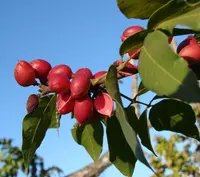
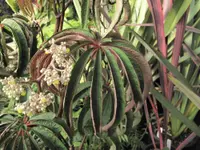
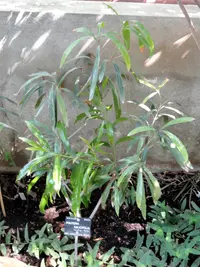
Almécega, Protium heptaphyllum, is a tropical evergreen tree native to Brazil and other parts of northern South America. It is best known for its aromatic resin and smooth, straight trunk.
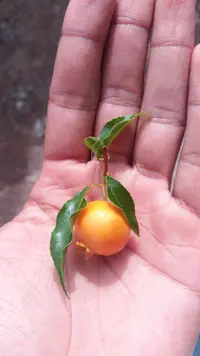
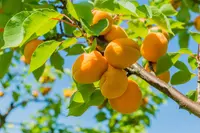
In nature it grows as a medium to large forest tree with glossy, dark green leaves arranged in leaflets and small, clustered flowers that develop into round fruits. The resin has traditional uses, which makes the species locally important.
This species prefers warm, humid climates, well-drained soils, and consistent moisture, so it is not practical for most small indoor spaces. For those interested in how to care for almécega outdoors in suitable climates, protection from cold and strong drying winds is essential.

Care Difficulty
Moderate Care

Light Preference
Full Sun

Water Requirements
Regular Water

Temperature Preference
Tropical / Frost Sensitive

Hardiness Zone
11–12

Soil Texture
Sandy, Loamy, Organic-rich

Soil pH
Acidic (5.5–6.5)

Soil Drainage
Moist but well-drained

Fertilization
Minimal (feed rarely)
Scan your plant to receive care tips personalized for your specific plant
Available on iOS and Android
This tropical tree prefers bright, filtered light that mimics open forest conditions.
This species prefers consistently moist but not waterlogged soil, especially while establishing outdoors.
This lowland tropical tree performs best in warm, frost-free climates all year.
This species prefers moderately humid air but survives in slightly drier outdoor conditions.
Protium heptaphyllum grows best in deep, loose, well-drained mineral soil enriched with organic matter.
This tree can be grown in containers for early stages or patio culture, though long-term growth is size-limited.
This tropical tree grows well in reasonably fertile soil but benefits from light feeding in cultivation, especially in containers.
Pruning Protium heptaphyllum is mainly structural and sanitary rather than heavy or frequent.
This species is usually grown as a landscape tree, so focus on careful transplanting of young plants rather than frequent repotting.
Reproduction of this tree is most often done from seeds, with vegetative methods used less commonly in home settings.
This tropical tree is frost sensitive and needs protection in regions with cold winters or occasional freezes.

Plant Health Check
Not sure what's wrong with your plant? Check your plant's health inside the app.
This tree produces a fragrant oleoresin often called almécega or Brazilian frankincense, used locally as incense and in traditional crafts due to its pleasant, persistent scent.
It is a canopy to subcanopy tree naturally distributed across Amazonian and Atlantic forests in Brazil and neighboring regions, where it contributes to forest structure and provides food resources for wildlife through its fleshy fruits.
Its resin and flowers attract specialized bees and other insects that use the sticky exudates for nest construction, illustrating a close ecological relationship between the tree and certain resin-collecting pollinators.

Chemical studies of its oleoresin show a complex mix of terpenoids, including α- and β-amyrin, which are part of the characteristic scent profile and help protect the tree from herbivores and microbial attack.
This tree is considered moderately fast-growing, often adding 30–60 cm in height per year in warm climates. In home or farm settings, it may reach 6–12 m tall with a broad, rounded crown.
Keep your plants happy and healthy with plant identification, disease detection, and easy care guidance.