Bromeliad Care (Aechmea 'Blue Tango')

Also known as: Aechmea
Bromeliad

About Bromeliad

Aechmea 'Blue Tango' is a tropical bromeliad grown mainly for its striking flower spike and colorful foliage. It is an epiphytic plant, meaning it often grows on trees in nature rather than in soil.

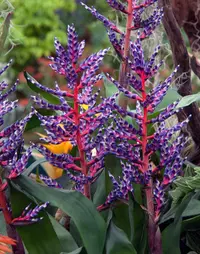
This cultivar forms a stiff rosette of arching leaves, with a tall, upright spike carrying pink bracts and bluish-purple flowers. It is native to the warm, humid regions of Central and South America through its parent species.

The plant is generally considered moderate in difficulty, as it tolerates indoor conditions but needs consistent warmth, bright filtered light, and careful watering. Learning how to care for Bromeliad helps this plant maintain strong color and a long-lasting bloom indoors.

Main Plant Requirements

Care Difficulty

Easy Care

Light Preference

Bright Indirect Light

Water Requirements

Moderate Water

Temperature Preference

Tropical / Frost Sensitive

Hardiness Zone

10–12

Soil Texture

Sandy, Loamy, Organic-rich

Soil pH

Acidic (5.5–6.5), Slightly acidic (6.5–7.0)

Soil Drainage

Well-drained

Fertilization

Light (every 4–6 weeks)

Get Personalized Care Plan

Scan your plant to receive care tips personalized for your specific plant

Available on iOS and Android

How to Care for the Bromeliad

Aechmea 'Blue Tango' prefers bright, indirect light for steady growth and flowering.

  • Provide 4–6 hours of bright, filtered light daily, such as near an east window or under light tree shade outdoors.
  • Tolerates light morning sun but protect from strong midday and afternoon sun, which can scorch leaves and fade color.
  • In low light, growth slows and bracts dull; move gradually to a brighter spot, especially in winter when days are shorter.

Watering focuses on keeping the central cup filled while allowing the potting mix to dry slightly between soakings.

  • Keep the central rosette (cup) 1/2–3/4 full with fresh, non-salty water and flush it every 1–2 weeks to prevent stagnation.
  • Let the top 2–4 cm of mix dry before watering the roots again; the mix must drain quickly and never stay soggy.
  • In warm, bright seasons, you may refill and root-water more often; in cooler, low-light periods, reduce frequency to avoid root rot and limp leaves.

This bromeliad prefers warm, stable temperatures and has low tolerance for cold or frost.

  • Aim for 65–80°F (18–27°C) for active growth, with stable conditions and protection from sudden drafts or temperature swings.
  • Short exposures down to about 50°F (10°C) are usually tolerated, but growth slows and damage risk rises below this level.
  • In hot spells above 85°F (29°C), increase air movement and shade from harsh sun; never expose the plant to frost or freezing conditions.

This bromeliad handles typical indoor humidity but benefits from slightly moist air.

  • Aim for 40–60% humidity to support healthy foliage and longer-lasting bracts.
  • Tolerates short periods of dry air, but leaf tips may brown or curl when humidity stays low.
  • Increase humidity with a pebble tray, grouping plants, or a nearby humidifier rather than misting the rosette.

Aechmea 'Blue Tango' prefers a loose, airy mix that drains very quickly.

  • Use a mix of roughly 50% orchid bark, 25% perlite or pumice, and 25% peat or coco coir for a chunky, organic-rich structure.
  • Ensure excess water runs through in seconds; the medium should feel springy rather than compact when squeezed.
  • Keep pH slightly acidic to neutral, around 5.5–7.0, which most commercial peat-based mixes naturally provide.
  • Avoid dense garden soil or mixes heavy in fine peat or clay that stay wet and exclude air around the roots.

This species is well suited to container growing for both indoor and sheltered outdoor use.

  • Choose a pot only 2–4 cm wider than the root base to keep the mix from staying wet too long.
  • Select a heavy ceramic or clay pot if the rosette becomes top-heavy, to reduce tipping risk.
  • Ensure large, unobstructed drainage holes so water exits rapidly and the central cup, not the root zone, holds most moisture.

This bromeliad benefits from light, carefully controlled feeding rather than heavy fertilization.

  • Use a balanced, water-soluble fertilizer at 1/4–1/2 strength, labeled for houseplants or Bromeliad indoor care.
  • Feed every 4–6 weeks in spring and summer, applying to the central cup and lightly to the potting mix.
  • Flush the cup with plain water monthly to prevent salt buildup and leaf tip burn.
  • Stop feeding in late fall and winter, when growth slows, to avoid soft, weak foliage.

Pruning Aechmea 'Blue Tango' focuses on hygiene and managing offsets rather than shaping.

  • In any season, remove dead, yellowing, or damaged leaves at the base with clean, sharp scissors or pruners.
  • After the flower spike fades, cut it off near the base to improve appearance and reduce rot risk.
  • Thin overcrowded offsets to maintain air flow and a balanced rosette shape.
  • Disinfect tools with alcohol before and after use to limit disease spread.

This plant grows slowly and needs infrequent repotting, mainly to refresh mix or manage offsets.

  • Repot every 2–3 years or when roots circle the pot, growth slows, or the plant becomes top-heavy.
  • Choose late spring or early summer, using a small pot and a very free-draining orchid or cactus/bromeliad mix.
  • Lift the plant gently, loosen circling roots lightly, and remove old soggy mix without breaking healthy roots.
  • Replant at the same depth, water lightly, and keep in bright, indirect light for 1–2 weeks to reduce stress.

Propagation is commonly done by separating offsets, also called pups, from the mother plant.

  • Wait until pups reach 1/3–1/2 the size of the mother, usually in late spring or summer.
  • Remove the plant from its pot and gently tease pups away, keeping some roots attached if possible.
  • Plant each pup in a small pot with coarse, well-drained mix and keep slightly moist, not wet.
  • Provide bright, indirect light, 70–80°F warmth, and high humidity to support strong rooting.

This tender bromeliad needs protection from cold, especially in regions with freezing winters.

  • Avoid exposure below 50°F; freezing temperatures (32°F and below) can damage foliage and roots.
  • Move container plants indoors before the first frost, placing them in bright, indirect light.
  • Reduce watering in winter, letting the mix dry slightly while keeping the central cup only lightly filled.
  • Keep plants away from cold drafts, uninsulated windows, and heating vents to prevent stress.

Care Tips

Water-filled cup

Keep the central cup 1/2–3/4 full with clean, low-mineral water and flush it out completely every 2–3 weeks to prevent salt buildup, algae, and mosquito larvae.

Secure rosette base

If the rosette is loose in its pot, wedge it gently with orchid bark or small stones around the base so the plant stays upright while new roots anchor it.

Pup management

When offsets reach about 1/3–1/2 the size of the mother plant, cut them off with a sterile knife at the base and pot them individually to maintain strong flowering cycles.

Flower spike longevity

To keep the inflorescence colorful longer, prevent water from sitting on the flower spike and avoid placing the plant directly under heat vents or strong drying air.

Ethylene and drafts

Keep the plant away from ripening fruit bowls and cold or hot drafts, as ethylene gas and rapid temperature swings can shorten bloom life and stress the rosette when growing Bromeliad indoors.

Common Pests and Diseases

Scale insects

This pest attaches to leaves and stems, sucking sap and causing yellowing, stunted growth, and sticky honeydew on the foliage and nearby surfaces.

Solution

Remove visible scale with a cotton swab dipped in isopropyl alcohol, then rinse the plant thoroughly; for heavier infestations, apply a horticultural oil or insecticidal soap to all leaf surfaces, repeating every 7–10 days until new growth is clean and healthy.

Mealybugs

These insects appear as white, cottony clusters in leaf axils and at the base of the rosette, weakening the plant and sometimes leading to leaf distortion or decline.

Solution

Isolate the plant, wipe or rinse off visible mealybugs with water and a mild soap solution, then treat hidden areas in the leaf bases with insecticidal soap or neem oil, repeating treatments and monitoring closely for several weeks.

Bacterial leaf spot

This disease causes small water-soaked spots on leaves that enlarge, turn brown, and may develop yellow halos, often starting where water sits on the foliage or in damaged tissue.

Solution

Remove and discard affected leaves, keep water out of the leaf axils and off the foliage when possible, improve air circulation, and avoid overhead watering; in severe or persistent cases, discard heavily infected plants to protect nearby bromeliads as part of broader Bromeliad care instructions.

Fungal crown rot

This disease develops in the central rosette when water and organic debris stagnate, leading to a soft, brown, foul-smelling crown and rapid collapse of the plant.

Solution

At early stages, cut away all soft, decayed tissue with sterile tools and allow the plant to dry well between waterings, keeping only a small amount of clean water in the cup; improve drainage, reduce watering frequency, and maintain stronger airflow to prevent recurrence.

Spider mites

These pests thrive in warm, dry indoor air and cause fine stippling, dull or bronzed leaves, and delicate webbing in tight leaf spaces.

Solution

Rinse the plant thoroughly under lukewarm water, focusing on the undersides of leaves and rosette crevices, then use insecticidal soap or a dilute neem oil spray at 5–7 day intervals while raising humidity and improving air movement to discourage reinfestation.

Interesting Facts

Long-lasting flower spike

The bright pink and purple inflorescence can remain showy for several months, because the colorful parts are actually long-lived bracts that protect and support the small true flowers.

Hybrid of two species

This cultivar is a deliberate cross between Aechmea dichlamydea trinitensis and Aechmea fendleri, selected to combine vivid bract color with a more compact, upright rosette and strong indoor performance.

UV-reflective bract color

The intense pink bracts and blue flower tips contain pigments that reflect ultraviolet light, which helps attract pollinators such as hummingbirds and insects that can see into the UV range.

Botan icon

Did you know?

Aechmea 'Blue Tango' was introduced into the ornamental trade only in the late 20th century, yet it quickly became a reference plant in discussions of Aechmea 'Blue Tango' plant care because its long-lasting, upright inflorescence shows how modern bromeliad hybrids can be bred specifically for extended indoor display rather than landscape use.

FAQs about Bromeliad

This hybrid usually blooms once when mature, then slowly declines while producing pups. Lack of bloom is often due to immaturity, insufficient light, or stress from recent repotting. Consistent conditions and time are usually all that is needed.

Grow Healthy Plants with Botan Care

Keep your plants happy and healthy with plant identification, disease detection, and easy care guidance.

Botan plant care app — identify plants on mobile

Explore More Plants