Mark Dormant Spots
Place small, durable labels where each plant grows so the exact spots are easy to find and avoid disturbing when the foliage dies back in early summer.

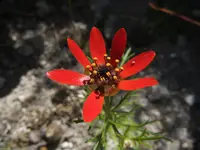
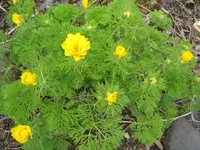
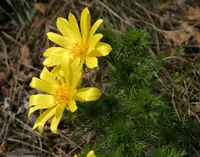
Scarlet pheasant's-eye (Adonis flammea) is a small annual wildflower from dry grasslands and light fields in parts of Europe and western Asia. It forms a low, bushy clump with finely divided, feathery leaves.
The plant is best known for its vivid red, poppy-like flowers with a dark center that appear in late spring to early summer. It suits naturalistic borders and meadow-style plantings more than formal beds.
Adonis flammea prefers open sun, well-drained, rather dry soil, and does not like disturbance once established. Understanding how to care for Scarlet Pheasant's-eye mainly involves providing lean soil, good drainage, and avoiding heavy competition from larger plants.

Care Difficulty
Moderate Care

Light Preference
Full Sun

Water Requirements
Moderate Water

Temperature Preference
Cool Climate

Hardiness Zone
5–8

Soil Texture
Sandy, Loamy, Organic-rich

Soil pH
Slightly acidic (6.5–7.0), Neutral (7.0)

Soil Drainage
Well-drained

Fertilization
Minimal (feed rarely)
Scan your plant to receive care tips personalized for your specific plant
Available on iOS and Android
This sun-loving annual thrives in open, bright positions with cool roots and unobstructed light to its foliage.
This species prefers evenly moist but not saturated soil, especially during active spring growth and flowering.
This cool-temperate annual grows best in mild conditions and dislikes both hard frost and intense, prolonged heat.
Adonis flammea handles typical household humidity well and rarely needs special adjustment.
Adonis flammea prefers light, free-draining mineral soil that dries quickly after rain or watering.
This species can be grown in containers if the potting setup mimics its preference for fast-draining, mineral soil.
Adonis flammea is a low-nutrient wildflower that needs only modest feeding in cultivation.
Pruning needs for Adonis flammea are minimal and focus on tidiness rather than shaping.
This species is better suited to open ground than containers, so focus on careful transplanting rather than frequent repotting.
Propagation of Adonis flammea is mainly done from fresh seed and requires some patience and suitable conditions.
In typical temperate climates, Scarlet Pheasant's-eye is fairly cold tolerant and usually needs only light winter care outdoors.

Plant Health Check
Not sure what's wrong with your plant? Check your plant's health inside the app.
This species is a classic component of traditional cereal fields in parts of Europe and western Asia but has declined severely due to herbicide use and modern seed cleaning, making it regionally rare or endangered in several countries.
Its flowers often show a striking dark blotch at the base of each intense red petal, a contrasting pattern thought to help guide pollinating insects toward the center of the flower.
The plant germinates and flowers early in the growing season in steppe and dry field habitats, completing much of its life cycle before crops or taller vegetation fully close the canopy.

Archaeobotanical studies have found seeds of this species in ancient grain stores and archaeological sites, indicating that it has accompanied human cereal cultivation since early agriculture in parts of the Mediterranean and Near East.
All parts of this species are considered poisonous if eaten, especially the seeds and roots. Ingestion may cause nausea, vomiting, abdominal pain, and heart rhythm disturbances. Keep it away from children, pets, and grazing animals.
Keep your plants happy and healthy with plant identification, disease detection, and easy care guidance.