Stimulate Leaf Movement
Place the plant where it receives gentle air circulation or low-volume music, as mild vibration and changing air currents can enhance the visible leaf movements without stressing the plant.

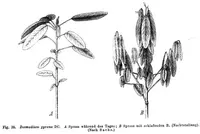
The telegraph-plant, Codariocalyx motorius, is a small tropical shrub best known for its moving leaflets that twitch in response to light and temperature changes. This fast, rhythmic motion makes it a popular curiosity plant and an engaging choice for observation.
In nature it occurs in warm regions of Asia, where it grows as an understory plant in bright, filtered light. It has slender stems, delicate green leaflets, and a somewhat open, leggy growth habit.
It is moderately challenging for beginners because it dislikes cold, drafts, and very dry air, and it responds poorly to inconsistent watering. To successfully care for telegraph-plant, provide stable warmth, bright indirect light, and a light, free-draining soil kept slightly moist but not waterlogged.

Care Difficulty
Moderate Care

Light Preference
Full Sun

Water Requirements
Regular Water

Temperature Preference
Tropical / Frost Sensitive

Hardiness Zone
10–11

Soil Texture
Sandy, Loamy, Organic-rich

Soil pH
Acidic (5.5–6.5), Slightly acidic (6.5–7.0)

Soil Drainage
Moist but well-drained

Fertilization
Moderate (every 2–4 weeks)
Scan your plant to receive care tips personalized for your specific plant
Available on iOS and Android
This species prefers bright, gentle light that supports active leaflet movement without scorching the foliage.
Codariocalyx motorius prefers evenly moist, fast-draining soil that never stays soggy for long periods.
This plant thrives in consistently warm, frost-free conditions similar to a tropical or warm subtropical climate.
This species prefers moderate humidity and reacts quickly to very dry air.
This plant prefers a loose, aerated, and fast-draining mix that still holds moderate moisture.
This species adapts well to container growing when root space and drainage are managed carefully.
Codariocalyx motorius benefits from light, consistent feeding during its active growing season.
Pruning Codariocalyx motorius helps maintain a compact form and supports healthy growth under cultivation.
This plant prefers steady conditions, so repotting Codariocalyx motorius should be done only when clear signs of crowding appear.
Codariocalyx motorius is most often propagated by seeds and soft stem cuttings under warm, stable conditions.
This species is frost-sensitive and needs thoughtful winter care, especially in temperate climates.

Plant Health Check
Not sure what's wrong with your plant? Check your plant's health inside the app.
This species has specialized motor organs at the base of its small lateral leaflets that drive rapid, rhythmic movements in response to light intensity and temperature, making the leaves appear to “dance” on a timescale of seconds to minutes.
Beyond slow daily leaf folding, the plant performs unusually quick nyctinastic movements, changing leaflet angle rapidly as day shifts to night, which helps optimize light capture while reducing heat and water loss.
It was used as a classic model in early plant physiology experiments to study electrical signaling and motor tissues, contributing to the understanding that plants can generate and conduct bioelectric impulses somewhat analogous to nerve signals.

This species can exhibit directional leaflet movements toward repetitive mechanical stimuli such as tapping or soft sound vibrations, making it one of the few plants whose motion can be observed in real time responding to non-contact environmental cues.
Leaf curling with reduced movement usually points to stress from low humidity, underwatering, or temperature swings. Check soil moisture, raise humidity, and keep it away from drafts. Movement improves gradually once conditions stabilize and new growth appears.
Keep your plants happy and healthy with plant identification, disease detection, and easy care guidance.