Early staking
Install low, sturdy stakes or a simple ring support in early spring so the tall stems stay upright and do not flop or split under late-summer flower weight or heavy rain.

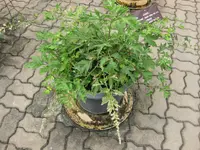
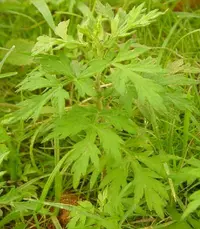
White mugwort (Artemisia lactiflora) is a herbaceous perennial from East Asia, valued for its tall, upright growth and finely divided, often silvery-green foliage. It produces sprays of small, creamy white flower heads above the leaves late in the season, giving a light, airy look in mixed borders. In gardens it is usually grown as an ornamental background or accent plant rather than for culinary use. The plant is generally robust and cold hardy, adapting well to typical temperate climates when planted in well-drained soil. It copes with a range of conditions, so care for White mugwort is usually straightforward if it receives adequate light and moderate moisture.

Care Difficulty
Moderate Care

Light Preference
Full Sun

Water Requirements
Moderate Water

Temperature Preference
Cold Hardy

Hardiness Zone
4–8

Soil Texture
Loamy, Sandy, Organic-rich

Soil pH
Slightly acidic (6.5–7.0), Neutral (7.0)

Soil Drainage
Moist but well-drained

Fertilization
Minimal (feed rarely)
Scan your plant to receive care tips personalized for your specific plant
Available on iOS and Android
This perennial prefers bright outdoor conditions with moderate direct sun for best growth.
This species prefers consistently moist but not saturated soil, especially during active growth.
This hardy perennial tolerates cool climates but grows most vigorously in mild conditions.
This species tolerates a wide humidity range and rarely needs special humidity management outdoors or indoors.
This species prefers moderately fertile, well-drained soil that does not stay wet.
This plant can grow in containers if the pot provides enough depth, stability, and drainage.
Artemisia lactiflora grows well in moderately fertile soil and usually needs only light feeding.
Pruning helps Artemisia lactiflora maintain a tidy shape and encourages healthy flowering stems.
This species is usually grown in garden beds, with transplanting more common than container repotting.
Artemisia lactiflora is commonly propagated by division, cuttings, or seeds.
This hardy perennial tolerates typical winters in much of the US with minimal care.

Plant Health Check
Not sure what's wrong with your plant? Check your plant's health inside the app.
This species flowers in late summer to autumn, producing many small, nectar-rich florets that support bees, hoverflies, and other insects when many other perennials have finished blooming.
In the wild it typically grows along streams, in damp meadows, and in mountain valleys of China, indicating a natural preference for consistently moist but not waterlogged soils.
Unlike many strongly aromatic Artemisia species, its leaves have a relatively mild, resinous scent, reflecting lower levels or different composition of volatile oils compared with relatives such as Artemisia absinthium.

Artemisia lactiflora was introduced to Western horticulture in the late 19th and early 20th centuries and became valued in European and North American gardens as one of the few Artemisia species grown primarily for its white, astilbe-like flower plumes rather than for silver foliage or intense fragrance.
This species spreads by creeping rhizomes and self-seeding, so it can become assertive in open soil. Use root barriers or containers, and divide clumps regularly if garden space is limited or nearby plants are delicate.
Keep your plants happy and healthy with plant identification, disease detection, and easy care guidance.