Philodendron lacerum Care

Philodendron lacerum

About Philodendron lacerum

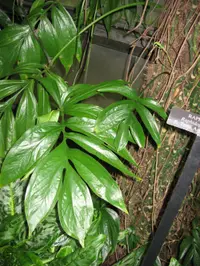
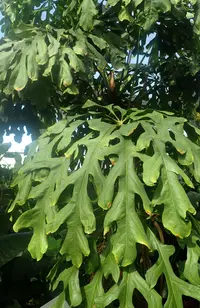
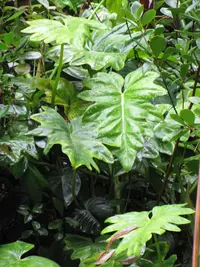
Philodendron lacerum is a tropical climbing aroid grown mainly for its large, deeply lobed green leaves and strong architectural presence. It is usually grown as a foliage houseplant or in warm, sheltered outdoor spaces.

In nature, it occurs in tropical forests of the Caribbean region, where it often scrambles or climbs on trees. Its thick stems and aerial roots allow it to anchor firmly and reach for higher light levels.

This species is considered moderately easy if given stable warmth, filtered light, and evenly moist but well-drained soil. Understanding how to care for Philodendron lacerum starts with providing a consistent environment and enough space for its vigorous growth habit.

Main Plant Requirements

Care Difficulty

Moderate Care

Light Preference

Bright Indirect Light

Water Requirements

Moderate Water

Temperature Preference

Tropical / Frost Sensitive

Hardiness Zone

10–11

Soil Texture

Loamy, Peaty, Organic-rich

Soil pH

Acidic (5.5–6.5), Slightly acidic (6.5–7.0)

Soil Drainage

Moist but well-drained

Fertilization

Light (every 4–6 weeks)

Get Personalized Care Plan

Scan your plant to receive care tips personalized for your specific plant

Available on iOS and Android

How to Care for the Philodendron lacerum

This species prefers bright, filtered light that mimics a forest understory.

  • Provide 6–8 hours of bright, indirect light each day, such as light filtered through sheer curtains or bright shade under a tree canopy.
  • Allow gentle early morning sun in cooler seasons, but protect Philodendron lacerum from direct midday or afternoon sun to prevent leaf scorch and bleaching.
  • In low-light rooms or deep shade outdoors, expect slower growth and longer internodes; supplement with a grow light during short winter days if foliage loses vigor.

Watering should keep the root zone evenly moist but never saturated.

  • Water when the top 2–4 cm of soil feels dry, allowing water to run through freely, then discard any excess to prevent root rot.
  • Reduce frequency in winter when growth slows, but avoid letting the entire root ball dry out; leaves curling or drooping can indicate underwatering.
  • Yellowing, soft leaves and a sour soil smell suggest overwatering, so improve drainage with a chunky, airy mix and ensure no standing water around the roots.

Stable, warm conditions support steady growth and reduce stress.

  • Aim for 70–80°F (21–27°C) for active growth, with acceptable short-term ranges of 65–85°F (18–29°C) if other conditions are favorable.
  • Avoid temperatures below 60°F (16°C); prolonged exposure near 50°F (10°C) can cause leaf damage, and light frost can kill exposed tissue.
  • In hot spells above 85°F (29°C), increase shade and airflow, and avoid placing the plant near heat sources or in enclosed spaces that trap hot, dry air.

This species benefits from elevated humidity and responds best to consistently moist air.

  • Aim for 50–70% humidity to support large, healthy foliage and steady growth.
  • Tolerates brief dips to 40%, but prolonged dry air causes brown leaf edges, curling, and stalled new leaves.
  • Increase humidity with a room humidifier, grouped plants, or a pebble tray, rather than misting alone, which dries quickly.

This aroid prefers a loose, airy, organic-rich mix that drains quickly yet retains moderate moisture.

  • Use a base of peat or coco coir with chunky orchid bark and perlite in roughly equal parts for structure and drainage.
  • Ensure the mix feels springy, not compacted, so roots receive both moisture and air, reducing risk of rot.
  • Keep pH slightly acidic to neutral, around 5.5–7.0, which supports nutrient availability for Philodendron lacerum.
  • Avoid heavy garden soil, fine sand, or mixes that stay wet for more than 2–3 days after watering.

This species is well suited to container growing due to its manageable root system and climbing habit.

  • Choose a wide, stable pot with some weight so the plant does not tip as vines elongate or when using a moss pole.
  • Select a container material that matches your environment, such as terracotta for faster drying or plastic for slower moisture loss.
  • Use a pot with multiple drainage holes and slightly raised feet to let excess water exit quickly and prevent a stagnant layer at the base.

Balanced feeding supports steady growth and healthy foliage in Philodendron lacerum under indoor or container conditions.

  • Use a balanced liquid fertilizer (such as 10-10-10 or 20-20-20) diluted to 1/4–1/2 strength for routine feeding.
  • Apply every 4–6 weeks during the growing season, only on moist soil to avoid root burn.
  • Reduce feeding to 1 light application in winter or pause entirely if growth slows markedly.
  • Organic options like dilute compost extract or a mild slow-release fertilizer can be used at the start of spring.

Thoughtful pruning keeps Philodendron lacerum manageable, encourages branching, and removes weak growth.

  • Carry out main pruning in late winter or early spring before strong new growth begins.
  • Remove yellowing, dead, or damaged leaves and any crossing, crowded, or leggy stems with clean, sharp shears.
  • Cut just above a node to encourage new lateral shoots and a fuller, more compact plant structure.
  • Disinfect tools before and after use to limit disease spread, especially when removing suspect tissue.

Container-grown Philodendron lacerum benefits from occasional repotting to refresh soil and support root health.

  • Plan to repot every 2–3 years, or when roots circle the pot, emerge from drainage holes, or growth slows despite good care.
  • Choose spring or early summer so roots can re-establish in warm, bright conditions with active growth.
  • Move the plant into a pot 2–5 cm wider, using a chunky, well-drained aroid mix, and handle roots gently.
  • Water thoroughly after repotting, then keep soil slightly moist and light a bit lower for 1–2 weeks to reduce stress.

Stem cuttings are the most practical method for increasing Philodendron lacerum plants for home collections.

  • Take semi-firm stem cuttings with at least 1 node and 1–2 leaves in late spring or early summer.
  • Root cuttings in moist, airy mix or water at 70–80°F with bright, indirect light and high humidity (60–80%).
  • Optional rooting hormone on the cut end can speed root formation and reduce failures.
  • Keep the medium barely moist, avoid waterlogging, and pot into a chunky aroid mix once roots reach 3–5 cm.

This tropical species has low cold tolerance and needs indoor or greenhouse conditions in regions with cool winters.

  • Keep temperatures above 60°F; exposure to frost or prolonged cold can damage leaves and stems.
  • Before night temperatures drop, move container plants indoors near bright, indirect light sources.
  • Maintain slightly drier soil in winter, avoiding both complete dryness and constant saturation.
  • Keep plants away from cold drafts, heater blasts, and very low humidity to prevent leaf edge browning.

Care Tips

Provide climbing support

Install a sturdy moss pole or textured stake early and gently tie new vines to it so the plant can anchor aerial roots and develop larger, healthier leaves over time.

Rotate for even growth

Turn the pot 90° every 2–3 weeks so the plant does not lean toward one side and develops a balanced canopy with stronger, more evenly lit foliage.

Inspect nodes regularly

Check stem nodes and leaf undersides every 1–2 weeks for early signs of pests or rot, and remove any soft, blackened sections with sterile tools before problems spread.

Refresh top substrate

Once or twice a year, scrape away the top 2–3 cm of potting mix and replace it with fresh mix to reduce salt buildup and maintain healthier root conditions when growing Philodendron lacerum.

Support heavy vines

As vines lengthen and leaves enlarge, add extra ties or a second support and secure stems loosely to prevent kinking or breakage at the base.

Common Pests and Diseases

Spider mites

This pest is common on Philodendron species grown in warm, dry indoor air, causing fine stippling, dull foliage, and delicate webbing on the undersides of leaves.

Solution

Rinse foliage thoroughly in the shower or with a sink sprayer, focusing on leaf undersides, then repeat every few days for 1–2 weeks; for heavier infestations, use insecticidal soap or a ready-to-use neem oil spray and increase humidity while keeping air movement gentle but constant.

Mealybugs

These insects hide in leaf axils and along stems, appearing as cottony white clusters that stunt new growth and cause sticky honeydew deposits.

Solution

Remove visible insects with a cotton swab dipped in isopropyl alcohol, then wash the plant with lukewarm water and mild insecticidal soap, repeating weekly until no new mealybugs appear and isolating the plant from others during treatment.

Bacterial leaf spot

This disease causes water-soaked, translucent spots that may turn brown with yellow halos, often spreading quickly in warm, humid conditions with poor air circulation.

Solution

Remove and discard affected leaves, avoid wetting foliage, sanitize cutting tools with 70% alcohol, and improve spacing and airflow; in severe cases, discard heavily infected plants and avoid reusing contaminated pots or media without thorough disinfection.

Fungal leaf blight

Symptoms include irregular brown or black lesions starting at leaf edges or tips, sometimes with a tan center, often after prolonged leaf wetness or overcrowded conditions.

Solution

Trim off blighted tissue, ensure the plant dries quickly after watering, increase airflow, and avoid overhead watering; for recurring issues, apply a labeled copper or sulfur-based fungicide according to directions and reduce humidity around the plant canopy while keeping the root zone evenly moist.

Scale insects

These insects appear as small, dome-shaped brown or tan bumps on stems and leaf midribs, slowly weakening the plant and causing yellowing or leaf drop.

Solution

Gently scrape or wipe off adults with a soft cloth or fingernail, then treat remaining juveniles with repeated applications of insecticidal soap or horticultural oil every 7–10 days, monitoring new growth closely as part of ongoing Philodendron lacerum care instructions.

Interesting Facts

Deeply lobed canopy

This species develops large, deeply divided leaves that can form an overlapping canopy layer in understory habitats, helping it intercept scattered light in low-light tropical forests.

Hemiepiphytic lifestyle

It often begins life on the forest floor and later climbs trees using aerial roots, a growth strategy known as hemiepiphytism that allows it to access higher light levels over time.

Native Caribbean range

The species is naturally distributed in parts of the Caribbean region, where it occupies humid, shaded forest environments rather than open or seasonally dry habitats.

FAQs about Philodendron lacerum

Yellow leaves usually result from overwatering, poor drainage, or low light. Check the root ball for rot, improve drainage, remove standing water in saucers, and trim a few worst leaves to redirect energy to healthy growth.

Grow Healthy Plants with Botan Care

Keep your plants happy and healthy with plant identification, disease detection, and easy care guidance.


Botan plant care app — identify plants on mobile

Explore More Plants