Mexican yam Care (Dioscorea mexicana)

Also known as: cabeza de negro
Mexican yam

About Mexican yam

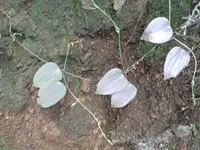
Mexican yam, Dioscorea mexicana, is a caudiciform vine grown for its sculptural swollen base and twining stems. It develops a thick, woody caudex that stores water and nutrients, with slender climbing shoots bearing heart-shaped leaves. In nature it occurs in Mexico and parts of Central America, often in seasonally dry habitats. The plant’s drought tolerance and storage organ make it relatively forgiving of occasional missed watering, but it dislikes prolonged cold and waterlogged soil. It prefers bright light, good air movement, and a very free-draining, gritty mix. Understanding how to care for Mexican yam mainly involves balancing strong light with careful, infrequent watering during active growth.

Main Plant Requirements

Care Difficulty

Moderate Care

Light Preference

Partial Sun

Water Requirements

Moderate Water

Temperature Preference

Tropical / Frost Sensitive

Hardiness Zone

10–11

Soil Texture

Sandy, Loamy, Organic-rich

Soil pH

Acidic (5.5–6.5), Slightly acidic (6.5–7.0)

Soil Drainage

Well-drained

Fertilization

Light (every 4–6 weeks)

Get Personalized Care Plan

Scan your plant to receive care tips personalized for your specific plant

Available on iOS and Android

How to Care for the Mexican yam

This caudiciform vine prefers bright conditions that mimic an open woodland edge.

  • Provide 4–6 hours of gentle morning sun with bright, filtered light the rest of the day for steady growth.
  • Tolerates light partial shade, but in deep shade the caudex elongates, leaves pale, and vining becomes weak in Mexican yam.
  • In hot climates, protect from harsh midday and late afternoon sun to prevent leaf scorch, especially in summer when sun intensity peaks.

Watering should support the caudex without leaving the roots in prolonged wetness.

  • During active growth, water when the top 3–5 cm of soil feel dry, allowing excess to drain freely each time.
  • Use a sharply draining, gritty mix; persistent wet soil, a sour smell, or soft, yellowing caudex tissue indicate overwatering and possible rot.
  • In dormancy, after leaves yellow and drop, reduce watering to very light sips every few weeks, only preventing the caudex from shriveling.

This species prefers warm, frost-free conditions with a marked dry rest in cooler seasons.

  • Aim for 70–85°F (21–29°C) during active growth for best foliage and vine development.
  • Protect from cold below 50°F (10°C); exposure near 40°F (4°C) can trigger leaf loss, and frost can kill the vine and damage the caudex.
  • In hot spells above 95°F (35°C), provide some shade and avoid hot, reflected surfaces to limit heat stress and moisture loss.

This species handles typical indoor humidity but benefits from slightly raised levels in very dry homes.

  • Aim for 40–60% humidity; it remains tolerant down to about 30% if watering is consistent.
  • Crisp leaf edges, dull foliage, and slowed vining in active growth can indicate humidity stress combined with underwatering.
  • Use a nearby open water tray or group plants together rather than misting, which has little lasting effect on Mexican yam.

Soil for Dioscorea mexicana must be very fast-draining yet moisture-retentive enough to support slow, steady growth.

  • Use a gritty, airy mix such as 40% cactus mix, 40% pumice or perlite, and 20% fine bark or coarse sand to prevent waterlogging around the caudex.
  • Ensure the structure stays loose; oversized particles and added perlite or pumice keep pores open for root aeration.
  • Keep pH slightly acidic to neutral, around 6.0–7.0, avoiding heavy lime additions or salty fertilizers that can damage roots.
  • Avoid dense, peat-heavy, or clay-based mixes that stay wet, as prolonged saturation encourages rot at the caudex base.

This species is well suited to container growing due to its compact caudex and manageable roots.

  • Choose a pot just 2–4 cm wider than the caudex so the mix dries evenly and does not stay wet at the base.
  • Use a deeper container than the caudex height to allow the tuber and feeder roots to anchor firmly and prevent wobbling.
  • Select a heavy ceramic or clay pot for outdoor use so the vine and support trellis do not tip the container in wind.

This caudiciform vine grows acceptably with minimal feeding, but moderate fertilization improves vigor and caudex development in Mexican yam.

  • During active spring–summer growth, apply a balanced liquid fertilizer (e.g., 10-10-10 or 20-20-20) every 4–6 weeks at 1/4–1/2 label strength.
  • Use a dilute, low-salt fertilizer or a light top-dressing of fine compost to avoid caudex and root burn.
  • Skip feeding in dormancy when vines die back and soil stays mostly dry, typically fall–winter.
  • Flush the pot with plain water occasionally during the season to reduce fertilizer salt buildup around the caudex.

Dioscorea mexicana needs only light pruning to manage its twining vines and maintain a tidy appearance.

  • Prune in late winter or very early spring, before strong new growth starts.
  • Use clean, sharp scissors or small pruners to remove dead, weak, or damaged vines back to a healthy node.
  • Thin crowded, tangled stems to improve air flow and light penetration, guiding remaining vines onto a support.
  • Avoid cutting the caudex; pruning affects vine length and density, not the stored stem base.

This species prefers a stable container and infrequent disturbance, so repot only when clearly necessary.

  • Plan to repot every 3–4 years, ideally in late winter or early spring just before new growth begins.
  • Look for roots circling the pot, very slow growth despite good care, or water running straight through as signs it needs more space.
  • Choose a shallow, wide pot with excellent drainage and gently loosen the root ball without injuring the caudex.
  • Replant at the same depth in fresh, gritty mix, water lightly once, then keep slightly dry until active growth resumes to limit stress.

Dioscorea mexicana is most often propagated from seed, with vegetative methods used less frequently.

  • Sow fresh seeds in warm conditions (75–85°F) in spring, using a well-drained, gritty seed mix kept slightly moist but never soggy.
  • Provide bright, indirect light and steady warmth; germination may be slow and uneven over several weeks.
  • Transplant seedlings carefully once they form a small caudex and several true leaves, avoiding damage to the young storage tissue.
  • Stem or caudex cuttings are possible but risky and slow, so are usually reserved for experienced growers.

This caudiciform is not frost hardy and needs specific winter care in most temperate climates.

  • Move container plants indoors before temperatures drop below 50°F, providing cool, bright, frost-free conditions.
  • Allow vines to yellow and die back naturally, then reduce watering to just enough to prevent the caudex from shriveling.
  • Keep the potting mix mostly dry in winter to avoid root and caudex rot in cool conditions.
  • In very mild climates, grow in a container rather than the ground so it can be sheltered from rare cold snaps.

Care Tips

Caudex height control

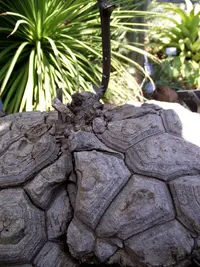
Set the potting mix level just below the widest part of the caudex to reduce rot risk and to make it easier to monitor new root and shoot growth when growing Mexican yam.

Seasonal vine support

Install a light, removable trellis or hoop at the start of the growth season so the twining vine can climb without kinking, then remove or cut back the structure when the vine naturally dies back.

Dormancy rest period

After the vine yellows and dries, stop watering completely, move the pot to a dry, shaded spot, and keep it undisturbed for several months to allow a proper rest period.

Repotting timing

Plan repotting for late dormancy and gently lift the caudex only enough to refresh soil and check roots, avoiding root disturbance once new shoots have started to extend.

Caudex surface cleaning

Use a soft, dry brush or cloth to remove algae, moss, or crusted mineral deposits from the exposed caudex surface so that the tissue can dry properly and early rot or damage is easier to see.

Common Pests and Diseases

Scale insects

This pest attaches to the caudex and vines, sucking sap and causing yellowing, stunted growth, and sticky honeydew on the surface. Symptoms include rough, crusty bumps that are hard to remove with fingers alone.

Solution

Remove visible scale with a cotton swab dipped in 70% isopropyl alcohol, then gently wipe the caudex and stems to clear remaining residue. For larger infestations, use repeated applications of insecticidal soap or a light horticultural oil, and improve air circulation and light levels to help the plant recover.

Spider mites

These insects thrive on Dioscorea mexicana kept in warm, dry indoor conditions, causing fine webbing, speckled leaves, and overall decline of the vine. Symptoms include dull, yellowing foliage that may drop prematurely.

Solution

Rinse vines thoroughly under a gentle shower or hose to dislodge mites, then apply insecticidal soap to both upper and lower leaf surfaces every 5–7 days until no new damage appears. Raising humidity slightly and avoiding very dry, stagnant air helps reduce future outbreaks while maintaining good airflow around the plant.

Mealybugs

This pest appears as white, cottony clusters in leaf axils, along twining stems, and sometimes in crevices of the caudex. Symptoms include sticky honeydew, distorted new growth, and gradual weakening of the plant.

Solution

Isolate the plant and dab visible mealybugs with a cotton swab dipped in 70% isopropyl alcohol, then wipe stems and caudex crevices carefully. Follow with several rounds of insecticidal soap or a systemic insecticide labeled for ornamental container plants, and inspect new growth regularly as part of Dioscorea mexicana care instructions.

Leaf spot

This disease causes small brown or dark lesions on leaves, sometimes with yellow halos, especially in humid, poorly ventilated conditions. Symptoms include premature leaf yellowing and drop along the vine.

Solution

Prune and discard affected leaves, avoiding contact with healthy foliage, and allow the soil surface and foliage to dry between waterings. Improve air movement, water at the base instead of over the leaves, and if spots continue to spread, apply a copper-based or other labeled ornamental fungicide according to the product directions.

Nematode damage

These microscopic worms can attack the underground tuber and feeder roots, leading to poor vine growth, yellowing, and a weak, underdeveloped caudex. Symptoms include stunted shoots despite apparently adequate light and water.

Solution

Discard severely affected plants and avoid reusing the same soil, since nematodes persist in the substrate. For mild cases, repot into fresh, well-draining mix in a clean container, consider using a commercially available biological nematode control, and keep the plant slightly on the dry side to minimize stress while new roots form.

Interesting Facts

Elephant-foot caudex

This species forms a large, often flattened woody caudex that can reach over 1 m across in old wild plants, storing water and carbohydrates to survive long dry seasons.

Seasonally opposite growth

The caudex may be leafless and dormant when conditions are too dry or hot, then suddenly produce fast-growing climbing vines once seasonal rains or irrigation resume.

Sexes on separate plants

It is a dioecious species, meaning individual plants are either male or female, so both sexes are needed in the same area for viable seed production.

Botan icon

Did you know?

In its native range in Mexico and Central America, this yam has been traditionally used as a starch source, but its very hard, corky outer caudex and often bitter tuber flesh make it much less favored as a food crop than other cultivated yam species.

FAQs about Mexican yam

This species is a twining vine that climbs rather than creeping along the ground. It wraps around nearby supports with slender stems while the woody caudex at the base remains compact and stationary.

Grow Healthy Plants with Botan Care

Keep your plants happy and healthy with plant identification, disease detection, and easy care guidance.

Botan plant care app — identify plants on mobile

Explore More Plants