Strong trellis setup
Install a sturdy, tall trellis or wire framework (2–3 m) before planting, as the vine twines tightly and can damage weaker supports once it becomes heavy with foliage and fruit.

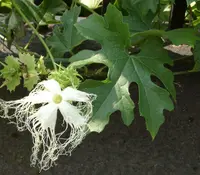
Chinese cucumber, Trichosanthes kirilowii, is a vigorous perennial vine grown for its ornamental leaves, unusual flowers, and distinctive elongated fruits. It climbs using tendrils and can quickly cover trellises, fences, or arbors in suitable climates.
This species is native to East Asia, especially China, where it grows in warm, temperate regions. It prefers sun to light shade, moderate moisture, and well-drained soil.
Gardeners who want to care for Chinese cucumber should know it grows fast and needs firm support and space. Its strong growth habit makes it rewarding but less suited to very small or low-maintenance gardens.

Care Difficulty
Moderate Care

Light Preference
Full Sun

Water Requirements
Regular Water

Temperature Preference
Cool Climate

Hardiness Zone
4–8

Soil Texture
Loamy, Sandy, Organic-rich

Soil pH
Acidic (5.5–6.5), Slightly acidic (6.5–7.0)

Soil Drainage
Moist but well-drained

Fertilization
Light (every 4–6 weeks)
Scan your plant to receive care tips personalized for your specific plant
Available on iOS and Android
This vigorous vine prefers bright outdoor conditions with protection from harsh extremes.
This species prefers evenly moist but not saturated soil during the active growing season.
This temperate vine grows best in warm summers and cool, frost-free conditions during active growth.
This climbing vine grows well in typical outdoor humidity and rarely needs special humidity management.
This species prefers loose, moist, well-draining soil with high organic content.
This species can be grown in containers if the pot is large, deep, and stable enough for vigorous climbing growth.
This vigorous vine benefits from modest feeding to support flowering and fruiting without excessive leafy growth when caring for Chinese cucumber.
Pruning helps manage the size and flowering performance of Trichosanthes kirilowii.
This vine is usually grown in the ground, so transplanting young plants is more common than long-term container repotting.
This species is most often propagated from seed, with success depending on proper temperature and moisture.
This hardy perennial vine tolerates typical temperate winters in the ground but benefits from some root-zone attention.

Plant Health Check
Not sure what's wrong with your plant? Check your plant's health inside the app.
This species is dioecious, meaning individual plants produce either male or female flowers, not both, so fruit set in cultivation requires both sexes to be present nearby.
The white flowers open in the evening and have long, lace-like corolla fringes that increase the surface area for scent dispersal and help attract nocturnal moth pollinators.
It is a frost-hardy, herbaceous perennial vine that climbs by twining its stems around supports, dying back to an underground tuber in cold winters and resprouting each spring.

The large subterranean tuber of Trichosanthes kirilowii can survive repeated freeze–thaw cycles in its native East Asian range, allowing the vine to persist for many years in regions with cold winters even though all aboveground growth is killed back each season.
Lack of flowers often comes from insufficient maturity, low light, or nutrient imbalance, especially excess nitrogen. Cool night temperatures and stress from irregular watering or root disturbance can also delay flowering on this vining species.
Keep your plants happy and healthy with plant identification, disease detection, and easy care guidance.



-1-200x150.webp)