alfalfa dodder Care (Cuscuta approximata)

alfalfa dodder

About alfalfa dodder

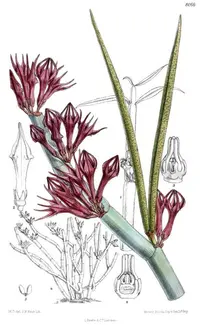
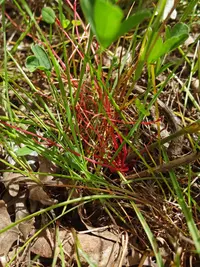
Alfalfa dodder, Cuscuta approximata, is a leafless, twining parasitic vine that forms fine yellow to orange threads over host plants, especially alfalfa and other legumes. It lacks true roots and leaves, drawing water and nutrients directly from its hosts through specialized structures called haustoria.

This species occurs mainly in arid and semi-arid regions of western North America and parts of Eurasia, where suitable host crops or wild legumes are present. It spreads by seed, often in contaminated crop seed, and can be difficult to manage once established.

Because it relies completely on host plants, it is not a typical garden or houseplant, and attempts to care for alfalfa dodder are usually limited to controlled research settings rather than home growing.

Main Plant Requirements

Care Difficulty

Hard Care

Light Preference

Full Sun

Water Requirements

Regular Water

Temperature Preference

Warm Climate

Hardiness Zone

Unknown

Soil Texture

Sandy, Loamy, Silty

Soil pH

Slightly acidic (6.5–7.0), Neutral (7.0)

Soil Drainage

Moist but well-drained

Fertilization

Minimal (feed rarely)

Get Personalized Care Plan

Scan your plant to receive care tips personalized for your specific plant

Available on iOS and Android

How to Care for the alfalfa dodder

This parasitic annual thrives in open, bright conditions that support vigorous host plants.

  • Provide 6–10 hours of direct sun daily in open fields or pastures; morning to mid-afternoon sun supports strong host growth and dense twining of alfalfa dodder.
  • Tolerates light partial shade, but stems become weaker and sparser when direct sun drops below about 4 hours per day.
  • Excessive, intense late-afternoon sun combined with drought can dry host foliage; in hot summers, rely on slight natural shading from taller host plants to limit scorch.

Cuscuta approximata relies completely on host plants for water, so moisture management focuses on the host stand and soil.

  • Maintain host soil slightly moist but not saturated; allow the top 2–5 cm to dry between irrigations in managed fields to limit root disease that can weaken hosts.
  • Overwatering hosts leads to yellowing, root rot, and poor vigor, which in turn reduces dodder growth; standing water or persistent mud indicates excessive moisture.
  • In hot, dry periods, monitor host wilting and leaf curl in early afternoon; if hosts recover by evening, delay irrigation, but if wilting persists, provide a deep, well-drained soak.

This species prefers warm growing seasons and declines rapidly in cold or frosty conditions.

  • Optimal active growth occurs around 70–86°F (21–30°C), matching typical warm-season field conditions where host plants are most vigorous.
  • Germination and early twining slow below about 59°F (15°C), and growth usually stops as sustained temperatures drop under 50°F (10°C).
  • Highly sensitive to frost; brief exposure near 32°F (0°C) can kill stems, while heat above 95°F (35°C) is tolerated if soil moisture supports host plants and prevents severe drought stress.

Humidity is not a key factor for Cuscuta approximata, which mainly depends on its host plant and ambient outdoor conditions.

As a parasitic vine, Cuscuta approximata anchors lightly in soil while drawing most resources from host plants, so soil setup focuses on drainage and host support.

  • Use a loose, sandy or sandy-loam substrate that drains quickly, such as 60% coarse sand with 40% low-organic topsoil.
  • Keep organic matter low; excessive compost or rich potting mix encourages host overgrowth and can complicate observing the vine.
  • Ensure the bed or container has free-draining holes or open ground beneath to prevent standing water around host roots.
  • Aim for a near-neutral pH around 6.5–7.5, avoiding compacted, clay-heavy sites that restrict aeration and host root health.

This species can be grown in containers only for controlled observation or research, not as a typical ornamental plant.

  • Use a wide, shallow container so host plants fit comfortably while allowing the twining stems space to spread across the surface.
  • Choose a heavy or stabilized pot to prevent tipping as the vine and host plants create uneven top growth.
  • Position host plants near the container edge or support stakes so the twining stems can be monitored and directed without tangling unintended plants.

Cuscuta approximata is a parasitic plant that relies on its host for nutrients and normally does not benefit from direct fertilization.

Pruning Cuscuta approximata focuses on containment and removal rather than shaping for ornamental use.

  • Cut back and remove infested host stems as soon as threads appear to limit spread.
  • Use clean, sharp scissors or pruning shears, disinfected with alcohol, to avoid transferring pathogens between plants.
  • Dispose of pruned material in sealed bags; do not compost, as viable seeds or fragments may persist.
  • Repeat inspections through the growing season and remove any regrowth promptly to keep host plants healthier.

Transplanting for Cuscuta approximata is generally limited to research or controlled cultivation, as it must establish on a suitable host.

  • Plan any transplanting for early to mid growing season, when host plants are actively growing and can support attachment.
  • Move small host plants already colonized by dodder rather than disturbing the dodder roots, which are embedded in host tissue.
  • Minimize stress by keeping the root ball of the host intact, watering beforehand, and transplanting into similar soil moisture conditions.
  • After transplanting, shade lightly for a few days and maintain even moisture so the host recovers and continues supporting the dodder.

Propagation of Cuscuta approximata is usually done from seed and is mainly relevant to research or controlled ecological work, not home gardening.

  • Sow fresh seeds in spring on the soil surface near suitable host seedlings, as light often improves germination.
  • Provide warm conditions around 68–77°F and consistent moisture, avoiding waterlogging that can rot seeds or young hosts.
  • Once seedlings emerge, allow them to naturally coil around nearby hosts, then thin excess plants to reduce competition.
  • For ethical and legal reasons, confirm that growing alfalfa dodder is permitted in your area and keep it confined.

In most climates where it occurs, Cuscuta approximata completes its life cycle in one season and needs no special winter care.

Care Tips

Select Robust Hosts

Establish plants on vigorous, fast-growing host crops or weeds (such as healthy alfalfa or clover stands) so the dodder has enough tissue to attach to and feed from without collapsing its own support too quickly.

Optimize Twining Height

Sow or position host plants at a fairly uniform height and density so the strands can bridge easily between stems, which encourages a continuous dodder mat instead of scattered, weak threads.

Manage Spread Boundaries

Use physical barriers such as clean cultivation strips or mowed alleys around experimental or demonstration plots to limit unintended spread and make monitoring and removal of escaping strands more straightforward.

Timed Cutting And Regrowth

In controlled settings, lightly cutting back host plants after dodder establishment can stimulate new soft shoots that the parasite can reattach to, extending the useful observation period for Cuscuta approximata plant care.

Sanitize Tools And Material

Clean cutting tools and avoid moving contaminated plant debris or seed between plots, since even small seed fragments can introduce dodder to new areas when growing alfalfa dodder for study or teaching purposes.

Common Pests and Diseases

Dodder smut

This disease is caused by Ustilago cuspidiata, a smut fungus that infects stems and reproductive structures of dodder. Symptoms include dark, powdery sori that distort stems and reduce seed viability.

Solution

Remove and destroy infected dodder strands before sori mature to limit spore production, and avoid moving contaminated plant material or equipment between sites. In agricultural settings, integrate crop rotation and sanitation around alfalfa or other hosts to reduce the inoculum that can infect Cuscuta approximata.

Stem canker

This disease is typically caused by opportunistic fungi entering through mechanical injuries on the slender stems. Symptoms include sunken, discolored lesions that may girdle sections of the vine and cause localized dieback.

Solution

Minimize mechanical damage when handling plants and promptly prune out and discard visibly cankered sections to slow spread. Maintain good airflow and avoid prolonged wetting of stems, as high surface moisture favors infection and expansion of cankers.

Seed-borne fungi

This disease complex involves various fungi that colonize dodder seeds and young seedlings, reducing germination and early vigor. Symptoms include shriveled, discolored seeds and rapid decay of germinating seedlings.

Solution

Use only clean, inspected seed lots and, in research or controlled settings, consider hot-water or appropriate fungicidal seed treatments to lower fungal load. Store seed in cool, dry conditions to limit further fungal development before sowing.

Leafhopper vectors

These insects feed on host plants and can transmit phytoplasmas or viruses that indirectly affect dodder vigor and survival. Symptoms include general decline of both host and attached dodder, with yellowing and reduced growth of the parasite as host health deteriorates.

Solution

Monitor host crops or forage plants for leafhopper presence and use targeted controls such as reflective mulches, row covers, or selective insecticides where appropriate. Maintaining diverse vegetation and avoiding large monocultures can also reduce vector buildup and subsequent transmission risks that impact parasitic dodder stands.

Host plant decline

This syndrome occurs when heavy dodder infestation severely weakens or kills the host, which then secondarily damages the attached dodder. Symptoms include yellowing, wilting, and dieback of host tissues, followed by collapse and desiccation of the parasite strands.

Solution

Limit dodder biomass on individual host plants by early cutting, mowing, or hand removal of dense tangles before they overwhelm the host. In managed fields or trials focused on Cuscuta approximata plant care, maintain a balance by thinning dodder when host stress becomes severe so both host and parasite can persist longer.

Interesting Facts

Specialist alfalfa parasite

Cuscuta approximata is a parasitic vine that shows strong preference for alfalfa crops in many regions, often forming dense orange tangles on Medicago sativa while largely ignoring nearby non-host plants.

Minimal chlorophyll presence

Unlike some other dodder species, Cuscuta approximata has extremely reduced chlorophyll and relies almost entirely on haustoria, specialized feeding organs, to extract water and nutrients from its host rather than performing its own photosynthesis.

Seed bank persistence

The seeds of Cuscuta approximata can remain viable in soil for several years, creating a persistent seed bank that complicates crop rotation and long-term field management in areas where alfalfa is grown repeatedly.

Botan icon

Did you know?

In several alfalfa-producing regions, Cuscuta approximata is regulated as a noxious weed, and certified seed standards often specify zero tolerance for its seeds, because even low contamination levels can trigger rapid reinfestation of new fields.

FAQs about alfalfa dodder

This parasitic vine spreads very aggressively once its seeds germinate on a suitable host. It forms dense tangles of stems, tapping into host tissues for water and nutrients, and can quickly overwhelm forage crops such as alfalfa.

Grow Healthy Plants with Botan Care

Keep your plants happy and healthy with plant identification, disease detection, and easy care guidance.

Botan plant care app — identify plants on mobile

Explore More Plants