Pourouma bicolor Care

Pourouma bicolor

About Pourouma bicolor

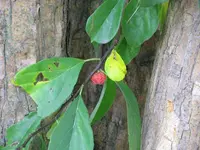
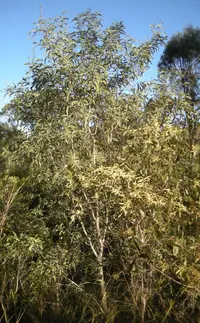
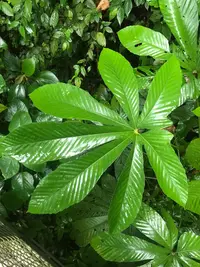
Pourouma bicolor is a fast-growing tropical tree from the humid lowland rainforests of Central and South America. It is sometimes grown as an ornamental in warm climates for its lush, rounded crown and large, often bi-colored foliage. The leaves can show a contrast between the pale underside and deeper green upper surface, giving the canopy a soft, textured look.

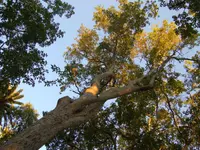
In suitable conditions it develops a straight trunk and a light, open canopy that lets filtered light reach plants below. It prefers warm temperatures, consistent soil moisture, and well-drained, fertile substrates. Gardeners who want to care for Pourouma bicolor should be prepared to provide a protected, frost-free site and enough space for its tree-sized growth.

Main Plant Requirements

Care Difficulty

Hard Care

Light Preference

Partial Shade

Water Requirements

Regular Water

Temperature Preference

Tropical / Frost Sensitive

Hardiness Zone

Unknown

Soil Texture

Loamy, Silty, Organic-rich

Soil pH

Acidic (5.5–6.5), Slightly acidic (6.5–7.0)

Soil Drainage

Moist but well-drained

Fertilization

Minimal (feed rarely)

Get Personalized Care Plan

Scan your plant to receive care tips personalized for your specific plant

Available on iOS and Android

How to Care for the Pourouma bicolor

This tropical canopy tree prefers bright, filtered light that mimics light under taller forest trees.

  • Provide 4–6 hours of bright, indirect light daily, such as dappled shade under higher trees or a light shade cloth outdoors.
  • Allow gentle morning sun but protect Pourouma bicolor from harsh midday and afternoon sun, which can scorch tender leaves and cause pale, crispy patches.
  • In hotter months, shift to deeper partial shade; in cooler seasons, increase light exposure slightly to maintain compact growth and avoid leggy, stretched shoots.

This species prefers consistently moist but not waterlogged soil, similar to a well-drained rainforest floor.

  • Water when the top 3–5 cm of soil feels slightly dry, aiming to keep the root zone evenly moist without standing water or sticky, saturated soil.
  • Use deep, thorough watering on well-drained soil, then allow excess to run off; poor drainage increases risk of root rot, wilting, and yellowing lower leaves.
  • In cooler seasons, reduce frequency as growth slows, but never let the root zone fully dry and watch for limp leaves or curling edges as signs of underwatering in Pourouma bicolor.

This tropical tree grows best in warm, stable conditions without exposure to frost or cold wind.

  • Aim for 70–85°F (21–29°C) for active growth, which matches warm, humid lowland conditions where this species naturally occurs.
  • Avoid temperatures below 55°F (13°C); brief drops near this level can slow growth, while exposure to 40°F (4°C) or frost can cause leaf damage or death.
  • In hot periods above 90°F (32°C), provide shade, mulch the root zone, and maintain soil moisture to prevent heat stress, leaf scorch, and premature leaf drop.

This species prefers moderately high, stable humidity to maintain healthy foliage.

  • Aim for 50–70% humidity, as prolonged exposure below 40% leads to leaf-edge browning and curling.
  • Tolerates brief drier air indoors, but consistent low humidity slows growth and increases mite susceptibility.
  • Increase humidity with grouped plants, a nearby humidifier, or a wide pebble tray under (not touching) the pot.

Pourouma bicolor benefits from a deep, loose, organic-rich substrate that drains freely yet holds consistent moisture.

  • Use a mix of roughly 50% peat or coco coir, 30% compost, and 20% perlite or pumice for structure and drainage.
  • Aim for slightly acidic to neutral pH around 6.0–7.0 to support nutrient availability and root function.
  • Incorporate coarse materials such as fine bark chips to increase aeration and prevent compaction around the root zone.
  • Avoid heavy clay-based mixes, standing water, and constantly waterlogged conditions, which quickly lead to root decline.

This tree can be grown in large containers for some years if root space and stability are managed carefully.

  • Select a wide, heavy pot to counteract the plant’s tall, leafy canopy and reduce tipping risk in wind.
  • Choose a container material that moderates moisture, such as thick plastic or glazed clay, in climates with rapid evaporation.
  • Raise the pot slightly on blocks or feet so drainage holes stay clear and excess water escapes quickly after watering.

This fast-growing tropical tree benefits from moderate feeding when cultivated in containers or managed plantings.

  • Use a balanced NPK fertilizer (such as 10-10-10) or well-rotted compost during the active growing season.
  • Apply fertilizer every 4–6 weeks in spring and summer, then stop or greatly reduce feeding in fall and winter.
  • Dilute liquid fertilizer to 1/2 strength to avoid root burn, especially in young plants of Pourouma bicolor.
  • Lightly work compost into the top 2–3 cm of soil rather than piling it against the trunk.

Pruning is mainly used to maintain structure and remove weak growth on Pourouma bicolor rather than to control size harshly.

  • Carry out light pruning at the end of the dry season or late winter before strong new growth starts.
  • Remove dead, diseased, rubbing, or storm-damaged branches using clean, sharp bypass pruners or a pruning saw.
  • Thin congested interior branches to improve airflow and light penetration, encouraging a healthier, more stable canopy.
  • Avoid heavy topping cuts; instead shorten or redirect branches to side shoots to maintain natural form and balanced growth.

This species is usually field-grown, so focus on careful transplanting or early up-potting of young container plants.

  • Shift container plants up when roots circle the pot, growth slows, or watering frequency increases noticeably.
  • Transplant in warm weather with stable temperatures, ideally in late spring to early summer for fastest root recovery.
  • Move to a hole or container only 1–2 sizes larger, using well-drained, organic-rich soil to support growing Pourouma bicolor.
  • Reduce root stress by watering deeply before and after moving, keeping the original root ball intact, and shading for 1–2 weeks.

Propagation is usually done from seed, as vegetative methods are less reliable in home conditions.

  • Collect fresh, fully ripe seeds and clean off any fruit pulp to reduce fungal problems during germination.
  • Sow seeds in warm conditions around 75–85°F in a loose, well-drained substrate, keeping it evenly moist but not waterlogged.
  • Provide bright, indirect light and high humidity, as germination may be slow and uneven over several weeks or longer.
  • Label seed trays clearly and discard any seedlings that appear weak or diseased to build a stronger planting stock.

This tropical tree is frost-sensitive and requires protective measures in regions with cool or cold winters.

  • In ground, add a 5–8 cm mulch layer around the root zone, keeping it slightly away from the trunk flare.
  • For young trees, wrap the lower trunk with breathable frost cloth when frost is forecast.
  • Move container plants indoors or into a heated greenhouse before temperatures drop below 50°F.
  • Ensure indoor or sheltered plants receive bright light and slightly reduced watering during the coolest months.

Care Tips

Early structural staking

Install sturdy stakes or a discreet tripod support while the plant is still young to guide its upright growth and prevent wind rock that can loosen new roots in the first 1–2 years.

Root zone mulching

Apply a 5–8 cm layer of coarse organic mulch around, but not touching, the trunk to keep roots cool, reduce evaporation, and buffer the soil from rapid temperature swings.

Wind exposure management

Position the plant where it is screened from prevailing strong winds or use temporary windbreak netting during the first few seasons to limit leaf shredding and mechanical stress on young branches.

Gradual canopy thinning

Once established, selectively remove a few congested interior branches every 1–2 years instead of heavy one-time pruning to improve airflow and light penetration and reduce fungal issues.

Dry-season protection

In regions with a pronounced dry season, stretch shade cloth or use neighboring taller plants as a light canopy to reduce leaf scorch and water stress when growing Pourouma bicolor outdoors.

Common Pests and Diseases

White wax scale

This pest feeds on stems and the undersides of leaves, producing thick white waxy coverings and honeydew that encourages sooty mold. Symptoms include yellowing foliage, reduced vigor, and sticky deposits on leaves and surrounding surfaces.

Solution

Prune and destroy heavily infested twigs, then wash remaining stems and leaves with a strong stream of water to remove scales and honeydew. For persistent infestations, apply a horticultural oil thoroughly to stems and leaf undersides during mild temperatures, repeating as needed according to label directions.

Leaf miner larvae

These insects tunnel within the leaf tissue of young foliage, creating pale winding trails and blotches that can distort the characteristic bicolored leaves. Heavy infestations reduce photosynthesis and overall growth.

Solution

Remove and destroy mined leaves promptly to break the life cycle and reduce larval numbers. In outdoor plantings, encourage natural predators and, where allowed, use a systemic insecticide targeted to leaf miners only if damage is severe and other methods are not effective.

Cercospora leaf spot

This disease causes small, angular brown to purplish spots on leaves that may coalesce, leading to premature leaf drop, especially in humid, shaded conditions. Symptoms include thinning canopy and reduced ornamental value of the foliage.

Solution

Remove and discard fallen and heavily spotted leaves to reduce fungal spores, and improve airflow by thinning crowded stems or nearby vegetation. Avoid overhead watering and, if leaf spot recurs severely, use a suitable foliar fungicide labeled for Cercospora, applied at the first sign of new lesions.

Anthracnose

This disease affects young leaves and tender shoots, causing irregular tan to dark brown lesions along veins and margins, often leading to distorted new growth. In wet, warm conditions, symptoms can spread rapidly and cause tip dieback.

Solution

Prune and dispose of infected shoot tips and leaves, making clean cuts into healthy tissue and disinfecting tools between plants. Improve drainage and canopy ventilation, and in regions where anthracnose is common on this genus, consider preventive fungicide sprays at the onset of warm, rainy weather.

Mealybugs

These insects cluster in leaf axils and along young stems, appearing as white cottony masses that suck plant sap and excrete honeydew. Symptoms include stunted new growth, leaf yellowing, and attraction of ants to the sugary deposits.

Solution

Wipe colonies with cotton swabs dipped in isopropyl alcohol and rinse foliage with lukewarm water to dislodge remaining insects. For larger plants or outdoor specimens, use repeated applications of insecticidal soap or horticultural oil, ensuring good coverage of hidden areas where mealybugs shelter as part of consistent Pourouma bicolor care instructions.

Interesting Facts

Bicolored leaf surface

This species has a distinct contrast between the dark green upper leaf surface and a much paler, sometimes whitish underside, which is the origin of the name bicolor and helps distinguish it from related Pourouma species.

Neotropical pioneer tree

It is a fast-growing small tree native to lowland tropical forests of northern South America, where it often behaves as a pioneer species that colonizes disturbed or secondary forest areas and contributes to early forest regeneration.

Edible, bird-dispersed fruits

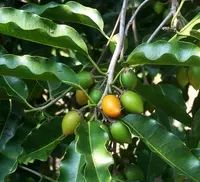
The tree produces small, fleshy fruits that are eaten by local wildlife and sometimes by people; birds and other animals disperse the seeds, helping maintain genetic exchange between scattered forest patches and supporting growing Pourouma bicolor populations in suitable habitats.

FAQs about Pourouma bicolor

In suitable tropical or warm subtropical conditions, this tree grows moderately fast, often adding 60–120 cm of height per year. Growth slows in cooler climates, poor soil, or when container-bound with restricted root space.

Grow Healthy Plants with Botan Care

Keep your plants happy and healthy with plant identification, disease detection, and easy care guidance.

Botan plant care app — identify plants on mobile

Explore More Plants