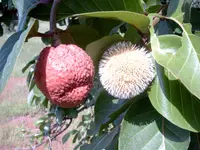
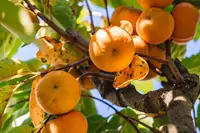
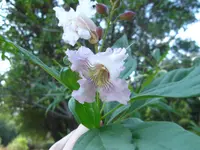
Haroni fig Care (Ficus vallis-choudae)

Haroni fig

About Haroni fig

Haroni fig (Ficus vallis-choudae) is a tropical fig tree species, usually grown as a medium to large indoor foliage plant in cooler climates. It forms an upright trunk with a rounded crown and dense, glossy green leaves that give it a lush, tree-like look.

In nature it occurs in parts of tropical Africa, often in warm, humid forests and along valleys and river zones. Its steady growth and tolerance of regular pruning make it manageable indoors, but it dislikes cold drafts and sudden changes.

Understanding how to care for Haroni fig starts with providing bright, filtered light, evenly moist but not waterlogged soil, and a stable, warm environment.

Main Plant Requirements

Care Difficulty

Moderate Care

Light Preference

Partial Shade

Water Requirements

Moderate Water

Temperature Preference

Tropical / Frost Sensitive

Hardiness Zone

Unknown

Soil Texture

Loamy, Sandy, Organic-rich

Soil pH

Acidic (5.5–6.5), Slightly acidic (6.5–7.0)

Soil Drainage

Moist but well-drained

Fertilization

Minimal (feed rarely)

Get Personalized Care Plan

Scan your plant to receive care tips personalized for your specific plant

Available on iOS and Android

How to Care for the Haroni fig

This fig prefers bright, filtered light that mimics high, open woodland edges.

  • Provide 4–6 hours of bright, indirect light or very light shade, with gentle morning sun and protection from harsh midday and late-afternoon rays.
  • The Haroni fig tolerates light to medium shade but may grow sparser with smaller leaves if light stays below this level for long periods.
  • In hot summers, use dappled shade or thin curtains to prevent leaf scorch, and in winter move plants closer to bright windows or brighter outdoor aspects.

This species prefers evenly moist but not saturated soil, with brief drying between waterings.

  • Before watering, let the top 3–5 cm of soil dry; use your finger to check, and water slowly until the root zone is evenly moistened, then allow excess to drain away.
  • During active growth in spring and summer, expect faster drying; in cooler months, extend the drying period and water less often as growth slows.
  • Signs of overwatering include yellowing leaves and soft stems, while crisp edges and drooping that improve after watering suggest the Ficus vallis-choudae needs moisture sooner.

This fig thrives in warm, stable conditions typical of lowland tropical climates.

  • Aim for 65–80°F (18–27°C) for steady growth, avoiding sudden swings greater than about 10°F (6°C) within a day.
  • Short exposures down to about 50°F (10°C) are usually tolerated, but growth slows and repeated chills near this level can cause leaf drop.
  • Protect from frost below 32°F (0°C) and from extreme heat above 95°F (35°C); provide shade and extra humidity during hot, dry periods to limit stress.

This species prefers moderate to high humidity for stable foliage and growth.

  • Aim for 50–60% humidity; it tolerates brief dips near 40% but may shed leaves if kept drier long term.
  • Watch for crisp leaf edges, slow new growth, and increased leaf drop as signs of low humidity stress.
  • Use a room humidifier, clustered plants, or a pebble tray under the pot to gently raise local humidity around Haroni fig.

Ficus vallis-choudae benefits from a loose, aerated, and freely draining mix that still retains moderate moisture.

  • Use a base of peat or coco coir with added compost for organic matter and steady moisture retention.
  • Blend in perlite and fine bark (about 30–40% of the mix) to improve aeration and prevent compaction around the roots.
  • Target a slightly acidic to neutral pH around 6.0–7.0, avoiding very alkaline substrates that can limit nutrient uptake.
  • Avoid heavy garden soil or mixes that stay wet for more than 2–3 days, which increase risk of root rot and loss of vigor.

This species adapts well to container growing when given adequate root space and drainage control.

  • Choose a wide, heavy container to counterbalance the plant’s woody canopy and reduce the risk of tipping in wind or minor bumps.
  • Select a pot material with moderate water loss, such as thick-walled terracotta, to help prevent prolonged waterlogging while keeping roots cool.
  • Ensure drainage holes are large and unobstructed so excess water exits rapidly, then empty any external saucers within 10–15 minutes after watering.

Ficus vallis-choudae benefits from light, steady feeding during active growth but does not require heavy fertilization.

  • Use a balanced liquid fertilizer (such as 10-10-10 or 20-20-20) diluted to 1/2 strength every 4–6 weeks in spring and summer.
  • Alternatively, apply a slow-release, balanced granular fertilizer at the start of the growing season for Haroni fig.
  • Pause feeding in winter or any dormant period, especially in cooler indoor conditions.
  • Avoid high-salt or fast-acting products; flush the soil occasionally with plain water to prevent buildup.

Pruning helps keep Ficus vallis-choudae manageable, healthy, and structurally sound, especially in container or landscape settings.

  • Carry out main pruning in late winter or early spring before vigorous new growth begins.
  • Remove dead, diseased, crossing, or rubbing branches first to improve airflow and light penetration.
  • Shorten or thin crowded shoots to maintain the desired height and spread, guiding a strong central framework.
  • Use clean, sharp bypass pruners; make smooth cuts just above a node or branch junction to support proper healing.

Ficus vallis-choudae is usually grown as a landscape tree, so focus on careful transplanting rather than frequent repotting.

  • Transplant young trees in early spring or early fall when temperatures are mild and soil is workable.
  • Look for roots circling the container, water running quickly through, or slowed growth as signs a potted plant needs a larger pot.
  • Shift to a container 1–2 sizes larger or into the ground, loosening circling roots gently without tearing the root ball.
  • Water thoroughly after planting, keep soil evenly moist for several weeks, and shade lightly to reduce transplant stress.

Ficus vallis-choudae is most often propagated from semi-hardwood cuttings under warm, controlled conditions.

  • Take semi-hardwood stem cuttings in late spring or summer, 10–15 cm long, with 2–3 leaf nodes.
  • Remove lower leaves, dip the cut base in rooting hormone, and insert into a well-drained, sterile medium such as perlite and peat.
  • Maintain bottom warmth around 70–75°F, high humidity, and bright, indirect light to support rooting.
  • Seed propagation is possible but slower; sow fresh seed in a fine, moist medium and keep conditions consistently warm.

This tropical ficus is frost-sensitive and needs protection in climates with cold winters, especially when grown in containers.

  • Avoid exposure to freezing temperatures; aim to keep plants above 40–45°F in winter.
  • For in-ground trees in marginal zones, apply a 5–8 cm mulch layer over the root zone, keeping it off the trunk.
  • Move container plants indoors or into a heated greenhouse before first frost, providing bright, indirect light.
  • Reduce watering in cool conditions, allowing the top layer of soil to dry slightly to prevent root rot.

Care Tips

Early structural training

Start shaping the plant while stems are still flexible by using soft ties and a central support stake, guiding the main trunk upright and spacing side branches so the canopy does not become congested as it matures.

Gradual pot upsizing

Repot in small size increments, moving up only 2–3 in in pot diameter at a time to avoid excessive, weak root growth and to keep the root ball evenly moist and aerated.

Root inspection routine

At least once a year, slip the plant from its pot to check for circling roots, gently teasing and trimming only those that are tightly wrapped to prevent future girdling and to maintain a stable root system.

Preventive pest monitoring

Inspect leaf undersides and young stems every 1–2 weeks with a magnifying lens, wiping them with a slightly damp, soft cloth to physically remove early spider mites or scale before they establish.

Rotation and canopy balance

Rotate the container 90° every 2–3 weeks to distribute light exposure, then prune or pinch only the most vigorous outer shoots to maintain a balanced crown and reduce the risk of leaning or one-sided growth when growing Haroni fig.

Common Pests and Diseases

Fig scale

This pest feeds on stems and the undersides of leaves, causing yellowing, sticky honeydew, and sooty mold growth. Heavy infestations can weaken branches and slow new growth.

Solution

Wipe stems and leaves with a cotton pad dipped in diluted alcohol or insecticidal soap, repeating weekly until the bumps disappear. For larger outdoor plants, combine manual removal with targeted applications of horticultural oil, ensuring thorough coverage of stems and the undersides of leaves while avoiding application in strong sun or high heat.

Root-knot nematodes

These microscopic worms attack the fine roots, leading to stunted growth, leaf yellowing, and poor recovery after watering. Symptoms include reduced vigor even when soil moisture and nutrients are adequate.

Solution

Remove and discard severely affected plants or soil, and avoid reusing contaminated ground for new figs. In garden settings, improve soil organic matter, rotate plantings, and use resistant or nematode-free rootstocks when available; in pots, replace the entire soil volume and use only clean containers and tools.

Fig rust

This disease causes small yellow to brown spots on leaves that can merge and lead to premature leaf drop, especially in warm, humid conditions. Symptoms include a rusty or powdery underside on affected leaves.

Solution

Remove and dispose of fallen and heavily spotted leaves to reduce spore spread, and avoid overhead watering to keep foliage dry. Improve airflow around branches by light pruning and, if the plant is outdoors, apply a labeled copper or sulfur-based fungicide at the first signs of spotting during humid periods.

Spider mites

These insects thrive in warm, dry conditions and puncture leaf cells, leading to fine stippling, dull foliage, and delicate webbing between leaves and stems. Symptoms include gradual leaf yellowing and drop if populations are high.

Solution

Rinse foliage thoroughly with lukewarm water, targeting the undersides of leaves, and repeat several times over 7–10 days to disrupt their life cycle. For persistent problems, use insecticidal soap or a light horticultural oil, and raise humidity slightly while avoiding waterlogged soil to support overall Ficus vallis-choudae plant care.

Interesting Facts

Riverine forest specialist

This species is naturally associated with moist river valleys and gallery forests in parts of tropical Africa, where it forms tall canopy trees rather than the smaller, shrubby form often seen in containers.

Fig–wasp partnership

Like other figs, it relies on a highly specific pollinating fig wasp that enters the enclosed fig inflorescence (syconium) to reproduce, making its reproduction in the wild dependent on this mutualistic relationship.

Bird and mammal food source

Its small figs are eaten by a variety of birds and mammals in its native range, and these animals help disperse the seeds across riverine and lowland forest habitats.

FAQs about Haroni fig

This species is moderately fast-growing under warm, bright, stable conditions, often adding 30–60 cm per year once established. Growth slows in low light, cool temperatures, small containers, or when rootbound, stressed, or pruned heavily.

Grow Healthy Plants with Botan Care

Keep your plants happy and healthy with plant identification, disease detection, and easy care guidance.


Botan plant care app — identify plants on mobile

Explore More Plants