Wind exposure training
Site young plants where they receive steady but not extreme wind so their flexible branchlets and trunk gradually strengthen, reducing later storm damage without needing constant staking.

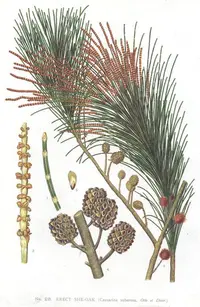
Black she-oak (Allocasuarina littoralis) is an evergreen tree or large shrub native to coastal and inland areas of eastern Australia. It belongs to the Casuarinaceae family, known for needle-like foliage and small cone-like fruit.
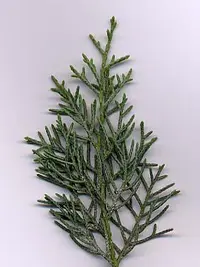
This species typically forms a narrow, upright crown with fine, jointed branchlets that resemble pine needles, giving a soft, feathery look. Bark is dark and furrowed, adding texture and interest.
Black she-oak is adapted to poor, sandy, and often dry soils, and it tolerates wind and salt exposure. These traits make it rugged outdoors but more challenging for those who want to learn how to care for black she-oak in containers.
It generally prefers full sun, well-drained soil, and modest moisture rather than constantly wet conditions.

Care Difficulty
Moderate Care

Light Preference
Full Sun

Water Requirements
Low Water

Temperature Preference
Warm Climate

Hardiness Zone
8–11

Soil Texture
Sandy, Loamy, Rocky

Soil pH
Acidic (5.5–6.5), Slightly acidic (6.5–7.0)

Soil Drainage
Well-drained

Fertilization
Minimal (feed rarely)
Scan your plant to receive care tips personalized for your specific plant
Available on iOS and Android
This species prefers open, bright conditions similar to its native coastal and woodland habitats.
Allocasuarina littoralis is drought-tolerant once established and prefers infrequent, deep watering.
This tree handles a wide temperature range but performs best in mild, temperate to warm climates.
This species tolerates a wide humidity range and usually does not need special humidity management indoors or outdoors.
Allocasuarina littoralis prefers lean, well-drained mineral soils that mimic its native, often sandy habitats.
This species can be grown in containers when young or maintained as a patio specimen under careful management.
Allocasuarina littoralis is adapted to low-nutrient soils, so only light, careful feeding is needed in containers or poor ground sites.
Pruning Allocasuarina littoralis is mainly corrective, helping maintain structure and clearance rather than forcing dense shaping.
This species is usually grown in the ground, so focus on careful transplanting rather than frequent repotting.
Allocasuarina littoralis is most often propagated from seed, with vegetative methods used less frequently and requiring more skill.
Mature plants are fairly cold hardy in mild-winter regions and usually need little winter care once established.

Plant Health Check
Not sure what's wrong with your plant? Check your plant's health inside the app.
This species has highly reduced true leaves and green, segmented branchlets that act as the main photosynthetic surfaces, giving the tree its characteristic fine, wispy appearance and soft rustling sound in wind.
Its woody, cone-like fruits release small winged seeds that are readily dispersed by wind and are an important food source for the glossy black cockatoo in parts of southeastern Australia.
The roots form nodules with actinobacteria in the genus Frankia, allowing the plant to fix atmospheric nitrogen and thrive on nutrient-poor, sandy or rocky coastal soils.

In its native range, this species is often one of the first woody plants to colonize impoverished coastal dunes and skeletal ridge-top soils, gradually improving soil structure and fertility so that less stress-tolerant plant species can establish over time.
Yes, this species grows reliably from seed. Collect mature cones, extract the winged seeds, and sow in a well-drained, sandy mix. Lightly cover, keep just moist, and provide warmth and bright light for germination.
Keep your plants happy and healthy with plant identification, disease detection, and easy care guidance.