Potentilla hebiichigo Care

Potentilla hebiichigo

About Potentilla hebiichigo

Potentilla hebiichigo is a small, creeping perennial in the rose family, grown mainly as a groundcover. It forms low mats of three-part leaves and small, strawberry-like fruits that are more ornamental than flavorful.

This plant is native to East Asia and is often used to fill gaps between stones, along paths, or at the edge of beds. It tends to spread steadily but not aggressively under suitable conditions.

Light shade to partial sun, moderately moist soil, and good drainage usually keep it healthy and compact. These traits make it relatively simple for beginners to care for Potentilla hebiichigo in outdoor settings.

Main Plant Requirements

Care Difficulty

Moderate Care

Light Preference

Partial Shade

Water Requirements

Moderate Water

Temperature Preference

Cool Climate

Hardiness Zone

6–8

Soil Texture

Loamy, Sandy, Organic-rich

Soil pH

Acidic (5.5–6.5), Slightly acidic (6.5–7.0)

Soil Drainage

Moist but well-drained

Fertilization

Minimal (feed rarely)

Get Personalized Care Plan

Scan your plant to receive care tips personalized for your specific plant

Available on iOS and Android

How to Care for the Potentilla hebiichigo

This groundcover strawberry prefers bright, gentle light similar to a woodland edge.

  • Provide 3–5 hours of direct morning sun with bright dappled or filtered light the rest of the day for compact growth and fruiting.
  • Tolerates partial shade (2–4 hours direct light), but in deep shade foliage thins and flowering declines noticeably.
  • In hot summers, protect Potentilla hebiichigo from strong afternoon sun with shade from 1–4 p.m. to prevent leaf scorch and dry, stressed soil.

This plant prefers consistently slightly moist but not waterlogged soil.

  • Water when the top 2–3 cm of soil feel dry, soaking the root zone thoroughly, then allow excess to drain away.
  • In spring and early summer, check moisture every 2–3 days; in cooler or rainy periods, extend intervals and rely on finger-checks instead of a fixed schedule.
  • Use well-drained, humus-rich soil; yellowing, soft leaves signal overwatering, while dull, wilting foliage with dry soil indicates underwatering.

This hardy groundcover tolerates a wide temperature range but grows best in mild conditions.

  • Optimal growth occurs around 60–75°F (16–24°C), especially in spring and early summer when days are bright and nights are cool.
  • The plant usually survives down to about 10–15°F (-12 to -9°C) once established, but young plants benefit from mulch in winter.
  • Heat above 85°F (29°C) can slow growth; provide afternoon shade and reliable soil moisture during hot spells to reduce stress and scorch risk.

This species handles typical indoor humidity well and does not need special moisture in the air.

  • Target 40–60% humidity, similar to most heated or air-conditioned homes.
  • Slightly dry air is tolerated; leaf edges browning and crisping indicate stress from very low humidity.
  • If air is extremely dry, place the pot on a pebble tray with water below the pot base to raise local humidity.

This plant prefers light, well-structured soil that drains quickly but still retains some moisture.

  • Use a mix of roughly 50% loam or all-purpose potting mix, 30–40% coarse sand, and 10–20% compost for moderate fertility.
  • Ensure very free drainage; water should pass through the profile within seconds rather than pooling on the surface.
  • Aim for slightly acidic to neutral pH, about 6.0–7.0, which supports nutrient availability without excess lime.
  • Avoid heavy clay, compacted ground, or soils that stay wet for more than 24 hours, as roots are prone to rot in poorly aerated conditions.

This species is suitable for container growing and can form a dense, trailing mat over the pot rim.

  • Choose a wide, shallow container to accommodate its spreading stolons while preventing deep, unused wet soil.
  • Select a relatively heavy pot material, such as ceramic, to keep the low, spreading growth from tipping in wind.
  • Raise the container slightly on feet or bricks so gravity helps pull water through and away from the drainage holes.

This small strawberry relative grows well in modest soils and usually needs only light feeding.

  • Use a balanced liquid fertilizer at 1/4–1/2 strength every 4–6 weeks in spring and early summer if growth seems weak.
  • Alternatively, top-dress with a thin layer of mature compost once in spring for slow, steady nutrition.
  • Stop feeding Potentilla hebiichigo by late summer so growth can harden before colder weather.
  • Avoid high-nitrogen products that push soft, leafy growth at the expense of flowers and runners.

Light pruning helps keep Potentilla hebiichigo compact and productive.

  • Best timing is late winter or early spring before new growth starts.
  • Use clean, sharp scissors or hand pruners to remove dead, damaged, or diseased foliage and stems.
  • Thin out crowded runners to maintain airflow and a low, tidy mat of growth.
  • Trim back excessively long stolons to control spread and direct energy to healthy rosettes and fruiting.

This ground-hugging species is usually grown in beds but can be moved or divided when needed.

  • Transplant or divide in early spring or early autumn, avoiding hot, dry weather for Potentilla hebiichigo care.
  • Look for signs like roots circling the pot, water running off quickly, or noticeably slower growth.
  • Move plants into a container 2–3 cm wider, or replant divisions at the same depth in loose, well-drained soil.
  • Water thoroughly after moving, then keep soil slightly moist and shaded for 3–7 days to limit transplant shock.

Spreading growth makes this plant straightforward to multiply for groundcover use.

  • Divide established clumps in early spring or early autumn, keeping several healthy crowns and roots per division.
  • Root runners by pegging them into moist soil until they form their own roots, then detach from the parent.
  • For cuttings, use short stolon segments with at least 1 node and root in loose, moist, well-drained mix.
  • Seeds need light, evenly moist soil and cool to mild temperatures; germination may be uneven and slower.

This hardy perennial usually needs minimal winter attention in temperate climates.

  • Plants tolerate light to moderate frost once established in well-drained soil.
  • Apply a 3–5 cm layer of leaf mold or compost mulch around, not on top of, crowns in late autumn.
  • In very cold or exposed sites, add a loose straw or fleece layer to shield crowns from deep freezes.
  • Move container-grown plants into a sheltered porch, cold frame, or unheated greenhouse during hard frosts.

Care Tips

Encourage Ground Spread

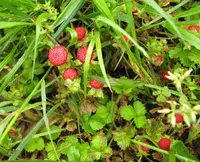
Pin short, flexible runners to the soil surface with small U-shaped wire pins so the nodes contact moist soil, which speeds up mat formation and helps fill gaps evenly when growing Potentilla hebiichigo.

Edge Containment

Install a shallow physical barrier 5–8 cm deep (metal, plastic, or stone) around beds or paths to prevent the plant from creeping into lawn or neighboring plantings while still allowing natural spread inside its designated area.

Mulch Management

Use a very thin, fine mulch layer (such as shredded bark or leaf mold) and keep it pulled back 2–3 cm from stems so the crown stays dry and well-aerated, reducing rot risk in dense plantings.

Clean Winter Tidy-Up

In late winter, rake out dead leaves and debris from the mat with a hand rake or gloved hands to improve airflow at the crown level and lower the chance of fungal problems before new growth starts.

Targeted Pest Checking

Regularly lift a few runners and inspect the undersides of leaves and the soil surface for slugs, aphids, or mites, then spot-treat early with horticultural soap or hand removal instead of broad, unnecessary chemical treatments.

Common Pests and Diseases

Two-spotted spider mites

This pest causes tiny pale speckling on the trifoliate leaves, fine webbing on stems, and general leaf dullness, especially in warm, dry conditions. Symptoms include slow growth and leaves that feel dry or rough to the touch.

Solution

Rinse foliage thoroughly with a strong but controlled stream of water, including leaf undersides, then increase humidity and reduce heat stress. For persistent infestations, use insecticidal soap or a neem oil spray every 5–7 days, and isolate the plant from others while monitoring new growth closely as part of overall Potentilla hebiichigo plant care.

Cyclamen mites

These insects deform new leaves and runners, causing tight, stunted, or crinkled growth at the crown while older foliage may look relatively normal. Symptoms include a compact, twisted center and failure of new leaves to expand properly.

Solution

Remove and discard the most distorted leaves and runners, then keep the plant in cooler conditions and avoid overhead watering that keeps the crown constantly damp. Treat new growth with repeated applications of insecticidal soap or a light horticultural oil, and if possible, briefly isolate and lower temperatures to slow mite reproduction while monitoring buds and young leaves closely.

Anthracnose leaf spot

This disease produces irregular tan to brown spots with darker margins on older leaves, often starting on lower, denser foliage. Symptoms include premature yellowing and shedding of spotted leaves during humid or warm, wet periods.

Solution

Remove and discard affected leaves, then thin surrounding growth or nearby plants to improve airflow and allow foliage to dry quickly. Water at soil level in the morning, keep leaves dry when possible, and apply a copper-based or other labeled fungicide if new spots continue to appear in favorable disease weather.

Powdery mildew

This disease appears as white, powdery patches on the upper leaf surface and runners, which can cause leaf curling and reduced vigor in shaded or crowded plantings. Symptoms include a gray-white film that can be wiped off but quickly returns under poor air circulation.

Solution

Increase light and airflow by spacing plants and trimming dense growth, and avoid overhead watering late in the day. Remove heavily affected leaves and use a labeled sulfur, potassium bicarbonate, or neem-based fungicide on remaining foliage, repeating as directed until new growth emerges clean.

Leaf scorch

Symptoms include dry, brown edges or blotches on leaves exposed to intense sun or hot, drying winds, while shaded foliage remains relatively unaffected. This physiological problem is linked to rapid water loss and overheating of the small, thin leaves.

Solution

Provide light afternoon shade in hot climates, maintain even soil moisture with a thin organic mulch, and avoid letting the substrate dry out completely between waterings during heat waves. Remove severely scorched leaves to reduce stress and encourage new, healthier growth once conditions improve.

Interesting Facts

Edible strawberry mimic

This species produces small, bright red fruits that resemble strawberries and are technically edible, but they are almost tasteless and not cultivated as a food crop.

Autumn-to-spring fruiting

In its native range in East Asia, it can flower in autumn and carry ripe fruits through winter into spring, which is unusual timing compared with most temperate-fruit species.

Carpet-forming groundcover

It spreads by above-ground stolons (creeping stems) that root at the nodes, forming a dense, low mat that can cover soil and outcompete small weeds in suitable climates.

Botan icon

Did you know?

This species is believed to be of hybrid origin within the genus Potentilla, and has escaped cultivation in some regions, where it is occasionally recorded as a naturalized plant outside its native East Asian range.

FAQs about Potentilla hebiichigo

This species spreads slowly by short runners and forms low, creeping mats rather than large, invasive patches. It is usually easy to keep within boundaries with light edging or occasional removal of unwanted stolons in beds or containers.

Grow Healthy Plants with Botan Care

Keep your plants happy and healthy with plant identification, disease detection, and easy care guidance.

Botan plant care app — identify plants on mobile

Explore More Plants