Early staking support
Install sturdy stakes or a simple cage when plants are 15–20 cm tall so stems can lean without snapping as clusters of berries develop and become heavier.

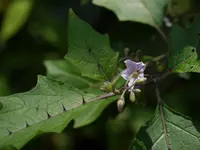
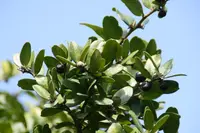
Forest bitterberry (Solanum anguivi) is a small shrub or subshrub in the nightshade family, grown mainly for its small, bitter fruits. It often forms a branching, somewhat woody plant with ovate leaves and clusters of green berries that ripen to yellow or orange.
This species is native to tropical Africa and parts of Asia, where it commonly appears in disturbed areas, field margins, and home gardens. It tends to be relatively tough and can cope with sun, warmth, and periods of uneven moisture, which makes it easier to care for Forest Bitterberry in mild to warm climates.
Solanum anguivi prefers well-drained soil, regular but not excessive watering, and a bright, open position.

Care Difficulty
Moderate Care

Light Preference
Full Sun

Water Requirements
Moderate Water

Temperature Preference
Tropical / Frost Sensitive

Hardiness Zone
10–12

Soil Texture
Sandy, Loamy, Organic-rich

Soil pH
Acidic (5.5–6.5), Slightly acidic (6.5–7.0)

Soil Drainage
Well-drained

Fertilization
Minimal (feed rarely)
Scan your plant to receive care tips personalized for your specific plant
Available on iOS and Android
Solanum anguivi prefers bright outdoor conditions with several hours of direct sun for strong growth and fruiting.
Solanum anguivi prefers steadily moist but not saturated soil, with moisture adjusted to weather and soil type.
This species thrives in warm, frost-free conditions and slows or stops growth in cool weather.
Solanum anguivi prefers moderately humid air but usually tolerates typical household levels if soil moisture is stable.
Solanum anguivi grows best in loose, well-drained, nutrient-rich mineral soil.
This species adapts well to container culture when given enough root volume and stable moisture.
Solanum anguivi benefits from light, targeted feeding when grown in gardens or containers, although wild plants often manage in poor soils.
Pruning Solanum anguivi is useful to manage size, encourage branching, and remove unhealthy growth.
Solanum anguivi is more often transplanted in the ground than maintained long term in containers, but young plants move well when handled carefully.
Solanum anguivi is most commonly propagated from seed, with cuttings used less often.
Solanum anguivi is a warm-climate species that needs protection from frost and prolonged cold in most temperate regions.

Plant Health Check
Not sure what's wrong with your plant? Check your plant's health inside the app.
This species is considered one of the wild progenitors closely related to the cultivated African eggplant complex (Solanum aethiopicum), and is sometimes involved in small-scale breeding and selection work to improve fruit traits and stress tolerance.
It serves as a natural host plant for various solanaceous-feeding insects, including certain leaf beetles and moth larvae, which helps maintain specialized herbivore populations in African savanna and fallow-field ecosystems.
Like many Solanum species, it contains steroidal glycoalkaloids concentrated in green fruits and other tissues, which deter many herbivores but are tolerated by some adapted animals and insect species.

Genetic studies place this species within the so-called anguivi complex of African Solanum, making it an important reference taxon for understanding the domestication and evolutionary history of several traditional African eggplant crops.
Ripe fruits and young leaves are used as food or traditional medicine in some regions, but unripe berries and other parts can be quite bitter. Always positively identify the species and cook thoroughly before any consumption.
Keep your plants happy and healthy with plant identification, disease detection, and easy care guidance.