Pinch For Bushiness
Pinch out the soft shoot tips when plants are 15–20 cm tall to encourage branching and a denser, more floriferous habit instead of tall, floppy stems.

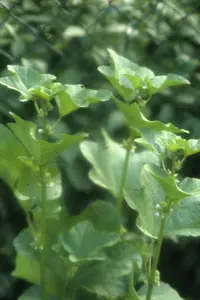
Cluster mallow (Malva verticillata) is a fast-growing annual or short-lived perennial herb in the mallow family. It forms upright, branching stems with rounded, lobed leaves and small pale pink to lilac flowers.
The plant is native to East Asia but has naturalized in many temperate regions, often appearing in fields, roadsides, and disturbed soils. It is generally vigorous and resilient, which makes it easy to establish in suitable conditions.
Cluster mallow prefers sunny, open sites with moderately moist, well-drained soil, but it tolerates a range of garden soils. These traits make it relatively simple to care for cluster mallow in informal beds, cottage-style plantings, or naturalized areas.

Care Difficulty
Easy Care

Light Preference
Full Sun

Water Requirements
Moderate Water

Temperature Preference
Cold Hardy

Hardiness Zone
4–8

Soil Texture
Sandy, Loamy, Clay

Soil pH
Slightly acidic (6.5–7.0), Slightly alkaline (7.0–7.5)

Soil Drainage
Well-drained

Fertilization
Minimal (feed rarely)
Scan your plant to receive care tips personalized for your specific plant
Available on iOS and Android
Malva verticillata performs best with ample sun but tolerates some shade in hot regions.
Malva verticillata prefers evenly moist, well-drained soil and does not tolerate standing water.
This species is a cool- to warm-temperate plant with good tolerance to seasonal outdoor variation.
Malva verticillata handles typical outdoor humidity well and rarely needs special humidity management.
This species prefers moderately fertile, well-drained, slightly loose soil to support strong root growth and abundant flowering.
This species is suitable for container growing when given enough root depth and stable moisture.
Malva verticillata responds well to modest feeding on reasonably fertile soil.
Pruning Malva verticillata keeps plants compact, tidy, and encourages new flowering shoots.
This species is usually grown in the ground, so focus on careful transplanting rather than frequent repotting.
Malva verticillata is most commonly propagated from seed and can self-sow in suitable conditions.
Established plants are fairly cold hardy and usually need only minimal winter care in most temperate climates.

Plant Health Check
Not sure what's wrong with your plant? Check your plant's health inside the app.
This species, often called cluster mallow, has been cultivated in East Asia for centuries as a leafy vegetable, especially in northern China and Korea, where the young leaves and shoots are cooked in soups and stews.
Its leaves and stems are rich in mucilage, a gel-like plant polysaccharide that gives cooked plant parts a slightly thick, slippery texture and helps the plant retain water under dry conditions.
Cluster mallow produces many small, disc-shaped seeds that can persist in soil and germinate readily, allowing the plant to naturalize and sometimes behave as a garden escape or minor weed in disturbed sites.

In some East Asian farming regions, this species has historically been grown along field margins and house plots as a dual-purpose plant, serving both as a cooked green for human consumption and as a high-fiber forage for small livestock such as rabbits and poultry.
This species self-seeds freely and can form dense patches if spent flowers are not removed. In open soil it behaves somewhat aggressively, so deadhead regularly and pull unwanted seedlings early to keep it within bounds.
Keep your plants happy and healthy with plant identification, disease detection, and easy care guidance.