Early vine training
Install a sturdy trellis or wire support as soon as new shoots appear and gently tie young vines with soft ties so the plant develops a single, manageable framework rather than a tangled mass that is hard to redirect later.

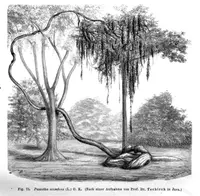
Nicker bean (Entada gigas) is a large tropical vine known for its enormous, hard brown seeds often found washed up on beaches. In native habitats it climbs high into trees and forms long, flattened pods containing the distinctive “sea heart” seeds.
This species occurs naturally in tropical coastal regions of the Americas and West Africa, usually in warm, humid climates. It is slow to start but can grow vigorously once established, needing strong support.
Gardeners who care for nicker bean should know it prefers bright light, warmth, and a well-drained, evenly moist growing medium. Its size and climbing habit make it better suited to spacious outdoor or greenhouse settings than to small indoor spaces.

Care Difficulty
Moderate Care

Light Preference
Full Sun

Water Requirements
Moderate Water

Temperature Preference
Tropical / Frost Sensitive

Hardiness Zone
11–12

Soil Texture
Sandy, Loamy, Organic-rich

Soil pH
Slightly acidic (6.5–7.0), Neutral (7.0)

Soil Drainage
Well-drained

Fertilization
Minimal (feed rarely)
Scan your plant to receive care tips personalized for your specific plant
Available on iOS and Android
This tropical vine thrives in strong light and performs best in warm, bright outdoor exposure.
This species prefers deep, infrequent watering once established, with soil allowed to dry slightly between soakings.
This tropical liana grows best in consistently warm, frost‑free conditions throughout the year.
Humidity is not a major concern for Entada gigas, but moderate moisture in the air supports healthier growth.
Entada gigas prefers fast-draining, slightly lean soil that still holds some moisture around the roots.
This species can be grown in containers, especially in cooler climates or where in-ground space is limited.
This large tropical vine grows well in poor soils and usually needs very little feeding once established.
Pruning Entada gigas mainly manages size and removes problem growth rather than stimulating heavy flowering.
This vigorous liana is usually grown in the ground, so transplanting young plants correctly is more important than repotting frequency.
Propagation of Entada gigas is most often done from seeds, which have very hard, water-resistant coats.
This tropical species is frost-tender and needs protection in regions with cool or freezing winters.

Plant Health Check
Not sure what's wrong with your plant? Check your plant's health inside the app.
This species produces extremely large, buoyant seeds that can stay viable after long periods in seawater, allowing them to drift across oceans and colonize distant tropical shores.
The plant forms very long, thick, woody pods that can reach over 1 m, each containing a small number of very large, hard seeds commonly known as sea hearts or sea beans.
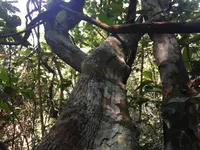
Entada gigas grows as a giant liana, using surrounding trees for support and climbing high into the forest canopy rather than forming a self-supporting trunk.

Entada gigas seeds have been recorded washing ashore thousands of kilometers from their point of origin, which has made them well-known drift seeds collected historically along Atlantic and Caribbean coasts as curiosities and talismans.
This species performs best outdoors in warm, frost-free climates where it can develop long vines and large pods. Nicker bean indoor care is challenging because the plant needs intense light, space, and strong support to grow normally.
Keep your plants happy and healthy with plant identification, disease detection, and easy care guidance.