Sobralia chrysostoma Care

Sobralia chrysostoma

About Sobralia chrysostoma

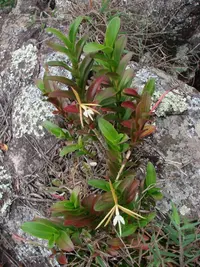
Sobralia chrysostoma is a terrestrial orchid with tall, cane-like stems and large, showy flowers that appear briefly but often over a long season. It forms clumps of upright shoots with narrow leaves, giving it a bamboo-like look.

This species is native to tropical regions of Central and South America, where it grows in humid forests and clearings. It prefers bright, filtered light, consistent moisture, and airy, well-drained substrate.

Its fast growth and need for space make it easier outdoors in mild climates or in large, warm indoor setups. Understanding how to care for Sobralia chrysostoma helps keep it vigorous and flowering reliably.

Main Plant Requirements

Care Difficulty

Hard Care

Light Preference

Partial Shade

Water Requirements

Keep Soil Moist

Temperature Preference

Tropical / Frost Sensitive

Hardiness Zone

11–12

Soil Texture

Loamy, Peaty, Organic-rich

Soil pH

Acidic (5.5–6.5), Slightly acidic (6.5–7.0)

Soil Drainage

Moist but well-drained

Fertilization

Moderate (every 2–4 weeks)

Get Personalized Care Plan

Scan your plant to receive care tips personalized for your specific plant

Available on iOS and Android

How to Care for the Sobralia chrysostoma

This orchid prefers bright, gentle light similar to high, filtered forest edges.

  • Provide 4–6 hours of bright, filtered light daily, such as dappled sun under high tree cover or morning sun with light afternoon shade.
  • Tolerates partial shade, but deep shade reduces flowering; move gradually to brighter exposure if new growths are thin and leaves dark, dull green.
  • Protect Sobralia chrysostoma from harsh midday sun; leaves turning yellow with scorched patches indicate too much direct exposure, especially in summer.

This species prefers consistently moist but airy conditions around its roots.

  • Water when the top 2–3 cm of the medium feel just starting to dry, aiming for evenly moist, not saturated, conditions during active growth.
  • Use a very free-draining orchid mix; water thoroughly, then let excess drain away to prevent root rot, soft pseudobulbs, and sour smell from chronic overwatering.
  • In cooler months reduce frequency slightly, watching the plant: wrinkling pseudobulbs or limp leaves suggest underwatering, while blackened roots indicate excess moisture.

This orchid grows best in mild, stable, frost-free temperatures.

  • Aim for 65–80°F (18–27°C) for strong growth and flowering, similar to warm to intermediate subtropical conditions.
  • Protect from cold below 50°F (10°C); brief dips to 45°F (7°C) may be tolerated but repeated exposure increases risk of tissue damage and root setback.
  • In hot weather above 85–90°F (29–32°C), increase shade, humidity, and air movement to prevent leaf stress, scorched tips, and stalled flowering in Sobralia chrysostoma.

This orchid prefers consistently moist, humid air to maintain healthy foliage and flowers.

  • Aim for 60–80% humidity, as Sobralia chrysostoma comes from naturally humid habitats and dislikes prolonged dry air.
  • Crisping leaf tips, rolled buds, and stalled new shoots indicate humidity stress rather than underwatering.
  • Increase humidity with grouped plants, pebble trays kept wet below the pot base, or a cool-mist humidifier placed nearby.

This species grows best in a loose, airy, orchid-style medium that drains quickly yet retains some moisture.

  • Use a mix of medium orchid bark, perlite or pumice, and a small portion of fibrous peat or coco coir for structure and moisture retention.
  • Ensure very fast drainage; water must run through freely so roots stay moist but never waterlogged.
  • Keep pH slightly acidic to neutral, roughly 5.5–7.0, which supports root nutrient uptake for robust canes and leaves.
  • Avoid compact garden soil, heavy clay, or fine potting mixes that collapse, reduce aeration, and promote root rot.

This species is suitable for container growing when the pot supports its tall, reed-like stems and moist yet airy root zone.

  • Choose a deep, heavy container that resists tipping as the tall canes develop and catch wind outdoors.
  • Select a pot material that matches your climate; terracotta allows faster drying while glazed or plastic keeps moisture longer for hot, dry areas.
  • Use a pot only slightly wider than the root mass so water moves through the medium evenly instead of accumulating in unused corners.

Nutrient-rich but well-drained media supports steady growth and flowering in Sobralia chrysostoma.

  • Use a balanced orchid fertilizer (around 20-20-20) diluted to 1/4–1/2 strength for container-grown plants.
  • Feed every 2–3 weeks during active growth in spring and summer, after thorough watering to avoid root burn.
  • Reduce feeding to monthly at very low strength in fall and stop in winter if growth slows markedly.
  • Organic options like fine orchid bark with compost or slow-release orchid pellets can supplement light liquid feeding.

Pruning focuses on hygiene and slight thinning to maintain healthy, flowering canes on Sobralia chrysostoma.

  • Cut spent flowering canes back to the base after blooms fade, using sharp, disinfected pruners.
  • Remove dead, damaged, or diseased stems and leaves promptly to limit fungal and bacterial issues.
  • Thin congested canes lightly at the clump edges to maintain airflow and upright habit without hard cutting.
  • Avoid removing young, green canes, as these store energy and support next seasons flowering.

Container or garden plants benefit from careful transplanting that preserves the coarse, aerated root zone.

  • Plan to divide or shift to a slightly larger pot every 2–3 years, or when roots circle the container and growth slows.
  • Carry out repotting in spring, just before active growth, so new roots can establish rapidly.
  • Gently loosen the root mass, remove rotted roots, and retain as much firm, white root tissue as possible.
  • Replant into a tall pot or free-draining bed with coarse orchid bark mix, then shade, water lightly, and keep humidity high for 1–2 weeks.

Division is the most practical method for increasing plants while maintaining characteristics of Sobralia chrysostoma.

  • Divide established clumps in spring, choosing sections with at least 3–4 healthy canes and strong roots.
  • Lift the plant carefully, then separate rhizomes by hand or with a sterile knife, removing soft or blackened roots.
  • Plant divisions into moist, free-draining orchid mix, keeping canes anchored upright and slightly shaded.
  • Maintain warm temperatures, high humidity, and gentle air movement to support new root and shoot formation.

This tropical orchid is not frost tolerant and needs mild, protected conditions through winter.

  • In regions below 40°F, grow in containers so plants can overwinter indoors or in a heated greenhouse.
  • Before first frost, move pots to a bright, cool room (55–65°F) with good airflow and reduced watering.
  • Outdoors in mild climates, apply a 5–8 cm mulch around the root zone, keeping it slightly away from canes.
  • Avoid cold, wet media; allow the upper mix to dry slightly between waterings while growth is slow.

Care Tips

Provide tall supports

Install slim bamboo stakes or a mesh panel 60–90 cm tall when new shoots are 10–15 cm high to keep the reed-like canes upright and reduce breakage from wind or handling.

Use breathable pot choice

Select tall, narrow, well-drained containers made from terracotta or other porous materials to stabilize the long canes and keep the rhizomes from sitting in cold, stagnant moisture.

Plan for clump renewal

Every 2–3 years, divide the outer, vigorous sections of the clump and discard old, woody centers to maintain flowering performance and control the plant’s size.

Protect buds from rain

In wet climates, position the plant under an overhang or use a simple rain shield during heavy downpours so that developing buds and open flowers are not damaged by constant dripping or splashing.

Monitor for stem pests

Regularly inspect the tender cane bases and leaf sheaths for scale insects or spider mites, and treat early with a horticultural oil spray to prevent weakening of the canes when caring for Sobralia chrysostoma.

Common Pests and Diseases

Scale insects

These insects feed on stems and leaf bases, often hiding in the sheaths of the tall canes and causing yellowing, weak growth, and sticky honeydew deposits.

Solution

Remove heavily infested sheaths and wipe canes with a cloth dipped in diluted alcohol or insecticidal soap, taking care to reach between overlapping bracts. Improve air circulation around the clump, avoid excess nitrogen fertilization, and repeat targeted treatments every 7–10 days until crawlers are controlled.

Spider mites

This pest thrives on Sobralia foliage grown in overly dry air, causing pale stippling, dull leaves, and fine webbing on the undersides.

Solution

Rinse leaves thoroughly with a firm but gentle spray of water, focusing on the undersides, then follow with a miticide-labeled horticultural oil or insecticidal soap. Raise humidity to around 50–70%, keep plants out of hot, drying drafts, and inspect neighboring orchids, since how to take care of Sobralia chrysostoma often involves managing mite pressure on the whole collection.

Leaf spot fungi

This disease causes small water-soaked lesions on the relatively soft leaves that enlarge into brown or black spots, sometimes with a yellow halo along the midrib and margins.

Solution

Remove and discard spotted leaves and any fallen debris, then increase spacing and airflow so foliage dries quickly after watering. Keep water off the leaves when possible, water early in the day, and use a labeled orchid-safe fungicide if new spots continue to appear.

Bacterial blight

Symptoms include rapidly spreading, soft, dark, and often foul-smelling patches on leaves or young canes, especially in warm, wet conditions.

Solution

Immediately cut out affected tissue with a sterile blade well into healthy material, then discard infected parts away from other orchids. Reduce overhead watering, avoid splashing between plants, disinfect tools and benches, and if needed apply a bactericide labeled for orchids to protect uninfected growths.

Interesting Facts

Golden lip coloration

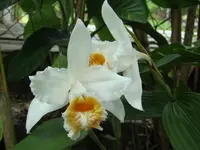
The species name chrysostoma refers to its distinctive golden to yellow lip, which contrasts with the usually white to pale petals and sepals and helps distinguish it from many other large-flowered Sobralia orchids.

Ephemeral but repeated blooms

Individual flowers are short-lived, often lasting only about a day, but mature plants can flower sequentially on the same inflorescence so the plant stays showy over a longer period despite each bloom’s brief lifespan.

Tall reedlike stems

This species forms tall, cane-like stems that can resemble bamboo culms, a habit typical of many Sobralia orchids that allows the plant to reach for better light in its native forest-edge habitats.

FAQs about Sobralia chrysostoma

This species performs best outdoors in a frost-free, humid, bright but lightly shaded position. Indoors, it is challenging due to its tall, reed-like canes, high humidity needs, and preference for good air movement and strong, filtered light.

Grow Healthy Plants with Botan Care

Keep your plants happy and healthy with plant identification, disease detection, and easy care guidance.

Botan plant care app — identify plants on mobile

Explore More Plants