Aspasia epidendroides Care

Aspasia epidendroides

About Aspasia epidendroides

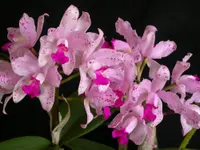
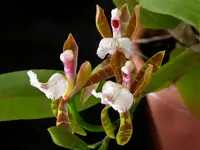
Aspasia epidendroides is a small to medium-sized epiphytic orchid that typically grows on trees in warm, humid forests. It has slender pseudobulbs with narrow leaves and arching sprays of star-shaped flowers.

This species is native to parts of South America, especially Brazil, where it experiences bright filtered light and good air movement. Its growth habit is relatively compact, which can suit indoor orchid collections.

Aspasia epidendroides is considered moderately easy for growers who understand basic orchid needs, but it dislikes stale air and prolonged dryness at the roots. Learning how to care for Aspasia epidendroides mainly involves providing stable warmth, regular moisture, and indirect light.

Main Plant Requirements

Care Difficulty

Hard Care

Light Preference

Bright Indirect Light

Water Requirements

Keep Soil Moist

Temperature Preference

Tropical / Frost Sensitive

Hardiness Zone

Unknown

Soil Texture

Peaty, Organic-rich

Soil pH

Acidic (5.5–6.5)

Soil Drainage

Moist but well-drained

Fertilization

Light (every 4–6 weeks)

Get Personalized Care Plan

Scan your plant to receive care tips personalized for your specific plant

Available on iOS and Android

How to Care for the Aspasia epidendroides

This orchid prefers bright, filtered light that mimics light under an open forest canopy.

  • Provide 8–12 hours of bright, indirect light daily, such as dappled shade under taller plants or shaded greenhouse benches.
  • Allow soft morning sun but protect from strong midday and afternoon sun, which can scorch leaves and cause yellow patches on Aspasia epidendroides.
  • In winter, move plants closer to bright windows or use supplemental grow lights to maintain day length, watching that leaves stay medium green, not dark or bleached.

Watering should keep roots evenly moist but never stagnant.

  • Irrigate when the top 2–3 cm of the potting mix or mounting medium feels just barely dry, then water thoroughly so excess drains away completely.
  • In active growth and warm weather, expect to water more often, while in cooler months slightly extend the dry interval but avoid letting roots dry hard or wrinkle.
  • Watch for yellow, soft pseudobulbs or a sour smell as signs of overwatering and root rot, and for shriveled pseudobulbs as a sign of underwatering.

This species thrives in intermediate temperatures with mild day–night variation.

  • Aim for 65–80°F (18–27°C) during the day and 55–65°F (13–18°C) at night for steady growth and flowering.
  • Avoid dropping below 45°F (7°C), as plants suffer cold damage and should be protected from any frost or near-freezing conditions.
  • In hot weather above 85°F (29°C), provide extra shade, strong air movement, and slightly higher humidity to prevent heat stress and leaf scorch.

This orchid prefers consistently moist air and reacts quickly to very dry conditions.

  • Aim for 60–80% humidity; prolonged levels below 50% often lead to shriveling pseudobulbs and dull leaves.
  • Monitor leaf tips for browning or accordion-pleated new growth as signs of humidity stress in Aspasia epidendroides.
  • Increase humidity with a room humidifier, grouped plants, or a wide pebble tray kept filled so water sits just below the pot base.

This epiphytic orchid requires a loose, airy medium that drains very quickly yet holds some moisture around the roots.

  • Use a mix of medium orchid bark, fine bark, and sphagnum moss, with about 20–30% perlite for extra aeration.
  • Choose a structure that mimics tree bark: chunky, fibrous particles that let roots grip and allow rapid water movement.
  • Keep pH slightly acidic, around 5.5–6.5, which supports nutrient uptake without stressing the roots of Aspasia epidendroides.
  • Avoid dense peat, garden soil, or compacted media that stay wet for more than 2–3 days, as this encourages root rot.

This species is well suited to container growing when the pot and medium are chosen to keep roots airy and stable.

  • Select a slightly snug, shallow orchid pot so roots fill the space and excess water leaves the medium quickly.
  • Use slotted plastic or breathable clay pots if extra evaporation is needed, matching pot material to your room humidity.
  • Place the pot in a stable cachepot or on a broad tray to prevent tipping as arching leaves and spikes add weight.

This orchid benefits from light, consistent feeding rather than heavy applications.

  • Use a balanced orchid fertilizer (around 20-20-20) diluted to 1/4–1/2 strength with every 2nd–3rd watering in spring and summer.
  • Apply only to moist medium to avoid root burn, and flush the pot with plain water monthly to prevent salt buildup.
  • Reduce feeding to 1×/month at very weak strength in autumn and winter, when Aspasia epidendroides grows more slowly.
  • Avoid compost or heavy slow-release granules that can decompose the orchid mix and suffocate roots.

Pruning on this orchid is minimal and focuses on hygiene rather than shaping.

  • After flowering, cut spent flower spikes at the base with sterilized scissors, avoiding damage to pseudobulbs.
  • Remove dead, yellow, or diseased leaves and dry sheaths to improve air flow and reduce fungal issues.
  • Trim only dead roots when repotting, leaving firm, green or white roots intact for stable growth.
  • Avoid heavy cutting, since Aspasia epidendroides stores energy in its pseudobulbs, which support future flowering.

This epiphytic orchid prefers a snug pot and should only be repotted when clearly necessary.

  • Check for crowded roots circling the pot, exhausted medium, declining vigor, or poor drainage as signs it needs repotting.
  • Plan repotting every 2–3 years in late winter or early spring, just as new roots or shoots start.
  • Gently remove old mix, trim only dead roots, and set the plant in fresh, coarse orchid bark with good aeration.
  • Water lightly for the first 7–10 days and keep humidity higher to reduce root stress and support recovery.

Division is the standard method for increasing plants of this orchid in cultivation.

  • Divide mature clumps during repotting in late winter or early spring, when new growths are just emerging.
  • Use a sterile knife to separate sections with at least 3–4 healthy pseudobulbs and active roots for each division.
  • Pot divisions in small containers with fresh orchid bark, keeping them stable and slightly more humid than usual.
  • Provide bright, indirect light, 65–80°F temperatures, and gentle air movement to encourage rapid establishment of Aspasia epidendroides divisions.

This orchid is not frost tolerant and needs mild, protected conditions in winter.

  • Keep plants above 55°F, ideally 60–70°F, and avoid exposure to freezing drafts or outdoor frost.
  • For container plants outdoors, move them indoors or into a heated greenhouse before nighttime temperatures drop below 50°F.
  • Maintain good air movement and slightly drier medium in winter, allowing the top of the mix to approach dryness between waterings.

Care Tips

Cool-night boost

Provide a 8–12°F drop at night for 4–6 weeks before expected blooming season by slightly opening a window or lowering thermostat, which helps trigger reliable flowering when caring for Aspasia epidendroides.

Mounted culture setup

For stronger roots and better air movement, mount the plant on cork or tree fern and wrap roots in a thin layer of long-fiber sphagnum, then increase watering frequency to prevent the mount from fully drying.

Basket growth management

Grow the plant in a slatted wooden or plastic basket so new growths can wander over the edges, and refresh or top-dress the medium annually without disturbing the older root system.

Targeted air circulation

Aim a small fan to create very gentle, constant airflow across foliage and roots, which reduces fungal issues and helps the thin leaves dry quickly after watering or misting.

Seasonal watering adjustment

In winter, keep the plant slightly drier and reduce watering frequency when light levels and growth slow, then gradually resume heavier watering and feeding as new shoots and roots start in spring.

Common Pests and Diseases

Scale insects

This pest feeds on plant sap, causing yellowing, loss of vigor, and sticky honeydew on leaves and pseudobulbs. Symptoms include small, dome-shaped bumps along leaf veins and at the base of pseudobulbs.

Solution

Isolate the plant, then wipe infested areas with cotton pads dipped in isopropyl alcohol, repeating weekly until no new scales appear. Improve air movement and avoid overfertilizing, and use a light horticultural oil or insecticidal soap directed at leaf undersides and crevices where scales hide.

Spider mites

These insects thrive on Aspasia leaves under warm, dry conditions, causing fine yellow stippling, dull foliage, and eventual leaf drop. Symptoms include very fine webbing between leaves and around new growth.

Solution

Rinse foliage thoroughly with lukewarm water, including leaf undersides, then increase humidity to 50–70% while maintaining good airflow. For persistent populations, apply insecticidal soap or a miticide labeled for orchids at 7–10 day intervals, rotating products to prevent resistance.

Bacterial brown rot

This disease causes soft, water-soaked spots on pseudobulbs and leaves that quickly turn brown and may emit a foul odor. Symptoms include rapid tissue collapse starting at a wound or water-splashed area.

Solution

Immediately remove and discard all affected tissue using sterilized tools, cutting back into firm healthy tissue, then dust cuts with ground cinnamon or a bactericide labeled for orchids. Keep foliage dry, water early in the day, improve air circulation around the plant, and avoid overhead watering to reduce bacterial spread.

Leaf spot fungus

This disease produces small dark spots on leaves that may enlarge, coalesce, and cause premature leaf drop, especially in crowded, humid growing areas. Symptoms include tan or brown lesions often with a darker margin.

Solution

Trim off heavily spotted leaves with sterilized shears and dispose of them, then space plants to improve airflow and reduce prolonged leaf wetness. If new spots continue to appear, apply a fungicide labeled for orchids at the recommended interval and adjust watering so leaves dry within a few hours.

Pseudobulb desiccation

Symptoms include shriveled, pleated pseudobulbs and leaves even though the potting mix may seem moist, often due to chronic underwatering, exhausted roots, or excessive salt buildup. This condition is common when growing Aspasia epidendroides in very fine bark that has broken down and suffocates roots.

Solution

Unpot the plant, trim dead roots, and repot into a fresh, open orchid mix that drains quickly but retains moderate moisture. Adjust watering so the medium is kept evenly damp but not soggy, flush the pot thoroughly every 3–4 weeks to remove salts, and maintain moderate humidity with good air movement to support new root growth.

Interesting Facts

Fragrant night bloomer

The flowers open fully at night and release a sweet, spicy fragrance, an adaptation to attract nocturnal moth pollinators in its native Brazilian habitats.

Flattened pseudobulbs

This orchid forms distinctly flattened pseudobulbs that store water and nutrients, helping the plant cope with periodic drying on exposed tree branches.

Pendant flower spikes

Its inflorescences often arch or hang below the plant, displaying several star-shaped flowers with a broad, patterned lip that serves as a landing platform for pollinators.

Botan icon

Did you know?

Aspasia epidendroides is native to the Atlantic Forest and nearby regions of Brazil, where it commonly grows as an epiphyte on tree trunks and branches in bright, open areas, making it one of the more light-tolerant Aspasia species compared with its typically shadier relatives.

FAQs about Aspasia epidendroides

Lack of flowering often relates to insufficient seasonal temperature drop at night, too little light, or depletion of stored energy. Provide bright, filtered light, a distinct cooler night period, and regular balanced feeding to support bud formation next year.

Grow Healthy Plants with Botan Care

Keep your plants happy and healthy with plant identification, disease detection, and easy care guidance.

Botan plant care app — identify plants on mobile

Explore More Plants