Tillandsia xiphioides Care

Tillandsia xiphioides

About Tillandsia xiphioides

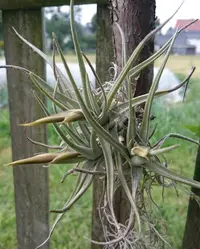
Tillandsia xiphioides is a small epiphytic air plant from South America, usually found clinging to rocks or tree branches in bright, airy habitats. It forms tight rosettes of stiff, silvery leaves covered with fine scales that help capture moisture from the air.

The plant is slow-growing and produces striking, often fragrant flowers on short, upright spikes, which makes it popular in air plant collections. It tolerates brief dryness but needs good air movement and regular light misting instead of soil, which makes it different from typical houseplants.

Because of its modest size and low substrate needs, it suits small indoor displays, mounted arrangements, or terrariums with good ventilation. Understanding how to care for Tillandsia xiphioides mainly involves balancing light, moisture, and airflow rather than managing potting mix.

Main Plant Requirements

Care Difficulty

Moderate Care

Light Preference

Bright Indirect Light

Water Requirements

Moderate Water

Temperature Preference

Tropical / Frost Sensitive

Hardiness Zone

10–12

Soil Texture

Sandy, Rocky, Organic-rich

Soil pH

Acidic (5.5–6.5)

Soil Drainage

Well-drained

Fertilization

Light (every 4–6 weeks)

Get Personalized Care Plan

Scan your plant to receive care tips personalized for your specific plant

Available on iOS and Android

How to Care for the Tillandsia xiphioides

This epiphytic air plant thrives in bright, indirect light with some gentle direct sun.

  • Provide 4–6 hours of filtered light daily, such as bright shade under a tree canopy or 1–2 hours of mild morning sun, then bright indirect light for the rest of the day.
  • Avoid strong midday or harsh afternoon sun; silver leaves on Tillandsia xiphioides can scorch, showing brown, crisp patches and bleached areas when light is too intense.
  • In summer, shift plants to brighter but filtered positions; in winter, move closer to unobstructed windows or brighter spots to compensate for shorter, weaker light.

This air plant absorbs water mostly through its leaf surface rather than roots.

  • Thoroughly soak or mist until leaves are evenly wet, then allow them to dry fully within 2–4 hours; avoid constant dampness around the base or between tightly packed leaves.
  • Increase watering frequency in warm, dry weather and reduce it in cool, humid periods; wrinkling or curling leaves suggest underwatering, while limp, soft bases point to overwatering.
  • Always provide strong air circulation after wetting; tilt or shake excess water from the crown to limit rot, especially in cooler seasons or shaded locations.

Stable, mild temperatures support healthy growth and flowering.

  • Aim for 65–80°F (18–27°C) for active growth; brief peaks up to 90°F (32°C) are tolerated if humidity is moderate and air movement is good.
  • Protect from cold below 50°F (10°C); growth slows, and prolonged exposure under 40°F (4°C) can cause tissue damage, especially on young leaves and developing buds.
  • Keep plants out of frost and freezing conditions; in heat waves above 90°F (32°C), increase shade and hydration to prevent leaf desiccation and stress.

This air plant prefers moderate humidity and reacts quickly to very dry air.

  • Aim for 40–60% humidity, with more frequent misting or soaking when indoor air drops below 35%.
  • Dry, curling leaf tips and slow recovery after watering indicate humidity stress or prolonged dry conditions.
  • Increase humidity by grouping air plants, using a shallow pebble tray near the display, or running a nearby humidifier during heating season.

This epiphytic species does not need conventional soil and should never be planted in potting mix.

  • Mount Tillandsia xiphioides on cork, hardwood, or inert rock, securing it so water drains freely and the base dries within a few hours.
  • Keep any decorative substrate (like moss or gravel) loose and shallow so air can circulate around the leaves and stem base.
  • Avoid peat-based or standard potting mixes, which trap moisture and quickly cause rot in the plant’s base tissues.
  • If adding a bit of sphagnum moss for support, use only a thin layer and let it dry completely between waterings to maintain aeration.

This species can be displayed in containers if treated as a mounted air plant rather than potted in mix.

  • Use open containers such as wire frames, slatted holders, or wide-mouthed terracotta pieces so air circulates freely around all sides.
  • Position the plant above any standing water or wet decorative stones so only brief, intentional watering wets the plant.
  • Choose a stable, slightly heavy base or container form so the plant does not shift or topple when soaked or when air circulation is high.

Light, diluted feeding supports healthy growth and blooming in Tillandsia xiphioides without overloading its roots.

  • Use a balanced liquid NPK fertilizer formulated for epiphytes or orchids, diluted to 1/4–1/2 strength.
  • Apply every 4–6 weeks in spring and summer, misting or dipping the plant rather than soaking the base for long periods.
  • Reduce feeding to 1 light application in fall and stop during winter dormancy or very low light.
  • Rinse with plain water between feedings to limit salt buildup and avoid leaf tip burn.

Pruning needs are minimal and mainly focus on hygiene and maintaining a tidy rosette on Tillandsia xiphioides.

  • Best timing is after flowering or in late spring when plants resume active growth.
  • Trim completely dead, brown, or damaged leaves at the base using clean, sharp scissors.
  • Remove spent flower spikes once fully dry to direct energy into new leaves and offsets.
  • Thin out crowded, senescent rosettes in a clump to improve air circulation and reduce rot risk.

This air plant is usually mounted rather than potted, so transplanting focuses on remounting rather than classic repotting.

  • Plan to remount every 2–4 years or when the clump outgrows its support or becomes unstable.
  • Best time is spring to early summer, when temperatures are mild and growth is active.
  • Gently detach the base from the old mount, keeping roots and offsets intact and avoiding bending the central rosette.
  • Secure onto new cork, wood, or wire mesh with soft ties, then keep in bright, humid, draft-free conditions for 1–2 weeks.

Propagation of Tillandsia xiphioides is most reliable through offsets rather than seed in home conditions.

  • Wait until offsets (pups) reach about 1/3–1/2 the size of the parent rosette before separation.
  • Carry out division in spring or early summer for faster establishment and lower stress.
  • Gently twist or cut pups away at the base with a sterile blade, keeping their small roots attached if present.
  • Place divided plants on a suitable mount in bright, indirect light with good air movement and consistent light misting.

This species is frost sensitive and requires careful winter management in most climates.

  • Move outdoor-mounted plants indoors before temperatures drop below 40°F, ideally to a bright, cool room.
  • Avoid exposure to freezing drafts near windows or doors and keep foliage dry in cold conditions.
  • Maintain temperatures around 50–65°F with good air circulation and reduced but consistent misting.

Care Tips

Optimize air movement

Place plants where they receive gentle but consistent air circulation, such as near an oscillating fan on low, to dry quickly after misting and reduce the risk of rot in the leaf bases.

Use mineral-safe water

If tap water is hard or heavily chlorinated, switch to rainwater, distilled, or reverse-osmosis water to prevent mineral deposits on the trichomes, which can impair moisture and nutrient uptake over time.

Secure for display

Attach plants to mounts with UV-stable plastic-coated wire, fishing line, or soft ties rather than glue on the leaf bases, so the plant remains stable while still allowing good airflow around the entire base.

Seasonal light shift

In summer, move mounts slightly farther from bright windows or high-intensity grow lights, then bring them closer again in fall–winter to keep light levels strong without causing leaf scorching.

Inspect floral bracts

During blooming, check inside the bracts and between tightly overlapping leaves with a hand lens every 1–2 weeks to spot early mealybug or scale infestations and treat promptly with a cotton swab dipped in isopropyl alcohol, which improves long-term Tillandsia xiphioides care.

Common Pests and Diseases

Scale insects

This pest feeds on leaf surfaces and leaf bases, sucking sap and causing yellowing, dull color, and slow growth in clumps of plants. Symptoms include small, rounded, tan to brown bumps that are hard to dislodge with gentle rubbing.

Solution

Remove affected plants from dense groupings to improve airflow, then manually scrape or wipe off scales with a cotton swab dipped in isopropyl alcohol, taking care not to soak the entire plant. Rinse thoroughly with room-temperature water, let the plant dry quickly in bright, airy conditions, and repeat checks weekly until no new insects appear.

Mealybugs

These insects hide in the leaf bases and along the trichome-covered leaves, producing white cottony masses and sticky honeydew that can lead to sooty mold. This pest can weaken plants over time, especially in warm, stagnant air or overcrowded displays.

Solution

Physically remove visible mealybugs using a cotton swab lightly moistened with isopropyl alcohol, then rinse the plant under a strong but gentle stream of water to flush insects from leaf bases. Increase air movement around the plants and keep them in bright, indirect light to discourage reinfestation, repeating inspections weekly until no new cottony clusters appear.

Fungal leaf spot

This disease produces small water-soaked or translucent spots that can turn brown or gray, sometimes with a slight halo, especially on plants kept too wet in low airflow. Symptoms include slow-spreading lesions that may merge and cause parts of the leaf to dry and die back.

Solution

Trim out badly affected leaves or sections with clean scissors, and allow the plant to dry completely between waterings by ensuring excess water does not sit in the leaf bases. Improve ventilation, avoid misting in cool or dim conditions, and if spots continue to spread, apply a light, air plant–safe fungicide spray and dry the plant promptly in bright, indirect light.

Bacterial soft rot

This disease causes localized soft, mushy, darkened tissue at the leaf bases or central rosette, often with a foul odor, usually after prolonged water pooling in the crown. Symptoms include rapid collapse of the affected area and easy separation of rotting leaves from the plant.

Solution

Isolate the plant immediately, cut away all soft or discolored tissue with sterile tools, and allow the remaining parts to dry very quickly in strong air movement and bright, indirect light. Prevent recurrence by dipping rather than soaking for long periods, shaking excess water from the leaf bases, and avoiding watering late in the day, which is a key part of practical Tillandsia xiphioides care instructions.

Interesting Facts

Natural rock specialist

This species occurs naturally on exposed rocks in parts of Bolivia, Argentina, Paraguay, and southern Brazil, often forming tight clumps that tolerate strong sun, wind, and large temperature swings compared with many other air plants.

Fragrant night blooms

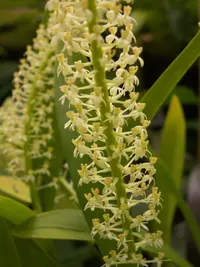
The plant produces tubular white to cream flowers with a notable sweet fragrance, and the scent is typically stronger during the evening and night, which suggests adaptation to moth pollinators.

Silvery shield trichomes

Its dense, silvery leaf scales, called trichomes, are especially well developed and give the plant a frosted look while helping it capture water and dissolved nutrients directly from mist, fog, and rain.

Botan icon

Did you know?

Some wild populations are considered locally uncommon and are collected by specialists for conservation-oriented cultivation, since distinct regional forms can differ noticeably in size, leaf texture, and flower shape despite belonging to the same species.

FAQs about Tillandsia xiphioides

Lack of strong indirect light, inadequate air movement, or insufficient maturity can delay flowering. This species usually blooms once it is several years old. Stable conditions and patience are often enough; avoid heavy fertilization or drastic environment changes.

Grow Healthy Plants with Botan Care

Keep your plants happy and healthy with plant identification, disease detection, and easy care guidance.

Botan plant care app — identify plants on mobile

Explore More Plants