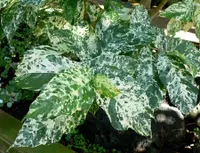
Rotate For Evenness
Rotate the pot 1/4 turn every 1–2 weeks to keep the stem upright and the variegation evenly distributed on all sides of the plant.

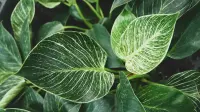
Philodendron 'Birkin' is a compact, upright aroid grown mainly as a houseplant for its striking variegated foliage. It forms a clumping rosette of glossy, dark green leaves streaked with creamy white pinstripes. New leaves often emerge lighter and gain stronger striping as they mature, giving the plant an evolving appearance over time. Although cultivated indoors, it descends from tropical American philodendrons that naturally grow in warm, shaded forest habitats. It is considered relatively easy to grow if kept in stable indoor conditions with bright, indirect light, moderate moisture, and a well-draining potting mix. Beginners often find it manageable once they learn how to care for Philodendron 'Birkin'.

Care Difficulty
Moderate Care

Light Preference
Bright Indirect Light

Water Requirements
Moderate Water

Temperature Preference
Tropical / Frost Sensitive

Hardiness Zone
10–12

Soil Texture
Loamy, Organic-rich

Soil pH
Acidic (5.5–6.5), Slightly acidic (6.5–7.0)

Soil Drainage
Moist but well-drained

Fertilization
Light (every 4–6 weeks)
Scan your plant to receive care tips personalized for your specific plant
Available on iOS and Android
This plant prefers bright, indirect light to keep its variegation clear and growth compact.
Watering should keep the soil slightly moist but never saturated for healthy root function.
Stable, warm conditions support steady growth and reduce stress on this tropical aroid.
This plant prefers moderate to high indoor humidity to keep leaves healthy and variegation stable.
This plant grows best in a loose, airy, organic-rich substrate that drains quickly but retains some moisture.
This species is very suitable for container growing in homes and offices.
Consistent but moderate feeding supports steady growth and good variegation in Philodendron 'Birkin'.
Thoughtful pruning keeps Philodendron 'Birkin' compact, tidy, and encourages fuller growth.
Container-grown plants benefit from periodic repotting to maintain healthy roots and stable growth.
Stem cuttings are the most practical way to multiply Philodendron 'Birkin' at home.
Indoor Philodendron 'Birkin' needs stable warmth and light adjustments during winter.

Plant Health Check
Not sure what's wrong with your plant? Check your plant's health inside the app.
This cultivar arose as a spontaneous chimeric mutation, or sport, from a green-leaved hybrid in cultivation, not from a naturally occurring wild population.
Its creamy-white pinstripe variegation is genetically unstable, so some plants may revert to solid green foliage or produce sectors with much less variegation over time.
Compared with many climbing philodendrons, this plant stays relatively compact and slow-growing, forming a dense self-heading rosette rather than long vines under typical indoor conditions.

Genetic and anatomical studies of variegated aroid cultivars indicate that the striking white striping in this plant is caused by layers of leaf tissue that completely lack chlorophyll, creating a stable chimeric pattern that can be propagated only vegetatively, not reliably from seed.
Stable warm light, not too low, helps maintain variegation. Very low light, heavy pruning of white leaves, or natural aging can all reduce white patterns. New leaves often emerge greener if conditions or genetics favor more chlorophyll.
Keep your plants happy and healthy with plant identification, disease detection, and easy care guidance.


_(49532732922)-2-200x133.webp)

-1-200x133.webp)