Windward placement
Site plants where prevailing winter winds are blocked by buildings or evergreen windbreaks to reduce leaf scorch and desiccation, especially in colder zones.

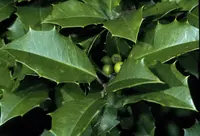
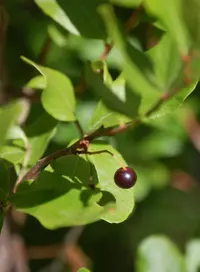
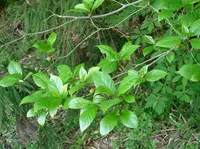
American holly, Ilex opaca, is an evergreen tree known for its glossy, spiny leaves and bright red berries. It typically develops a dense, pyramidal crown. Native to the eastern and central United States, it grows in woodlands, coastal plains, and well-drained bottomlands. The plant is slow to moderate in growth and can live for many decades with stable conditions. American holly is generally resilient once established but can be sensitive to very dry soil and harsh urban conditions. It prefers consistent moisture, acidic soil, and light ranging from partial shade to full sun, which influences how to care for American holly successfully.

Care Difficulty
Moderate Care

Light Preference
Partial Sun

Water Requirements
Moderate Water

Temperature Preference
Cold Hardy

Hardiness Zone
5–9

Soil Texture
Sandy, Loamy, Clay

Soil pH
Strongly acidic (4.5–5.5), Acidic (5.5–6.5)

Soil Drainage
Moist but well-drained

Fertilization
Minimal (feed rarely)
Scan your plant to receive care tips personalized for your specific plant
Available on iOS and Android
Ilex opaca grows best with consistent outdoor light that mimics bright woodland edges.
Ilex opaca prefers evenly moist, well-drained soil rather than frequent shallow watering.
This species is a hardy evergreen tree adapted to temperate outdoor climates with cold winters.
This species prefers moderate outdoor humidity but tolerates a wide range if roots stay evenly moist.
Ilex opaca grows best in deep, moist, well‑drained soil with high organic matter.
This species can be grown in large outdoor containers when managed for size and stability.
Ilex opaca is slow-growing and needs only modest, careful feeding for steady health.
Ilex opaca benefits from light, well-timed pruning to maintain structure and berry display.
This holly is usually grown in the ground, so focus on careful transplanting rather than frequent repotting.
Ilex opaca propagation is possible but slow and best suited to patient growers or nursery conditions.
This species is cold hardy in much of its range and usually needs only minimal winter care outdoors.

Plant Health Check
Not sure what's wrong with your plant? Check your plant's health inside the app.
American holly naturally grows as an understory tree in mixed hardwood and pine forests of the eastern United States, tolerating relatively low light compared with many other evergreen trees.
Its bright red drupes are a key winter food for birds such as cedar waxwings and American robins, which disperse the seeds after passing them through their digestive tracts.
Individual American holly trees are either male or female, so only female plants produce berries and they require a nearby male plant for successful pollination.

American holly is one of the few broadleaf evergreen trees native to the eastern United States that has been widely adopted as a traditional winter holiday decoration, leading to historic overharvesting from wild populations in the early 20th century before conservation measures and nursery production became common.
Yellowing leaves often result from root stress, poor drainage, or nutrient imbalance, especially iron deficiency in alkaline soil. Check drainage, avoid overwatering, apply mulch, and consider a soil test before using an acid-forming fertilizer.
Keep your plants happy and healthy with plant identification, disease detection, and easy care guidance.