


Cool root mulch
Apply a 3–5 cm layer of fine bark or leaf mold around the crown each spring to keep roots cool, conserve moisture, and suppress weeds without burying the emerging fiddleheads.

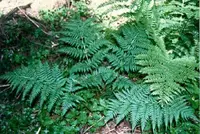
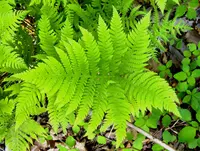
Spreading woodfern, Dryopteris expansa, is a hardy, clump-forming fern known for its finely divided, triangular fronds that arch outward to create a soft, layered look. It spreads slowly by short creeping rhizomes, forming loose colonies rather than tight clumps.
This species is native to cool, moist forests and shady slopes across northern and montane regions of North America, Europe, and Asia. It naturally thrives in dappled light, consistently moist soil, and rich organic matter, which explains why it is generally considered easy to care for spreading woodfern in similar garden or woodland settings.

Care Difficulty
Moderate Care

Light Preference
Partial Shade

Water Requirements
Keep Soil Moist

Temperature Preference
Cold Hardy

Hardiness Zone
3–8

Soil Texture
Loamy, Silty, Organic-rich

Soil pH
Acidic (5.5–6.5), Slightly acidic (6.5–7.0)

Soil Drainage
Moist but well-drained

Fertilization
Minimal (feed rarely)
Scan your plant to receive care tips personalized for your specific plant
Available on iOS and Android
Dryopteris expansa prefers cool, low to moderate light similar to a woodland understory.
This fern grows best in consistently moist, cool soil that never dries out completely.
This species is a cold-hardy fern adapted to cool, humid climates.
This fern prefers consistently moist air and reacts quickly to very dry conditions.
Soil for Dryopteris expansa should mimic a cool, moist forest floor with rich organic matter and steady moisture.
This fern adapts well to container growing when the pot supports its shallow, spreading root system.
Dryopteris expansa has modest nutrient needs and benefits from light feeding in active growth only.
Pruning Dryopteris expansa focuses on hygiene and maintaining a tidy clump rather than reshaping the plant.
This fern is more often grown in the ground, so care usually centers on transplanting mature clumps rather than frequent repotting.
Dryopteris expansa is most practically propagated by division of established clumps rather than from spores.
This fern is naturally cold hardy in many temperate regions and usually needs only minimal winter care in the ground.

Plant Health Check
Not sure what's wrong with your plant? Check your plant's health inside the app.
This fern naturally occurs from subarctic regions of North America and Eurasia down into cool montane forests, showing a strong adaptation to cold, short growing seasons and low-angle light conditions.
Its fronds are typically tripinnate, meaning each leaflet is finely divided three times, giving the plant a lacy, expansive appearance that helps maximize light capture in shaded forest understories.
Dryopteris expansa spreads slowly by short creeping rhizomes, allowing it to form loose colonies in stable, moist forest soils without becoming aggressively invasive.

This species often hybridizes with closely related Dryopteris ferns, and these natural hybrids can be difficult to identify, which has made Dryopteris expansa an important reference species in studies of fern hybridization and evolution.
This fern spreads slowly by short rhizomes and self‑spores in favorable, cool, moist woodland conditions. It usually forms gradually enlarging clumps rather than an invasive carpet, but can seed into nearby shaded, undisturbed beds over many years.
Keep your plants happy and healthy with plant identification, disease detection, and easy care guidance.

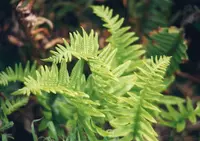
California polypody
Polypodium californicum
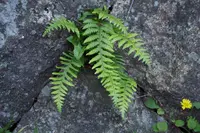
Japanese beech fern
Phegopteris decursive-pinnata
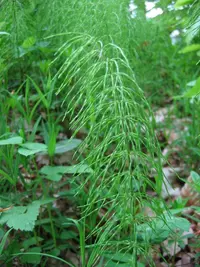
Shady Horsetail
Equisetum pratense
 POPULAR
Japanese bird's-nest fern
Asplenium antiquum
toothed clubmoss
Huperzia serrata
male fern
Dryopteris filix-mas
Black wood fern
Dryopteris cycadina
broad beechfern
Phegopteris hexagonoptera