


Staggered Division
Divide mature clumps every 3–4 years in early spring, but only split a section of the colony at a time so the mother plant can re-establish and maintain a full, layered look.

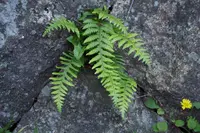
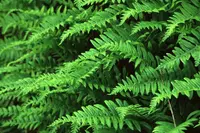
Japanese beech fern, Phegopteris decursive-pinnata, is a hardy deciduous fern valued for its graceful, layered fronds and soft, arching habit. It forms low clumps that slowly spread, creating a natural woodland look.
In the wild, it grows on shaded forest slopes and stream banks in East Asia, especially Japan, where soils stay cool and evenly moist. This background makes it reliable in temperate gardens and suitable for shaded containers when conditions are stable.
It prefers consistent moisture, humus-rich soil, and protection from hot, direct sun. With its steady growth and tolerance of cool conditions, it is considered moderately easy to care for Japanese beech fern once planted in the right spot.

Care Difficulty
Moderate Care

Light Preference
Partial Shade

Water Requirements
Keep Soil Moist

Temperature Preference
Cool Climate

Hardiness Zone
5–8

Soil Texture
Loamy, Silty, Organic-rich

Soil pH
Acidic (5.5–6.5), Slightly acidic (6.5–7.0)

Soil Drainage
Moist but well-drained

Fertilization
Minimal (feed rarely)
Scan your plant to receive care tips personalized for your specific plant
Available on iOS and Android
This woodland fern prefers soft, indirect light that mimics a shaded forest floor.
This fern depends on consistently moist but not waterlogged soil for healthy growth.
This species favors cool to mild conditions and dislikes temperature extremes.
This fern prefers consistently moist air and reacts quickly to very dry conditions.
Soil for this fern should mimic moist, loose woodland ground with steady drainage.
This species suits container growing when moisture and stability are managed carefully.
This fern grows well in moderately fertile soil and benefits from light feeding during active growth.
Phegopteris decursive-pinnata needs only light pruning to stay tidy and healthy.
This fern is usually grown in the ground, but container plants or crowded clumps benefit from occasional transplanting.
Division is the most practical method for increasing Phegopteris decursive-pinnata in home gardens.
This fern is generally cold hardy in suitable climates and needs only minimal winter attention outdoors.

Plant Health Check
Not sure what's wrong with your plant? Check your plant's health inside the app.
This fern has pinnae whose bases run slightly down the rachis (the central leaf axis), a feature called being decurrent, which gives the frond a softly tapered, flowing outline different from many other woodland ferns.
It is naturally distributed in shaded, moist forests across East Asia, including Japan, Korea, parts of China, and the Russian Far East, where it grows on humus-rich slopes and streambanks rather than on rocks or tree trunks.
Mature fronds are typically glabrous, meaning almost hairless, with a smooth surface that helps distinguish it from related, more bristly ferns in the same family.

Botanists historically placed this species in several different genera, including Polypodium and Thelypteris, and only detailed study of its frond architecture and spore-bearing structures led to its current placement in the genus Phegopteris.
This species spreads slowly by short rhizomes and spores, forming gentle colonies rather than invasive carpets. In typical garden conditions, it stays well behaved and is easy to keep within bounds with light edging or division.
Keep your plants happy and healthy with plant identification, disease detection, and easy care guidance.

 POPULAR
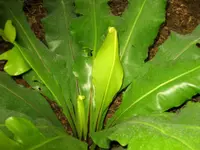
Bird's nest ferns
Asplenium nidus
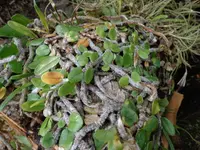
Microgramma vacciniifolia
Microgramma vacciniifolia
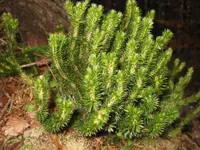
toothed clubmoss
Huperzia serrata
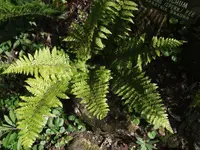
Braun's hollyfern
Polystichum braunii
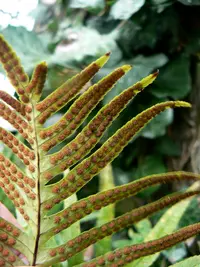
Southern Polypody
Polypodium cambricum
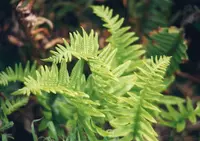
California polypody
Polypodium californicum
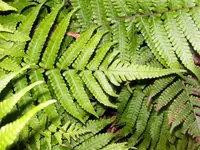
downy maiden fern
Thelypteris dentata
nested polypody
Polypodium calirhiza