Frond thinning
Remove 1–2 of the oldest, yellowing fronds at the base each month during active growth to maintain good air movement through the clump and reduce fungal issues when caring for downy maiden fern.

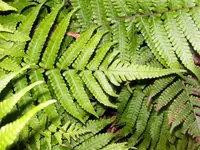
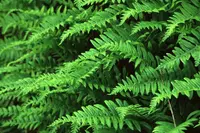
Downy maiden fern (Thelypteris dentata) is a terrestrial fern known for its soft, arching fronds and dense clumping habit. It often forms graceful, low mounds that slowly spread over time.
This species is native to tropical and subtropical regions and is frequently found in moist, shaded woodlands and along stream banks. In cultivation it is grown both as a garden fern in mild climates and as a container or houseplant.
Its preference for consistent moisture, high humidity, and shade makes it moderately demanding, but predictable, once conditions are right. Understanding how to care for downy maiden fern starts with providing sheltered, indirect light, evenly moist soil, and good drainage.

Care Difficulty
Moderate Care

Light Preference
Partial Shade

Water Requirements
Keep Soil Moist

Temperature Preference
Tropical / Frost Sensitive

Hardiness Zone
9–12

Soil Texture
Loamy, Silty, Organic-rich

Soil pH
Acidic (5.5–6.5), Slightly acidic (6.5–7.0)

Soil Drainage
Moist but well-drained

Fertilization
Minimal (feed rarely)
Scan your plant to receive care tips personalized for your specific plant
Available on iOS and Android
This fern prefers gentle, filtered light that mimics a bright forest floor.
This species thrives in consistently moist, never soggy soil.
This fern favors mild, frost-free conditions similar to a sheltered woodland.
This fern prefers consistently moist air and reacts quickly to dry indoor conditions.
This fern prefers loose, moist, organic-rich soil that drains freely but never dries out completely.
This species grows well in containers when moisture and stability are managed carefully.
This fern benefits from light, consistent feeding during active growth but is sensitive to excess nutrients.
Thoughtful pruning keeps Thelypteris dentata dense, tidy, and free of diseased foliage.
Container-grown plants appreciate occasional repotting to refresh soil and manage vigorous root growth.
This fern is most reliably multiplied by division rather than from spores in home conditions.
Winter needs depend on climate; this fern is only moderately frost tolerant and prefers mild conditions.

Plant Health Check
Not sure what's wrong with your plant? Check your plant's health inside the app.
In parts of its native range in Asia and the Pacific, this fern has been regarded as a common weed of disturbed, moist sites such as ditches, roadsides, and plantation understories, showing how easily it colonizes open, humid ground.
Its light spores are easily carried by wind and tropical storms, which has helped it establish naturalized populations in warm regions far from its original distribution, including parts of the southeastern United States and the Caribbean.
This species often persists in secondary forests, abandoned agricultural land, and urban-edge habitats, indicating a relatively high tolerance for canopy opening, soil disturbance, and fluctuating light compared with many forest ferns.

This fern is one of the few tropical species that has successfully invaded some coastal wetland and hammock ecosystems in Florida, where it can form dense stands that compete with native ferns and modify the structure of the understory.
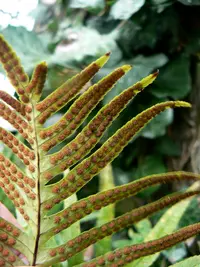
This species is a true fern and does not bloom. It reproduces by spores, which develop in small clusters on the undersides of mature fronds instead of producing flowers, nectar, or seeds at any stage.
Keep your plants happy and healthy with plant identification, disease detection, and easy care guidance.