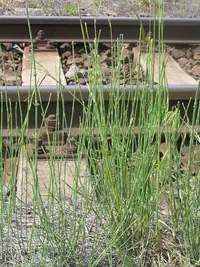
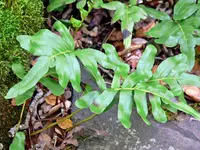
Braun's hollyfern Care (Polystichum braunii)

Braun's hollyfern

About Braun's hollyfern

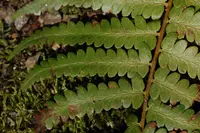
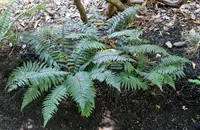
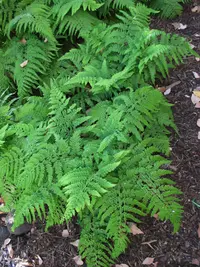
Braun's hollyfern, Polystichum braunii, is a hardy, evergreen to semi-evergreen fern valued for its finely divided, arching fronds. The fronds form a dense, upright clump that brings a structured, woodland look to shaded spaces.

This species is native to cool, moist forests in parts of North America, Europe, and Asia, where it grows in rocky, well-drained but consistently damp soils. It is generally slow-growing but long-lived when kept in stable conditions.

Once established, Braun's hollyfern is fairly forgiving if kept out of hot sun and drying winds. Understanding how to care for Braun's hollyfern mainly involves providing shade, steady moisture, and humus-rich soil that does not stay waterlogged.

Main Plant Requirements

Care Difficulty

Moderate Care

Light Preference

Partial Shade

Water Requirements

Keep Soil Moist

Temperature Preference

Cold Hardy

Hardiness Zone

3–7

Soil Texture

Loamy, Peaty, Organic-rich

Soil pH

Acidic (5.5–6.5), Slightly acidic (6.5–7.0)

Soil Drainage

Moist but well-drained

Fertilization

Minimal (feed rarely)

Get Personalized Care Plan

Scan your plant to receive care tips personalized for your specific plant

Available on iOS and Android

How to Care for the Braun's hollyfern

This woodland fern prefers cool, shaded conditions and is adapted to low light levels.

  • Provide dappled or filtered light equivalent to 2–4 hours of soft morning sun; avoid direct midday or afternoon sun that can scorch fronds.
  • Plant Braun's hollyfern on the north or east side of buildings or under open-canopy trees where it receives bright shade most of the day.
  • In summer, increase shade if fronds pale, crisp, or curl at the edges; in spring and fall, limited early sun is usually tolerated if soil stays moist.

This fern thrives in consistently moist, humus-rich soil without prolonged drying or waterlogging.

  • Irrigate when the top 2–3 cm of soil feels slightly dry, aiming for evenly damp soil that never becomes saturated or muddy.
  • During hot, dry periods, check moisture every 1–2 days; in cool, rainy seasons, rely more on natural rainfall and irrigate only if fronds begin to droop slightly.
  • Ensure soil drains freely; yellowing, limp fronds and sour-smelling soil suggest overwatering, while crispy, browning tips indicate Polystichum braunii is staying too dry.

This species is a hardy, cool-temperate fern that tolerates significant cold once established outdoors.

  • Optimal growth occurs around 50–70°F (10–21°C), with steady moisture and protection from drying winds.
  • Mature plants typically survive down to about -20°F (-29°C) under snow or mulch, but new plantings benefit from winter leaf mulch for extra crown protection.
  • Heat above 80°F (27°C) is tolerated if soil remains moist and shade is deep; extended periods above 90°F (32°C) can stress fronds, causing wilting and browning.

This fern prefers consistently moist air and reacts quickly to very dry conditions indoors.

  • Aim for 50–70% humidity, using a room humidifier or grouping plants if household air stays below 40%.
  • Tolerates brief dips in humidity but fronds may crisp at the tips and edges if air stays too dry.
  • Watch for pale, browning fronds and slowed unfurling as humidity stress, especially when caring for Braun's hollyfern in heated homes.

Polystichum braunii grows best in cool, moist, humus-rich soil that drains freely yet never dries out completely.

  • Use a loose mix of 50–60% peat or coir, 20–30% compost, and 20–30% mineral aggregate such as perlite or pumice.
  • Aim for slightly acidic to neutral pH around 5.5–7.0 to support nutrient uptake and healthy root growth.
  • Incorporate fine bark or leaf mold to mimic woodland leaf litter and maintain moisture without creating waterlogging.
  • Avoid heavy clay, compacted substrates, or mixes dominated by sand, which either hold water around roots or dry out too rapidly.

This species adapts well to container growing when moisture and root space are carefully managed.

  • Choose a deep pot that allows a broad, fibrous root system to spread laterally without crowding the sides quickly.
  • Select a heavier container material like ceramic or clay outdoors to stabilize the fern’s leafy top in wind.
  • Raise the pot slightly on feet or bricks so drainage holes stay clear and excess water exits instead of pooling under the base.

This fern benefits from modest feeding but grows well in humus-rich soil without heavy fertilizer use.

  • Use a balanced, diluted liquid fertilizer (around 10-10-10), at 1/4–1/2 strength during spring and early summer for Braun's hollyfern.
  • Apply every 4–6 weeks in the active growing season if soil organic matter is low.
  • Stop feeding in late summer and avoid fertilizing in winter dormancy.
  • Prefer slow-release granules or compost worked lightly into the topsoil rather than strong synthetic products.

Pruning Polystichum braunii focuses on tidying old foliage rather than reshaping the plant.

  • Carry out main cleaning in late winter or very early spring before new fronds unfurl.
  • Remove dead, diseased, or badly damaged fronds at the base using clean, sharp scissors or hand pruners.
  • Thin a few oldest, crowded fronds if needed to improve air flow and reveal new growth.
  • Avoid cutting emerging fiddleheads, which can reduce vigor and spoil the natural form.

This fern is usually grown in the ground but can adapt to containers with careful transplanting.

  • Transplant or repot in early spring or early fall, when temperatures are mild and soil is evenly moist.
  • Look for roots circling the pot, slow growth, or frequent wilting as signals it needs more space.
  • Move up only 1 pot size, keeping the root ball intact and setting the crown at the same soil level.
  • Water thoroughly after planting, then keep soil moist and shaded for 1–2 weeks to reduce transplant stress.

Polystichum braunii is most reliably propagated by division rather than from spores by home growers.

  • Divide established clumps in early spring as new growth begins, choosing healthy, vigorous plants.
  • Lift the root mass and gently separate it into sections, each with several fronds and firm rhizomes.
  • Replant divisions at original depth in humus-rich, moist, shaded soil, spacing to allow future spread.
  • Water well after planting and maintain consistent moisture until new fronds appear and harden.

This fern is cold hardy in much of its range and usually needs only light winter attention outdoors.

  • Tolerates typical frost in temperate climates once established, especially in sheltered, shaded sites.
  • Apply a 5–8 cm layer of leaf mold or bark mulch around the crown to insulate the root zone.
  • Leave spent fronds in colder areas until late winter, as they add extra protection from freeze-thaw cycles.
  • Move container-grown plants into a cold, frost-free, shaded spot and keep soil just slightly moist.

Care Tips

Frond cleanup

Remove browned or tattered fronds at the base with clean, sharp scissors in late winter to reduce fungal spores and open the crown for healthy new growth.


Cool-root mulching

Apply a 3–5 cm layer of fine, leaf-based mulch around but not over the crown to keep roots cool, conserve moisture, and mimic the natural forest floor microclimate.

Crown protection

In cold regions, tuck loose, dry leaves or straw around the crown after the ground freezes to buffer freeze–thaw cycles that can heave and damage the rootstock.

Sporeling management

If volunteer seedlings appear nearby, either pot them up while very small for propagation or remove them to prevent overcrowding and maintain strong airflow around mature clumps.

Site rotation trial

When establishing a new planting, trial 2–3 nearby spots with slightly different shade and moisture levels, then keep the most vigorous clump and move the others once dormant to optimize growing Braun's hollyfern in that garden.

Common Pests and Diseases

Scale insects

This pest feeds on fronds and stipes, causing yellowing, stunted growth, and a sticky honeydew that can promote sooty mold. Infestations are more frequent on plants grown in sheltered, low-airflow, or indoor conditions.

Solution

Physically remove visible scales with a cotton swab dipped in 70% isopropyl alcohol, then rinse fronds thoroughly with lukewarm water. For persistent problems, use repeated applications of insecticidal soap or a light horticultural oil, and improve airflow and spacing as part of Braun's hollyfern indoor care.

Aphids

These insects cluster on the soft rachis and young fronds, sucking sap and causing leaf distortion, chlorosis, and sticky honeydew deposits. Symptoms include curled new fronds and a general decline in vigor, especially in container-grown plants.

Solution

Spray the plant with a firm stream of water to dislodge aphids, then treat remaining insects with insecticidal soap, thoroughly covering both sides of the fronds. Limit excess nitrogen fertilization and maintain good airflow to reduce recurrent outbreaks.

Slugs and snails

This pest is common in cool, moist, shady sites and eats irregular holes in fronds, often leaving slime trails on or around the plant. Damage is most noticeable on young fiddleheads and tender new growth in spring.

Solution

Hand-pick slugs and snails at dusk or early morning, and use physical barriers such as copper tape or rough grit around containers or planting areas. In high-pressure sites, deploy iron phosphate slug baits according to label directions, keeping them out of reach of pets and wildlife.

Leaf spot

This disease produces brown to black spots or blotches on fronds, sometimes with a yellow halo, and can cause premature browning and shedding of affected leaflets. Symptoms include scattered lesions that gradually merge, especially in prolonged moist or crowded conditions.

Solution

Remove and discard affected fronds to reduce inoculum, and avoid overhead watering that keeps foliage wet for long periods. Improve spacing and airflow, water at the soil level, and if needed use a labeled fungicide for ornamental ferns, applying preventively during long wet periods.

Crown rot

This disease affects the central crown where fronds emerge, leading to soft, dark, rotting tissue and collapse of the entire rosette. Symptoms include sudden wilt, foul odor at the crown, and fronds that pull away easily at the base.

Solution

Promptly remove and discard severely affected plants, including as much of the infected crown and surrounding soil as possible. In early or mild cases, improve drainage, avoid waterlogged conditions, reduce mulch directly against the crown, and replant only in well-drained, cool, organic-rich soil to prevent recurrence.

Interesting Facts

Braun-named mountain fern

This species is named in honor of German botanist Alexander Braun and is naturally found in cool, mountainous forests across both Eurasia and North America, making it a classic example of a boreal, or northern, disjunct distribution.

Double-layered scales

Its stipes and rachises (leaf stalks and midribs) carry distinctive two-colored scales that are dark in the center and pale at the edges, a key feature botanists use to distinguish it from visually similar shield ferns.

Persistent overwintering fronds

The leathery evergreen fronds can persist under snow cover and resume photosynthesis early in spring, allowing the plant to take advantage of cool, moist conditions before tree canopies fully leaf out.

Botan icon

Did you know?

In parts of its range, this fern is considered a glacial relict, meaning its present-day populations are remnants of a much wider distribution that existed during cooler post-glacial periods, which makes it an important indicator species for long-term climate and forest history studies.

FAQs about Braun's hollyfern

This species is semi-evergreen to evergreen in cool, moist climates. In colder regions, older fronds may die back after hard frost while new fronds emerge from the crown in spring, giving it an almost evergreen presence.

Grow Healthy Plants with Botan Care

Keep your plants happy and healthy with plant identification, disease detection, and easy care guidance.

Botan plant care app — identify plants on mobile

Explore More Plants