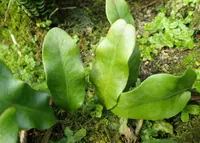
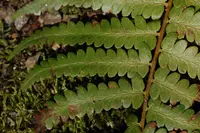
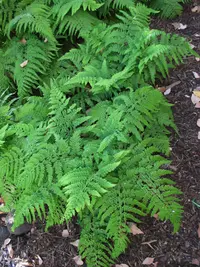
Korean rock fern Care (Polystichum luctuosum)

Also known as: Tsushima holly fern, Tsushima shield fern, Mourning Shield Fern
Korean rock fern

About Korean rock fern

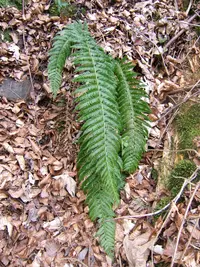
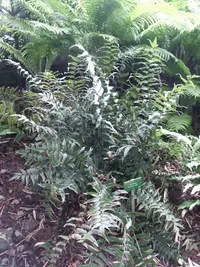
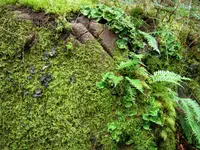
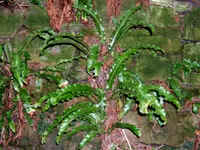
Korean rock fern (Polystichum luctuosum) is a small, evergreen fern valued for its neat, arching fronds and compact clumping habit. It stays low and tidy, which suits small gardens and containers. The plant is native to rocky, shaded slopes in East Asia, where it grows among stones and woodland leaf litter. This background explains its preference for cool conditions and consistent moisture. It is considered relatively easy to grow as long as the soil drains well and the site avoids harsh, direct sun. Gardeners often look up how to care for Korean rock fern when they want a refined, shade-tolerant accent plant.

Main Plant Requirements

Care Difficulty

Moderate Care

Light Preference

Partial Shade

Water Requirements

Keep Soil Moist

Temperature Preference

Cool Climate

Hardiness Zone

6–8

Soil Texture

Loamy, Rocky, Organic-rich

Soil pH

Acidic (5.5–6.5), Slightly acidic (6.5–7.0)

Soil Drainage

Moist but well-drained

Fertilization

Minimal (feed rarely)

Get Personalized Care Plan

Scan your plant to receive care tips personalized for your specific plant

Available on iOS and Android

How to Care for the Korean rock fern

Polystichum luctuosum thrives in cool, shaded conditions that mimic woodland edges.

  • Provide bright shade or dappled light, such as under trees or on the north or east side of buildings; aim for 1–3 hours of gentle morning sun at most.
  • Avoid harsh midday or afternoon sun, which can scorch fronds and cause bleaching or crisp brown edges on Korean rock fern.
  • In summer, increase shade or filtered light; in low winter light, remove heavy obstructions but still protect from direct sun in mild climates.

This fern prefers consistently moist but not waterlogged soil around its root zone.

  • Water when the top 2–3 cm of soil feel slightly dry, using slow, deep watering so moisture reaches the full root depth.
  • Ensure soil is rich and well drained; standing water, sour smell, or black, mushy roots indicate overwatering and poor drainage.
  • In hot, dry weather, expect more frequent watering and monitor for limp, curling fronds, while in cool or rainy seasons extend the interval between waterings.

This fern grows best in cool to mild climates with stable, moderate temperatures.

  • Aim for 50–75°F (10–24°C) for active growth, with slightly cooler nights promoting sturdy fronds.
  • Mature plants tolerate down to about 10–20°F (-12 to -6°C) with mulch, but repeated freeze–thaw cycles can damage crowns.
  • Heat above 85°F (29°C) combined with dry air stresses the plant, so provide shade, mulch, and consistent soil moisture during hot spells.

This fern benefits from consistently moist air and reacts quickly to dry indoor conditions.

  • Aim for 50–70% humidity, especially in heated homes or near drying air sources.
  • In dry air, fronds may brown at tips and edges and feel crisp rather than firm.
  • Increase humidity with a pebble tray under the pot, grouped plants, or a room humidifier when caring for Korean rock fern.

This species prefers a loose, moisture-retentive but airy soil that mimics leaf litter on rocky slopes.

  • Use a mix of roughly 50% peat or coco coir, 30% compost, and 20% perlite or fine bark for a fibrous, loamy texture.
  • Ensure fast drainage so water moves through within seconds, but the mix still feels slightly damp a few hours after watering.
  • Keep pH slightly acidic to neutral, around 5.5–7.0, avoiding strongly alkaline mixes that can limit nutrient uptake.
  • Avoid heavy clay, compacted potting soil, or pure garden soil that stays waterlogged and restricts oxygen around roots of Polystichum luctuosum.

This fern adapts well to container growing when moisture and root space are carefully managed.

  • Choose a pot just 2–5 cm wider than the root ball to keep the mix evenly moist rather than wet and cold in the center.
  • Use a stable, heavier container if grown outdoors to prevent wind from rocking the shallow but spreading root system.
  • Select thicker-walled clay or ceramic pots in hot, bright locations to reduce rapid overheating and moisture loss from the root zone.

This fern benefits from light, steady nutrition rather than heavy feeding.

  • Use a balanced, dilute liquid fertilizer (e.g. 10-10-10 or 20-20-20 at 1/4–1/2 strength) for container-grown Korean rock fern.
  • Feed every 4–6 weeks during spring and summer when new fronds are forming.
  • Skip or greatly reduce feeding in fall and winter when growth slows.
  • Alternatively, apply a thin layer of compost or a mild slow-release fertilizer in early spring.

Pruning Polystichum luctuosum focuses on hygiene and maintaining a neat clump.

  • Best time is late winter to early spring, before strong new growth emerges.
  • Cut dead, damaged, or diseased fronds at the base with clean, sharp scissors or pruners.
  • Remove old, crowded fronds to improve air movement and reduce fungal issues.
  • Light cleanup preserves the plant’s natural arching shape while supporting vigorous new fronds.

This fern prefers stable conditions and modestly sized containers, so repotting is infrequent.

  • Plan repotting or transplanting in early spring when fresh growth begins.
  • Check for roots circling the pot, pushing through drainage holes, or noticeably slowed growth every 2–3 years.
  • Move into a container 2–3 cm wider with moist, humus-rich, well-drained mix to limit stress.
  • Keep the root ball intact, plant at the same depth, water thoroughly, then shade from strong sun for 1–2 weeks.

Division is the most practical method to increase Polystichum luctuosum plants.

  • Divide established clumps in early spring when new croziers (unfurling fronds) just appear.
  • Lift the plant carefully, keeping as much root and soil attached as possible.
  • Split the rhizome into sections, each with several healthy fronds and strong roots.
  • Replant divisions immediately into moist, humus-rich soil and keep evenly damp until established.

This fern is fairly cold hardy but benefits from simple winter care in colder climates.

  • In-ground plants tolerate light to moderate frost when soil drainage is good.
  • Apply 3–5 cm of leaf mold or bark mulch around the root zone in late fall, keeping crowns uncovered.
  • In very cold areas or for container plants, overwinter in a sheltered, frost-free but cool location with bright shade.

Care Tips

Protect frond crowns

When top-dressing or mulching, keep mulch 2–3 cm away from the central crown so new fiddleheads can emerge freely and do not rot from trapped moisture.

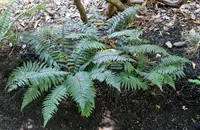
Use stone microclimates

Plant near rocks, pavers, or low walls that provide slight thermal buffering and stable moisture around the root zone, mimicking the fern’s natural rocky habitat.

Divide at right time

If the clump becomes congested or bare in the center, divide it in early spring while new fronds are just emerging, ensuring each division has several healthy crowns and a solid root mass.

Layered understory planting

Grow it beneath taller, deciduous shrubs or small trees to provide bright but filtered light in summer and slightly more light in winter when overhead leaves drop.

Winter crown shielding

In colder regions, loosely cover the crown with fine leaf litter or pine needles after the first frosts to buffer freeze–thaw cycles, then remove most of the cover in early spring to resume normal caring for Korean rock fern.

Common Pests and Diseases

Scale insects

This pest feeds on frond midribs and stalks, causing yellowing, stunted growth, and sticky honeydew on nearby surfaces. Symptoms include small dome-shaped bumps that are hard to remove with a fingernail.

Solution

Physically remove scales with a cotton swab dipped in isopropyl alcohol, then rinse fronds thoroughly with lukewarm water. For persistent infestations, apply a light horticultural oil spray labelled safe for ferns, and improve air circulation and spacing as part of broader Polystichum luctuosum plant care.

Fern aphids

These insects cluster on young fronds and undersides of leaflets, sucking sap and causing curling, distortion, and sticky honeydew. This pest is more common on soft new growth, especially in sheltered, humid sites.

Solution

Shower the plant with a firm stream of water to dislodge aphids, repeating every few days. If needed, use an insecticidal soap spray on both sides of the fronds, avoiding application in strong sun or on heat-stressed plants.

Spider mites

This pest appears in hot, dry indoor or greenhouse conditions and causes fine stippling, dull fronds, and delicate webbing between pinnae. Symptoms include a general faded, dusty look rather than clear spots or lesions.

Solution

Increase humidity, rinse fronds thoroughly in the shower or with a hose, and wipe main frond stalks with a damp cloth. For ongoing problems, use a miticide or insecticidal soap labelled for spider mites, applied repeatedly to disrupt the life cycle.

Leaf spot

This disease produces small brown to black spots on fronds that may merge into irregular patches, often with a yellow halo. Symptoms include premature browning and death of affected pinnae, especially in crowded, damp conditions.

Solution

Remove and discard heavily spotted fronds to reduce inoculum, and avoid wetting the foliage late in the day. Improve airflow around the plant, water at the base, and in severe or recurring cases use a fern-safe fungicide according to label directions.

Crown rot

This disease affects the central growing point, where symptoms include blackened, mushy crown tissue and fronds that collapse from the base. It often develops in poorly drained soil or containers kept constantly wet and cool.

Solution

Cut away all soft, rotted tissue with a sterile blade and discard affected material, then adjust watering so the soil is evenly moist but not saturated. Improve drainage by using a well-draining, humus-rich mix, avoid burying the crown, and reduce overhead watering in cool weather.

Interesting Facts

Native to East Asia

This fern is naturally found in rocky, mountainous woodlands of Korea, Japan, and parts of China, where it often grows among stones and in crevices with cool, moist air and sharp drainage.

Semi-evergreen habit

In mild climates it often keeps much of its frond mass through winter, but in colder conditions the fronds can die back and the plant regrows fresh foliage from the crown in spring.

Textured, glossy fronds

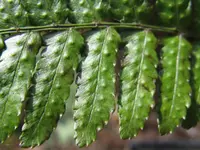
The fronds are notably leathery and glossy dark green with finely divided leaflets, an adaptation that helps reduce water loss and allows it to tolerate slightly drier and more exposed rocky sites compared with many woodland ferns.

FAQs about Korean rock fern

This species is a true fern and does not produce flowers or blooms at any stage. It reproduces by spores, usually seen as small dots or lines on the undersides of mature fronds.

Grow Healthy Plants with Botan Care

Keep your plants happy and healthy with plant identification, disease detection, and easy care guidance.

Botan plant care app — identify plants on mobile

Explore More Plants