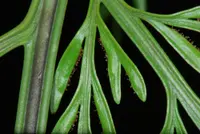
hard shield-fern Care (Polystichum aculeatum)

hard shield-fern

About hard shield-fern

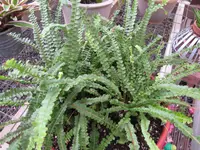
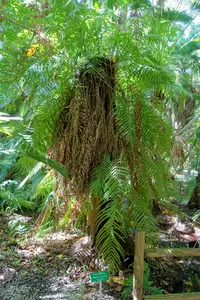
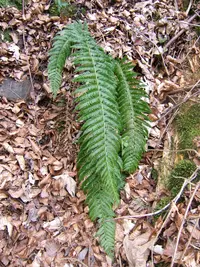
Hard shield-fern, Polystichum aculeatum, is an evergreen fern valued for its firm, glossy, dark green fronds and neatly clumping habit. It forms dense rosettes with divided, leathery fronds that keep their structure through much of the year, giving consistent texture in shaded spaces.

This species occurs naturally in shaded woodlands, rocky slopes, and moist banks across parts of Europe and western Asia, often in cooler, humid sites. It is considered moderately easy to grow if its need for shade, evenly moist soil, and good drainage is respected.

Gardeners who learn how to care for hard shield-fern appreciate its durability, tolerance of cooler temperatures, and ability to handle slightly drier shade better than many other ferns.

Main Plant Requirements

Care Difficulty

Moderate Care

Light Preference

Partial Shade

Water Requirements

Keep Soil Moist

Temperature Preference

Cold Hardy

Hardiness Zone

5–8

Soil Texture

Loamy, Peaty, Organic-rich

Soil pH

Acidic (5.5–6.5), Slightly acidic (6.5–7.0)

Soil Drainage

Moist but well-drained

Fertilization

Minimal (feed rarely)

Get Personalized Care Plan

Scan your plant to receive care tips personalized for your specific plant

Available on iOS and Android

How to Care for the hard shield-fern

This evergreen fern prefers cool, shaded conditions that mimic woodland understory light.

  • Provide dappled or filtered light, with 1–3 hours of gentle morning sun and no harsh afternoon sun to prevent frond scorch.
  • Plant hard shield-fern in partial to full shade; bright indirect light under trees, north or east sides of buildings suits it well.
  • In summer, protect from strong sun and drying winds; in winter, ensure it still receives ambient daylight, avoiding deep, continuous gloom under dense evergreens.

This fern prefers consistently moist but not waterlogged soil throughout the growing season.

  • Water when the top 2–3 cm of soil feel slightly dry, aiming for evenly moist soil, especially in spring and summer.
  • Ensure soil is humus-rich and well-drained; avoid standing water, which can cause root rot, blackened bases, and foul smell.
  • Reduce watering frequency in cool autumn and winter weather, watching for limp, curling fronds as a sign of underwatering and yellowing, mushy fronds as overwatering.

This hardy fern tolerates cool climates but grows best in mild, stable temperatures.

  • Optimal growth occurs around 50–70°F (10–21°C), with steady moisture and shelter from drying winds.
  • Polystichum aculeatum typically survives down to about 5°F (−15°C) once established, though fronds may scorch or collapse in severe frost.
  • In hot spells above 80°F (27°C), provide deep shade and extra mulch to keep roots cool, as prolonged heat and dryness can stunt new fronds.

This species prefers consistently moist air but usually adapts to typical home humidity if soil moisture is stable.

  • Aim for 50–70% humidity, especially in heated homes or near radiators.
  • Hard shield-fern in air below 40% may show crisping frond tips and browning edges from humidity stress.
  • Increase humidity with a pebble tray under the pot or by grouping plants, rather than frequent misting that dries quickly.

This fern prefers humus-rich, moist, well-structured soil that drains freely but never dries out completely.

  • Use a mix such as 50% peat-free compost, 30% fine bark, and 20% perlite or grit for a loose, fibrous texture.
  • Ensure drainage is fast enough that water runs through freely within seconds, but the mix still holds even moisture.
  • Target slightly acidic to neutral pH around 5.5–7.0, avoiding strongly alkaline mixes high in lime.
  • Avoid compacted, heavy clay or pure sand; add bark and grit to dense soils to improve aeration and root health for Polystichum aculeatum.

This species is well suited to container cultivation outdoors on shaded patios or balconies.

  • Choose a pot slightly wider than the root mass but with moderate depth, as the root system is fibrous rather than tap-rooted.
  • Select a heavier material such as ceramic or clay outdoors to stabilize the fronds against wind and accidental knocks.
  • Elevate the container on feet so drainage holes stay clear, preventing water from pooling under the pot base.

This hardy woodland fern needs only light feeding in containers or nutrient-poor soils.

  • Use a balanced, diluted liquid fertilizer (such as 10-10-10 at 1/4–1/2 strength) or a thin layer of fine compost in spring.
  • Feed potted hard shield-fern every 4–6 weeks during active growth, stopping by late summer.
  • Avoid fertilizing in winter dormancy, as low demand and cool soil increase the risk of salt buildup.
  • Water before and after feeding to distribute nutrients evenly and reduce root burn risk.

Pruning Polystichum aculeatum focuses on hygiene and maintaining a neat rosette shape.

  • Best timing is late winter to early spring, before new fronds unfurl, or after hard frosts have passed.
  • Remove dead, yellowing, or diseased fronds at the base with clean, sharp scissors or hand pruners.
  • Thin out crowded, crossing fronds to improve air flow and reduce fungal problems in damp shade.
  • Avoid cutting into the central crown, as this can slow recovery and distort the plant’s form.

This fern is more often grown in the ground, but container plants or crowded clumps benefit from occasional transplanting.

  • Look for roots circling the pot, water running straight through, or slowed growth as signals to move or up-pot.
  • Transplant or divide in early spring or early autumn when temperatures are mild and soil moisture is reliable.
  • For containers, shift to a pot only 2–5 cm wider, using moisture-retentive, well-drained compost rich in organic matter.
  • Keep root disturbance minimal, water thoroughly afterward, and shade for 1–2 weeks to reduce transplant stress.

Division is the standard method for increasing Polystichum aculeatum in gardens.

  • Divide established clumps in early spring or early autumn, when soil is cool and evenly moist.
  • Lift the plant carefully, then split the crown into sections with several healthy buds and attached roots.
  • Replant divisions at the same depth in humus-rich, shaded soil, firming gently to remove air pockets.
  • Water thoroughly and keep evenly moist for several weeks to support new root growth and establishment.

This evergreen fern is cold hardy in much of its range and usually needs only simple winter care.

  • Tolerates typical garden frosts, but fronds may scorch in prolonged freezes or drying winds.
  • Apply a 3–5 cm mulch of leaf mold or compost around the root zone in late autumn, keeping it off the crown.
  • In very cold or exposed sites, leave old fronds over winter as a natural shield, cutting them back in early spring.
  • Move container plants to a sheltered, unheated spot to reduce freeze–thaw stress on roots and pots.

Care Tips

Rotate clumps annually

When a clump develops a bare or congested center, lift and rotate it 180° in early spring so the freshest crowns face the main viewing side and have room to expand evenly.

Divide for rejuvenation

Every 4–6 years, lift and divide the rootstock into several firm sections with at least 3–5 healthy crowns each, then replant at the same depth to maintain vigor and leaf density.

Mulch to protect croziers

Apply a thin, loose mulch of leaf mold or fine bark around but not over the crowns in late autumn to buffer winter temperature swings and reduce frost damage to emerging spring croziers.

Shelter from winter wind

In exposed gardens, use windbreak mesh, evergreen shrubs, or temporary screens on the windward side to prevent winter scorch and frond shredding, which can weaken the plant over time.

Monitor crown rot zones

In consistently wet or compacted spots, gently tease away old frond bases and debris from the crowns once a year to increase air flow and reduce the risk of crown rot when caring for hard shield-fern.

Common Pests and Diseases

Scale insects

This pest attaches firmly to frond stalks and the underside of pinnae, sucking sap and causing yellowing or weak growth. Symptoms include small, dome-shaped brown or off-white bumps that do not brush off easily.

Solution

Physically scrape or wipe colonies off fronds with a cotton swab or soft cloth dipped in 70% isopropyl alcohol, then rinse the plant thoroughly. For heavier infestations, apply a horticultural soap or light horticultural oil spray labeled safe for ferns, repeating every 7–10 days and improving air circulation and plant vigor to reduce reinfestation.

Vine weevil

This pest affects hard shield-fern mainly in containers and shaded beds, where adults notch the frond edges and larvae feed on roots and crowns. Symptoms include irregular leaf-edge notches and sudden collapse or poor growth in otherwise moist soil.

Solution

Hand-pick adult weevils at night using a flashlight and shake them from fronds onto a sheet for removal. For larvae in the root zone, drench the potting mix or soil in late summer to early fall with entomopathogenic nematodes labeled for vine weevil, and avoid letting containers sit waterlogged, which favors larval damage.

Fern aphids

These insects cluster on the soft rachis and new fronds, sucking sap and sometimes causing curling, distortion, or sticky honeydew on fronds. This pest is more common on sheltered or indoor specimens with soft new growth.

Solution

Rinse colonies off with a firm but gentle stream of water, especially targeting new fronds and undersides. If needed, use an insecticidal soap labeled safe for ferns, applied in the cool part of the day and repeated weekly until new growth appears clean, while also reducing excess nitrogen fertilization that encourages soft, aphid-prone foliage.

Leaf spot

This disease produces small brown to black lesions on fronds that may merge into larger dead patches, especially in dense, shaded plantings with prolonged leaf wetness. Symptoms include spotting that starts on older fronds and may have a yellow halo or darker margin.

Solution

Remove and discard affected fronds to reduce spore sources and avoid overhead watering, especially late in the day. Improve spacing and airflow around clumps; in persistent cases outdoors, a fungicide labeled for fern leaf spots may be applied preventively during warm, humid periods according to label directions.

Crown rot

This disease affects the central growing point when hard shield-fern is kept in poorly drained soil or containers that stay wet, leading to browning and collapse of inner fronds. Symptoms include a soft, dark, often foul-smelling crown at soil level while outer fronds yellow and die back.

Solution

At early stages, lift the plant, cut away all soft, dark tissue, and replant only firm, healthy sections in sharply draining, humus-rich soil or mix. Long term, keep the crown just at or slightly above soil level, avoid water collecting around the plant, and use containers with ample drainage holes to reduce recurrence when trying to grow Polystichum aculeatum in pots.

Interesting Facts

Native to Atlantic woodlands

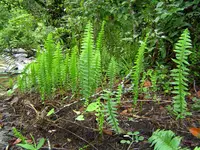
This species is naturally distributed across humid, ocean-influenced woodlands from western and central Europe to parts of southwestern Asia, where it favors cool, shaded ravines and rocky forest slopes.

Stiff, spiny-textured fronds

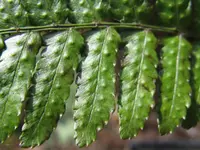
The fronds are distinctly leathery and rigid with sharply pointed tooth-like segments, which help reduce herbivory and limit water loss compared with softer fern species.

Evergreen winter survivor

Unlike many ferns that die back, this species usually retains its deep green fronds through winter in mild to cool climates, giving it an important structural role in woodland ground layers year-round.

FAQs about hard shield-fern

This fern does not produce true flowers. It reproduces by spores, which form in small clusters called sori on the undersides of mature fronds. Lack of blooms is normal and not a sign of poor health.

Grow Healthy Plants with Botan Care

Keep your plants happy and healthy with plant identification, disease detection, and easy care guidance.

Botan plant care app — identify plants on mobile

Explore More Plants